

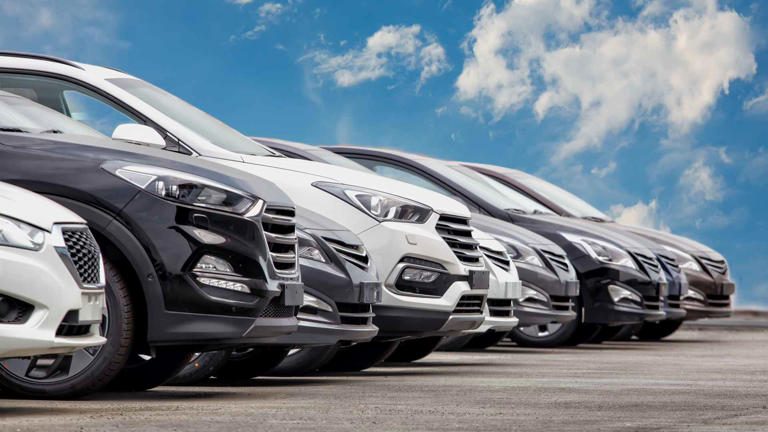
In 2019, a $35,000 budget felt like a golden ticket into the heart of the new‑car market, with plenty of room for options and even a few near‑luxury badges. Today, that same sticker price sits in a very different neighborhood, squeezed by inflation, higher transaction prices, and costlier ownership across the board. The number on the check has not changed, but what it buys on the lot has.
The shift is not just about shoppers feeling squeezed. The Value of $35,000 has eroded in real terms, and the car market itself has reset around bigger, pricier vehicles and more expensive technology. To understand what that means in practical terms, it helps to look at how far $35,000 stretches now compared with 2019, and which models still deliver solid value inside that cap.
How $35,000 Shrunk While Car Prices Swelled
Start with the simple math: inflation alone has taken a big bite out of a $35,000 car budget. According to one calculator tracking the Cumulative change in prices, the Value of $35,000 from 2019 to 2026 has shifted by 26.78%. In plain English, someone walking into a showroom with $35,000 today is effectively shopping with roughly three‑quarters of the buying power they had seven years ago, before even factoring in how the auto market itself has moved upmarket.
At the same time, the typical new‑car transaction has climbed well beyond that budget. Recent data show the average price paid for New Vehicles hit $50,326 in late 2025, according to figures from Cox Automotive and Kelley Blue Boo. Separate research on the Average price of new and used vehicles underscores how far the typical Data Point has drifted from a mid‑$30,000 cap. In other words, $35,000 used to sit near the middle of the market; now it is well below the mean.
That gap shows up in the showroom mix. Fewer truly cheap models are left, and America’s appetite for larger trucks and SUVs has pulled the center of gravity upward. Reporting on how Americans shop for cars notes that America is living through a K‑shaped auto economy, where wealthier buyers keep spending on high‑end models while everyone else stretches loans or hangs on to older vehicles. Analysts have also pointed out that between higher insurance, loan payments, maintenance and fuel, the all‑in cost of owning a vehicle has grown faster than general prices, a trend highlighted in coverage of how much Between 2019 and now has changed for buyers.
The used market, once the pressure valve for budget shoppers, has not offered much relief either. At a recent industry summit, vice president Jonathan Banks was quoted by reporter Anna del Villar describing how used prices have “structurally reset,” a polite way of saying they are not going back to pre‑pandemic norms. That new reality means a $35,000 shopper weighing new versus used is often choosing between a modestly equipped new compact and a higher‑trim used model with more miles, rather than snagging a bargain.
What $35,000 Actually Buys Now
So what does a mid‑$30,000 budget get a buyer in 2026? In the new‑car world, it mostly means compact sedans, small crossovers and a handful of entry‑level EVs, often in mid‑level trims instead of the fully loaded versions that were realistic in 2019. Listings of New Cars Sorted by Year and Model in the $25,000 to $35,000 band show how tight the window has become. A 2026 Hyundai Elantra, for instance, carries an MSRP that runs from $22,625 up to $36,600, with fuel economy figures reaching 58 mpg in certain trims. That spread means a buyer with a hard $35,000 ceiling can reach into the nicer versions of a compact like this, but not necessarily the absolute top spec.
Shoppers who want something fresher than a long‑running sedan have options too, but they still live near the top of that budget. The 2026 Kia K4, pitched as a compact sedan for Asian and European markets before it arrives in South America and North America, is expected to offer a strong engine and premium features at around $34,000 according to Kia. Crossovers like the Kia Sportage Plug In Hybrid and electric models such as the Chevrolet Equinox EV, which was Introduced as a new take on a familiar Chevy recipe, also show up in rankings of More vehicles that stretch a dollar, but hitting the right trim within $35,000 often means sacrificing some bells and whistles.
Value hunters can still find standouts under the cap, especially if they are flexible on size and power. Lists of the best cars around this price point highlight models like the 2025 Kia Soul, where Courtesy of Kia pricing shows an MSRP of $20,490, leaving room in the budget for higher trims or added features. Broader roundups of Why Car Buying 2019 point out that There are still solid choices for $35,000, but buyers are more likely to be in compact territory than in midsize or full‑size segments that used to be within reach.
More from Wilder Media Group: