
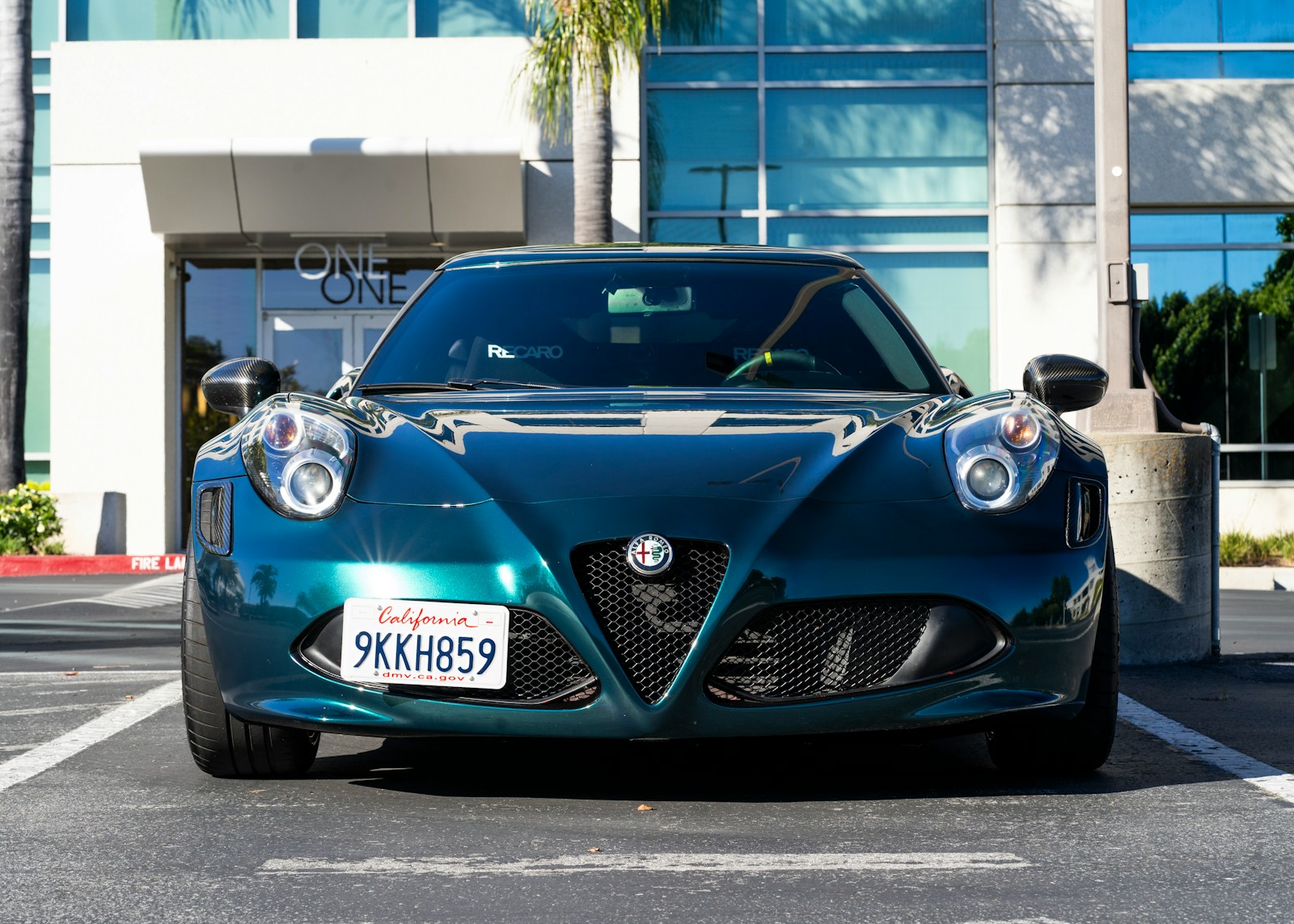

The Alfa Romeo 4C has taken an unusual path through the used market, dropping hard in its early years before stabilizing and then starting to climb again. Over the past five years in particular, its values have shifted from ordinary depreciation toward the kind of resilience usually reserved for low-volume enthusiast cars. Tracking that change reveals how a carbon tub, limited supply, and a maturing fan base can quietly reshape what a small Italian sports car is worth.
From launch pricing to today’s baseline
When the Alfa Romeo 4C arrived, it was positioned as an exotic-feeling sports car with a relatively attainable price, and that original sticker still frames how buyers judge it today. The car’s initial MSRP sat in the mid five figures, and that number has become the mental benchmark for many shoppers comparing current asking prices to what early adopters paid. Over time, the market has treated that MSRP as a ceiling for ordinary examples and a reference point for how far the best cars can climb as they age.
Historical tracking of 4C prices shows that the model’s MSRP did not stay completely static, instead edging upward during its production run as options and special versions appeared. Analysis of long term pricing notes that the official price inflated slightly over the car’s life, then used values softened before beginning to recover, with a projected recovery period starting in 2024 that reflects renewed demand for clean cars with documented histories and low mileage, according to an Artificial Intelligence Historical and Projected 4C Price Analysis. That pattern has set the stage for the last five years, where the car’s worth has been defined less by its age and more by how the market now values its unique specification.
Initial Depreciation and the five year trough
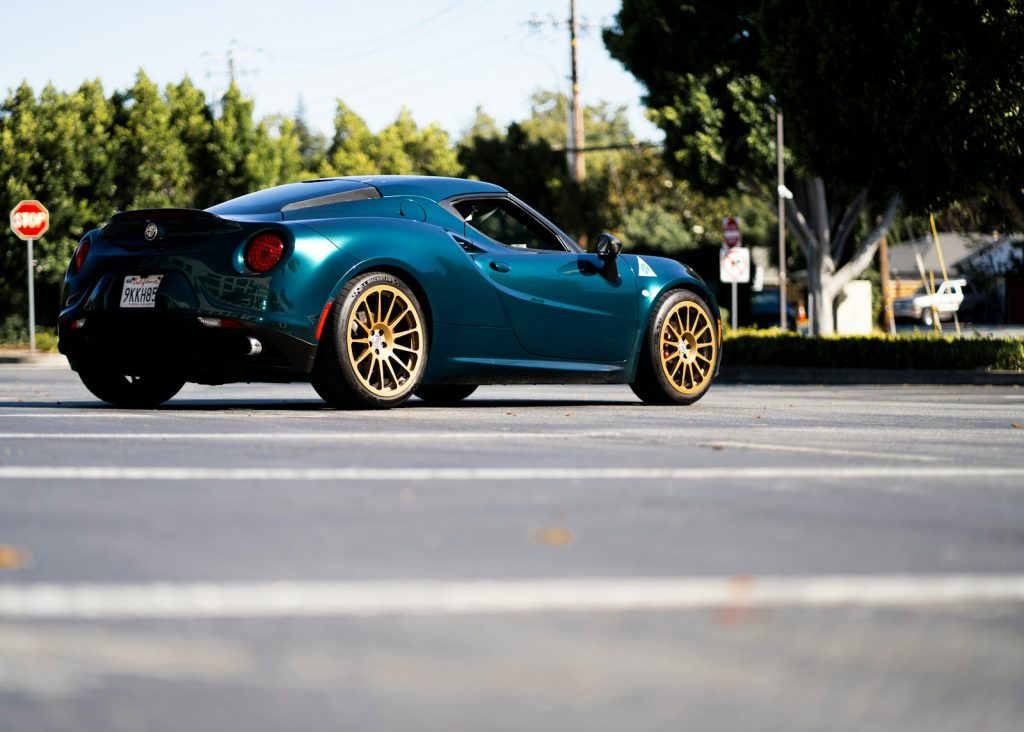
Like most new performance cars, the Alfa Romeo 4C did not escape the steep early drop that hits as soon as a car leaves the showroom. The period identified as Initial Depreciation, running from 2014 through 2020, saw values fall sharply from that original MSRP as early buyers absorbed the cost of novelty and as more examples appeared on the used market. By the time the car had been on sale for several years, the average transaction price for used 4Cs had settled well below what first owners had paid, creating an opportunity window for second owners to step in.
Data compiled in the same pricing analysis shows that this Initial Depreciation phase pushed typical values down from the launch MSRP to around 54,000 dollars by 2022, a figure that captures how far the car slid before stabilizing, according to the Initial Depreciation (2014–2020) breakdown. That trough is important when looking at the last five years, because many of the cars bought in that window have since held their value or appreciated, turning what looked like a typical depreciation curve into something closer to a plateau followed by a gentle climb.
How five year ownership has actually played out
For people who bought a 4C about five years ago, the financial story has turned out better than many expected for a niche Italian sports car. Instead of continuing to slide, values for well kept examples have proven relatively robust, especially when compared with more common performance models that shed a larger share of their price over the same period. Owners who purchased during the post launch slump have in many cases seen their cars lose very little additional value, and some are now finding that they can sell for close to what they paid.
Reporting on five year ownership notes that the 4C has behaved like a sports car beating the depreciation curve, with fair purchase estimates showing that original owners who held on have not suffered the kind of deep losses that were common early in the 4C’s run, according to an analysis of How Much An Alfa Romeo 4C Has Depreciated In 5 Years. That shift means that a buyer who stepped into a used 4C around 2020 is now sitting on a car whose market value has flattened or even nudged upward, a rare outcome in a segment where five year ownership usually guarantees a sizable financial haircut.
What valuation guides say about current numbers
Independent valuation tools provide a useful snapshot of how the 4C is priced in the real world, and they help quantify the shift from falling asset to relatively stable one. Looking at a specific model year, such as a 2018 Alfa Romeo 4C Coupe 2D, shows how far the car has moved from its original sticker to its present market position. These guides track both what buyers are paying and what dealers are offering on trade, which together reveal whether the car is still sliding or has found a floor.
For the 2018 Alfa Romeo 4C Coupe 2D, one widely used pricing guide encourages shoppers to stay up to date by watching the Fair Purchase Price, and it lists a current trade in value of 29,356 dollars for that configuration, according to the detailed KBB Fair Purchase Price entry. When that figure is set against the original MSRP, it confirms that the heaviest depreciation has already occurred, and that recent years have been more about modest adjustments than dramatic drops, especially for cars with clean histories and reasonable mileage.
Why prices have started to rise again
Over roughly the last five years, the Alfa Romeo 4C has shifted from a depreciating used car into a low volume specialty model that is beginning to attract collectors. Several factors are driving that change, starting with the car’s unusual construction and driving experience, which have no direct replacement in the current Alfa Romeo lineup. As more buyers realize that there will not be another small carbon tub Alfa Romeo in the near term, demand for existing cars has firmed up.
Market observers tracking 4C transactions note that prices have not exploded to speculative levels, but they have begun to rise, with figures showing that asking prices have edged upward while still remaining in roughly the same range for most trims, according to a detailed buyers guide. That pattern suggests a market that is tightening rather than overheating, where good cars are a little more expensive than they were a few years ago, but still accessible enough that enthusiasts can justify paying a premium for the car’s distinctive character.
Production history and the scarcity effect
The 4C’s value trajectory over the last five years cannot be separated from its production story, which has left the market with a finite pool of cars. The Alfa Romeo 4C was introduced to the world at the Geneva Motor Show, and its combination of a lightweight carbon tub and compact turbocharged engine immediately marked it out as something different from mainstream sports cars. That early positioning as a mini supercar has only grown more pronounced as time has passed and as other manufacturers have moved away from similar construction methods at this price point.
Pricing analysis that looks back to the launch notes that the MSRP inflated slightly over the production run, then values softened before starting to climb again, and that prices have continued to increase since then as the car has aged out of regular production and into modern classic territory, according to a report on how The Alfa Romeo 4C is Rising Slowly, But Surely. With no new cars entering the market, each accident, track incident, or heavily modified example effectively reduces the supply of stock vehicles, a dynamic that has helped underpin the firmer pricing seen since the early 2020s.
How the 4C compares with other sports cars
When set against other sports cars of similar age and price, the Alfa Romeo 4C’s last five years look unusually strong. Many rivals from larger brands have continued to depreciate in a more linear fashion, reflecting higher production numbers and a steady stream of newer models that push older ones down the ladder. The 4C, by contrast, has benefited from its niche status and from the absence of a direct successor, which has allowed it to hold a more stable position in the enthusiast hierarchy.
Analysts who have examined five year depreciation patterns point out that the 4C’s recent performance resembles that of a sports car beating the depreciation curve, with fair value estimates showing smaller losses for long term owners than might be expected for a low volume Italian coupe, as highlighted in the review of How Much An Alfa Romeo 4C Has Depreciated In Years. That relative strength does not mean the car is immune to market swings, but it does suggest that its combination of rarity, design, and driving feel has insulated it from the steeper declines seen in more common performance models.
Owner behavior and mileage shaping resale
Another reason the 4C has held its ground over the last five years is how owners use the car. Many treat it as a weekend toy rather than a daily driver, which keeps mileage low and condition high, two factors that strongly support residual values. The car’s firm ride, compact cabin, and focused nature naturally limit its appeal as a commuter, which in turn means that a large share of the used market consists of lightly used examples that still feel special.
Guides that track depreciation for specific trims, such as the 2018 Alfa Romeo 4C Coupe 2D, implicitly capture this behavior in their numbers, with the recorded trade in value of 29,356 dollars reflecting a pool of cars that have not been worn down by heavy use, as shown in the Alfa Romeo Coupe Depreciation data. That pattern helps explain why the 4C’s depreciation curve has flattened in recent years, since buyers are often stepping into cars that feel closer to new than their age would suggest, and are therefore willing to pay stronger money than they might for a higher mileage alternative.
What the next five years are likely to look like
Looking ahead, the last five years of pricing movement offer some clues about where the Alfa Romeo 4C might go next. The car has already passed through its steepest depreciation and has entered a phase where values are guided more by enthusiast demand than by age alone. If current trends continue, the most desirable examples, such as low mileage coupes with original paint and minimal modifications, are likely to see further gentle appreciation, while higher mileage or heavily altered cars may simply hold steady.
Forward looking models that build on historical data suggest that the recovery period starting in 2024 could extend into the coming years, with prices either remaining firm or ticking upward as the car’s reputation as a modern classic solidifies, according to projections in the Artificial Intelligence Historical and Projected 4C Price Analysis. For current and prospective owners, that implies a relatively low risk of further heavy depreciation over the medium term, provided the broader performance car market remains stable and the 4C’s unique appeal continues to resonate with buyers who want a compact, carbon tub Alfa Romeo that stands apart from more conventional sports cars.
More from Wilder Media Group: