

The design Hyundai is not being subtle about
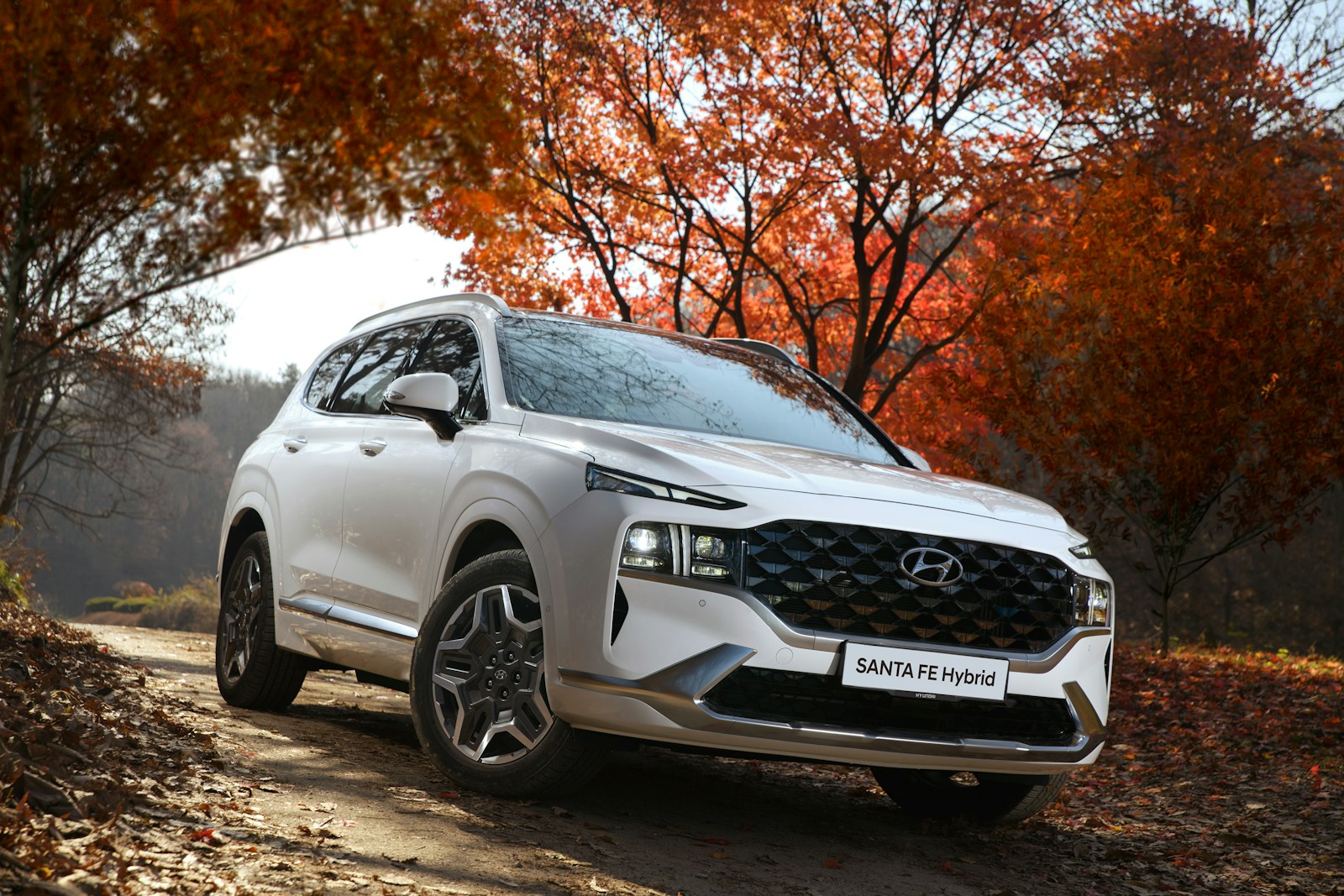
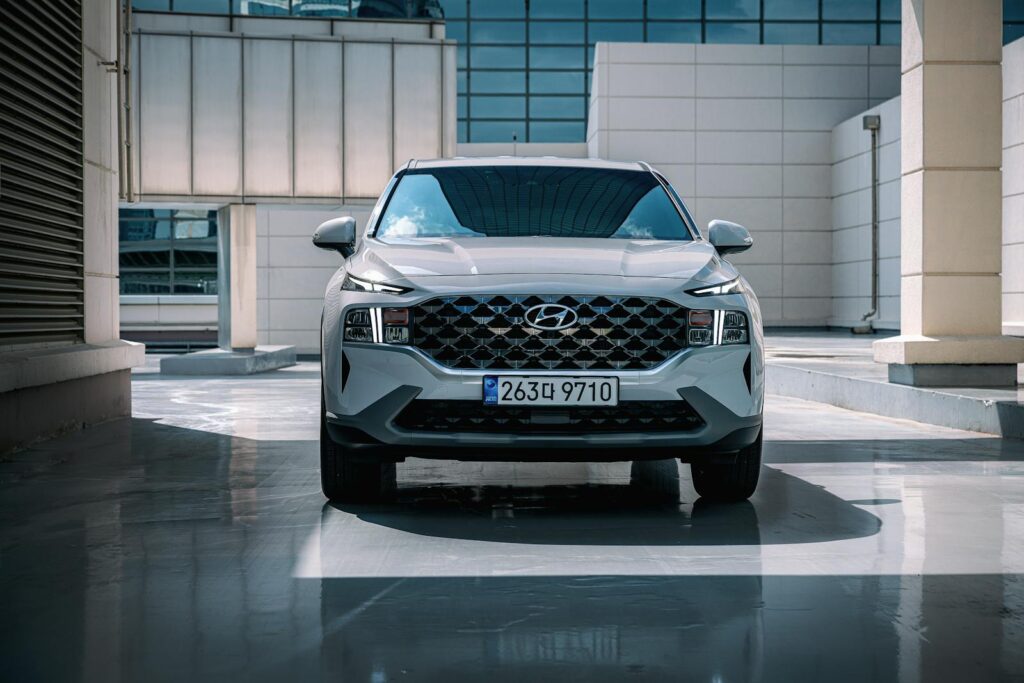
Hyundai did not stumble into the Land Rover resemblance. The company’s design team, led by global chief Luc Donckerwolke, deliberately pushed the Santa Fe toward a bolder, more architectural shape for this generation. Flat body sides, stacked lighting elements, and a tall, upright greenhouse give the SUV a presence that Car and Driver and other outlets have directly compared to the Range Rover and Defender.
The proportions are not just for show. Those upright pillars open up headroom in all three rows, and the squared-off tail creates a wider cargo opening than the outgoing model offered. Hyundai’s own design brief for the Santa Fe emphasizes “bold lines that stretch from one side of the body to the other,” a philosophy that trades the soft, anonymous curves of earlier generations for something that registers in a parking lot full of crossovers.
What families actually get inside
The 2026 Santa Fe seats up to seven when equipped with the optional third row and a second-row bench. Buyers who prefer more breathing room can swap the bench for captain’s chairs, dropping capacity to six but adding a walk-through aisle that makes car-seat installation far less acrobatic. According to Edmunds, cargo space behind the third row measures roughly 11.4 cubic feet, expanding to nearly 75.5 cubic feet with both rear rows folded. That is competitive with the Toyota Grand Highlander and noticeably more than the Kia Telluride offers with its seats down.
The third row is best suited to children or shorter adults, a common trade-off in this class. But the second row is genuinely spacious, with available heated and ventilated seats, generous legroom, and enough width for three across in a pinch. Deep door pockets, a large center console bin, and a flat load floor round out the practical details that matter on a 10-hour drive to the coast.
Two powertrains, one clear efficiency winner
Hyundai offers the Santa Fe with a 2.5-liter turbocharged four-cylinder producing 277 horsepower in standard form, paired with an eight-speed dual-clutch automatic. The hybrid variant combines a 1.6-liter turbo-four with an electric motor for a combined 232 horsepower and an EPA-estimated 33 mpg combined in front-wheel-drive configuration, according to fueleconomy.gov data for the current powertrain. All-wheel-drive versions dip slightly but still hover around 32 mpg combined, a strong number for a vehicle this size.
The turbo-only model is quicker off the line, but the hybrid is the volume play. It delivers enough power for merging and passing while cutting fuel stops on long family trips. Both powertrains route through Hyundai’s HTRAC all-wheel-drive system when optioned, which biases torque to the rear wheels as needed and adds confidence on wet or loose surfaces.
How it drives day to day
On the road, the Santa Fe rides with a composure that surprised several reviewers. MotorTrend noted that the chassis feels settled over broken pavement and that wind noise is well-managed at highway speeds, qualities that matter more to families than a quick zero-to-60 time. Steering is light enough for parking-lot maneuvers but firms up at speed, and the brakes are progressive rather than grabby, a detail that helps when a car seat is in the back.
The boxy shape does create slightly more aerodynamic noise than a sleeker crossover might, but Hyundai has compensated with thicker glass and additional sound deadening. The net effect is a cabin that stays conversational even at 75 mph, which is exactly where most family road trips live.
Tech and safety that justify the comparison
Inside, a dual 12.3-inch screen setup spans the dashboard, combining a digital instrument cluster with a central infotainment display. Wireless Apple CarPlay and Android Auto are standard, and a Bose premium audio system is available on upper trims. The interface is responsive and logically organized, a step up from the busier layouts Hyundai used a few years ago.
On the safety front, every 2026 Santa Fe comes with forward-collision avoidance assist, lane-keeping assist, blind-spot collision avoidance, rear cross-traffic alert, and adaptive cruise control with stop-and-go capability. The Insurance Institute for Highway Safety awarded the current-generation Santa Fe a Top Safety Pick+ rating, its highest designation, based on strong crashworthiness scores and effective front-crash prevention across tested scenarios.
Warranty coverage that still leads the pack
Hyundai backs the Santa Fe with a five-year, 60,000-mile basic warranty and a 10-year, 100,000-mile powertrain warranty for the original owner. Subsequent owners receive a five-year, 60,000-mile powertrain warranty, a detail worth noting for anyone buying used. Complimentary maintenance covering oil changes and tire rotations is included for the first three years or 36,000 miles.
That coverage outpaces Toyota (five-year, 60,000-mile powertrain), Ford (five-year, 60,000-mile powertrain), and matches Kia’s identical 10-year, 100,000-mile terms. For families planning to keep a vehicle through multiple stages of kid-hauling, the long powertrain warranty reduces the risk of a surprise repair bill right when college tuition starts looming.
The Land Rover question: looks without the price
The visual overlap with Land Rover is impossible to ignore, and Hyundai is clearly comfortable with the comparison. But the financial gap is enormous. The 2026 Santa Fe starts around $35,000 for a well-equipped SE trim, while a base Land Rover Defender 130 lists above $70,000 before options, according to manufacturer pricing. A loaded Santa Fe Calligraphy with the hybrid powertrain and all-wheel drive tops out near $50,000, still well under a base Defender.
What buyers give up is the Defender’s off-road hardware (locking differentials, adjustable air suspension, wading depth) and the cachet of the badge. What they gain is better fuel economy, a longer warranty, lower maintenance costs, and a third row that the Defender 130 also offers but charges a steep premium for. For the vast majority of families whose toughest terrain is a gravel campsite, the Santa Fe covers the brief.
More from Wilder Media Group: