
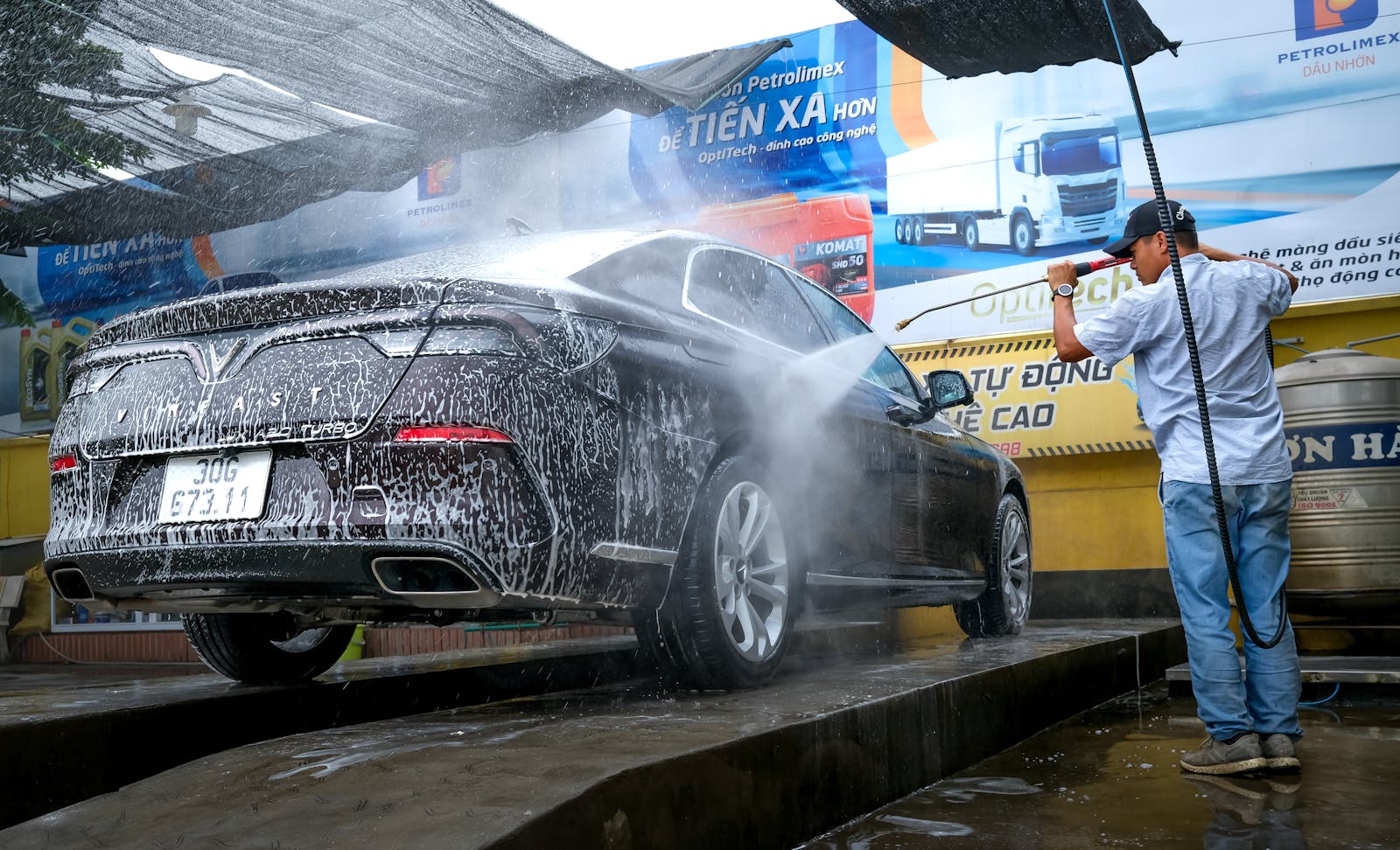

It’s the kind of small annoyance that somehow feels way bigger than it should. You pull up, you’ve got the membership sticker right there on your windshield like a little badge of responsibility, and you’re expecting the usual smooth “welcome back” moment. Instead, the attendant leans in, squints, and hits you with: “Yeah… that doesn’t apply at this location.”
That’s exactly what happened to a driver this week, sparking a familiar debate online: if the logo is the same and the signs look identical, shouldn’t the membership be honored everywhere? The short version is that car wash “brands” can be a lot more complicated than they look from the driver’s seat.
The moment everything stopped feeling “unlimited”
According to the driver, the sticker had been on the windshield for months—same color scheme, same brand name, same everything. They’d used it without issue at their usual spot, and assumed a different location across town would be a no-brainer. The attendant, though, didn’t even hesitate: not valid here.
What really stung wasn’t just being turned away, but the fact that the place looked like a twin of the original. Same menu board, same promotional language, and the same cheery branding that suggests one big happy car-wash family. And yet, the membership might as well have been a punch card from a frozen yogurt shop.
How can the branding match but the membership not?
Here’s the annoying-but-true explanation: a lot of car washes operate under a mix of corporate-owned locations, franchises, and “affiliated” sites that license a name or buy equipment and signage packages. To customers, that reads as one chain. Behind the scenes, it can be more like a neighborhood of cousins who share a last name but don’t share a bank account.
Memberships are often tied to specific point-of-sale systems and databases. If one site runs on System A and another is on System B—or if they’re owned by different entities—the sticker is basically a suggestion, not a key. That doesn’t make it feel any less ridiculous at the gate, but it’s usually the reason.
The fine print nobody reads (until they’re stuck at the entrance)

Most “unlimited” wash memberships come with a quiet little asterisk: valid at participating locations. That’s a phrase doing a lot of heavy lifting. Sometimes it means “all locations in our network,” and sometimes it means “the one place you signed up, plus maybe two others if the manager is feeling generous.”
The driver said they never remembered seeing that distinction when they signed up, which is relatable because the pitch is usually fast: pick a tier, sign up, drive clean forever. The terms might be on a website, on the back of a receipt, or displayed in a font size typically reserved for allergy warnings on gum. It’s not exactly designed for clarity.
Why attendants get stuck in the middle
If you’ve ever argued with an attendant about a membership, you know it’s a weird dynamic. They didn’t design the policy, they didn’t write the signage, and they definitely don’t control the software that decides whether your car is blessed today. Most attendants are just trying to keep the line moving and avoid turning a Tuesday morning into a hostage negotiation.
That said, customers aren’t wrong to feel thrown. When branding implies universality, the expectation is pretty reasonable: a membership should travel. The frustration usually isn’t “I demand a free wash,” it’s “why does this look like the same company if it isn’t?”
The bigger trend: subscriptions everywhere, clarity… not so much
Car wash memberships have exploded because they’re great business. Predictable monthly revenue, customer loyalty baked in, and people feel like they’re “saving” money as long as they go often enough. The sticker on the windshield is basically the physical symbol of the subscription era—your car’s version of a streaming password.
But subscriptions only feel good when they’re simple. When customers have to memorize which locations count, or discover the rules only when they’re blocked at the entrance, it starts to feel less like convenience and more like a trick. And nobody wants to feel tricked over something as low-stakes as soap and spinning brushes.
What to do if this happens to you
First: ask calmly whether the location is corporate-owned, franchised, or simply “not participating.” Those words matter, because “not participating” sometimes means there’s a way to manually honor it—or at least offer a discount—while “different owner/system” can mean their hands are tied. It’s also worth asking if there’s a sister location nearby that does accept your plan.
Next: pull up your membership confirmation email or app (if there is one) and look for a list of eligible locations. If the company has multiple brands under the same umbrella, make sure the name on your membership matches exactly—some washes have near-identical signage with small differences. And if you signed up in person, check whether the receipt or welcome packet mentions location limitations.
If you feel misled, don’t take it out on the attendant—ask for a manager’s card or customer service contact and follow up with specifics. A helpful approach is: “The branding looks identical, and I assumed it was valid here. Can you clarify where my membership works, and is there a way to switch my plan to a multi-location one?” You’ll get further with that than with a righteous speech delivered beside a tire shine display.
What companies could do better (without spending a fortune)
This problem is surprisingly fixable. Chains and franchise networks could post a simple sign at the entrance: “Memberships sold at other locations may not be accepted here—please check participating locations.” Not glamorous, but honest, and it saves everyone time.
Even better, companies could standardize how they talk about membership coverage: single-location plan versus multi-location plan, with clear pricing. Right now, many places market the dream (“unlimited!”) and tuck the geography into the shadows. If customers understood the deal upfront, fewer people would end up feeling like they’d just tried to pay with Monopoly money.
The takeaway: matching logos don’t always mean matching systems
The driver’s story hit a nerve because it’s so believable. You did the “right” thing, you kept the sticker on, you showed up to a place that looked like the same brand, and you still got told no. It’s a reminder that modern convenience is often held together by separate databases, separate owners, and terms that only show themselves when something goes wrong.
If you’ve got a car wash membership, it’s worth taking two minutes to confirm exactly where it’s valid—especially before you’re in a line of cars with someone behind you who’s already late. And if you’re shopping for a new plan, ask the question that actually matters: “Is this good at all locations, or just this one?” That answer is the difference between unlimited and… well, limited with extra steps.
More from Steel Horse Rides: