
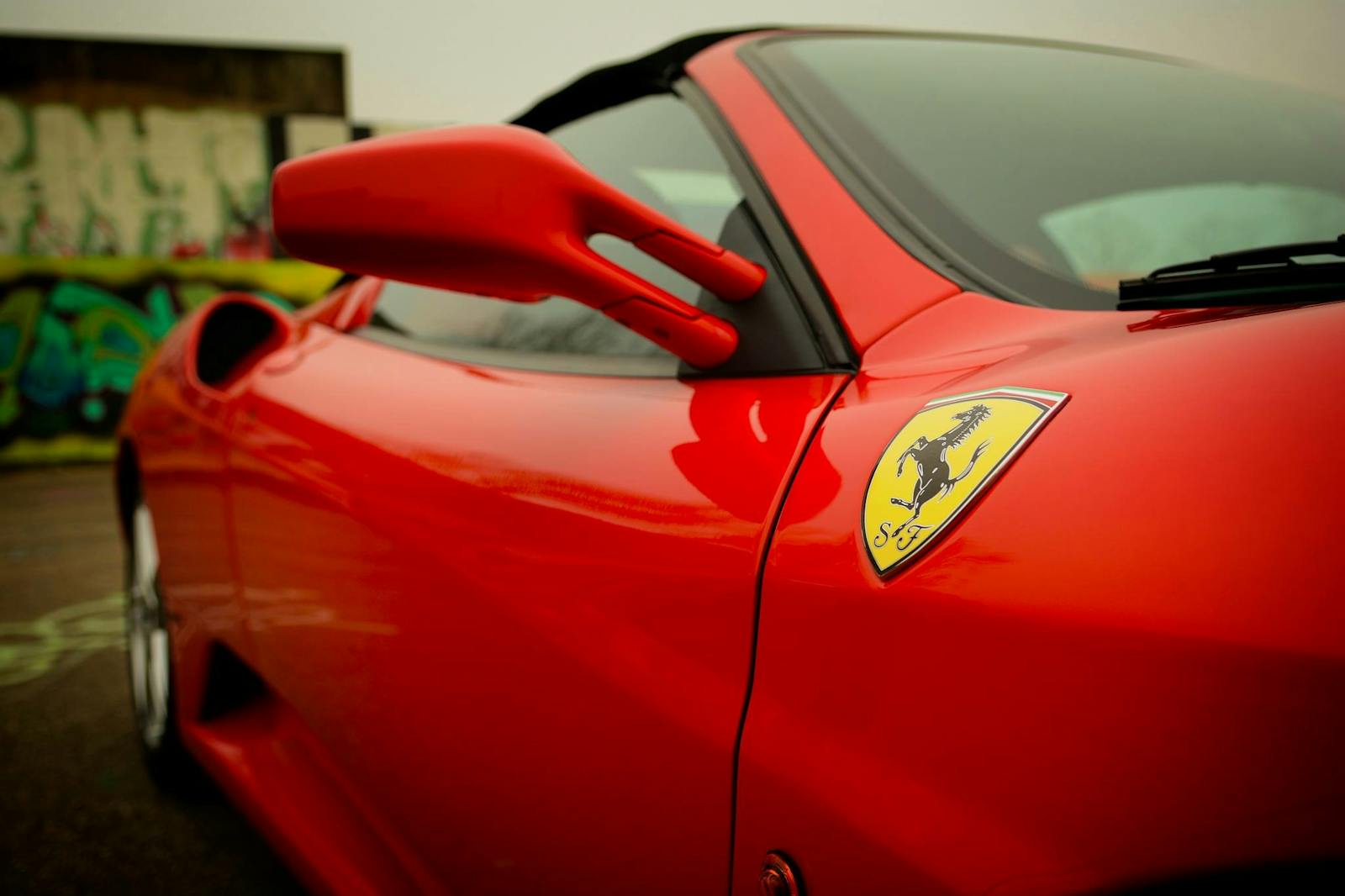

Ferrari has never been shy about spectacle, but some of its most intriguing moves happen quietly in the background, in trademark filings and test mules rather than on motor show stands. The latest hints, from new model codes to evolving design programs, suggest Maranello could be preparing another ultra-exclusive one-off while it reshapes its broader supercar lineup. Taken together, these clues sketch a brand that is trying to satisfy its most devoted collectors and, at the same time, prepare for an electric future without losing its mystique.
Instead of a single smoking gun, the picture emerges from a series of small but telling decisions: fresh internal codes like SC40 and CZ26, a renewed focus on halo cars such as the Ferrari F80, and a methodical rollout of the company’s first EV. For fans reading between the lines, the question is not only whether a new one-off is coming, but what it will say about Ferrari’s next chapter.
Trademarks, Codenames, And The SC40 Mystery

Ferrari has long used cryptic internal codes as the first breadcrumb trail to its future products, and the latest filings are already fueling speculation. The company has registered the names “SC40” and “CZ26,” a move that, on its face, simply protects intellectual property but in practice often foreshadows new models or special projects. In reporting on Ferrari’s latest corporate maneuvers, one analysis framed these registrations as a Secret Move Teases The Next Generation Of Italian Supercars, underscoring how seriously the industry takes even a few letters and numbers from Maranello.
Those codes matter because they sit outside the familiar rhythm of series-production Ferraris, which typically follow a clear lineage of hypercars, supercars, and GTs. A separate report on Ferrari’s naming strategy notes that, while the main line has been built around recurring cycles, the company also maintains a parallel universe of bespoke creations and limited runs that do not fit neatly into that pattern. In that context, the suggestion that a fresh trademark could point to a new one-off is not idle gossip but a logical extension of how Ferrari has used internal designations to signal models outside its conventional lineup.
How One-Offs Fit Into Ferrari’s Modern Playbook
To understand why a code like SC40 sparks so much interest, it helps to look at how Ferrari treats its one-off projects. These cars are not marketing stunts; they are commissioned machines for a single “very important owner,” built through the company’s Special Projects division and often based on an existing platform that is then radically re-bodied. A recent example is the Ferrari SP3JC, a one-off V12 that illustrates how far the brand is willing to go in tailoring a car’s design and character for a single client while still keeping it recognizably Ferrari.
These projects also serve a strategic purpose, acting as rolling laboratories for styling cues and technical ideas that may later filter into series cars. The SP3JC, with its 6.3 litre 769 bhp V12 and bespoke bodywork, showed how Ferrari could reinterpret classic front engined proportions for the modern era while testing appetite for more extroverted, open top designs. When observers now see new codes like SC40 and CZ26 appear alongside hints of future halo models, they are not just guessing about a one-off; they are reading a pattern in which ultra limited cars preview the direction of Ferrari’s broader design language and engineering priorities.
Halo Cars, GTs, And The Shape Of Ferrari’s Next Flagships
Any potential one-off arriving in the near future would not exist in a vacuum, it would sit alongside a new generation of halo cars and GTs that are already redefining Ferrari’s range. The Ferrari F80, described as the company’s sixth halo model, has been singled out as the kind of machine that must be “something special” even by Maranello standards, with a price tag that climbs into the multi million bracket. Coverage of the Ferrari F80 places it among the standout supercars of 2025, reinforcing the idea that Ferrari is using its top tier models to push both performance and exclusivity to new heights.
At the same time, Ferrari is experimenting with a different kind of grand tourer personality through cars like the Ferrari Amalfi. Described in early impressions as “a Ferrari in loafers,” the Amalfi is a sleek two door GT with fastback lines that “whisper” rather than shout, trading some of the brand’s traditional aggression for a more relaxed, long legged character. One review of First Impressions of The Ferrari Amalfi highlights how it balances that softer image with the expected flair, suggesting Ferrari is broadening its design vocabulary. In that landscape, a new one-off could either double down on the wild, track focused side represented by the F80 or explore the more understated, GT flavored direction hinted at by the Amalfi.
EV Benchmarks And The Three Act Electric Debut
Overlaying all of this is Ferrari’s deliberate march toward electrification, which is already shaping how any future one-off might be powered. The company has publicly committed to unveiling its first EV in three distinct stages, opting for a slow reveal rather than a single grand announcement. According to a detailed breakdown of that plan, Ferrari is not dropping the curtain all at once but instead is unveiling its first EV in three acts, with a Tech reveal, an Interior design showcase, and a final performance focused debut.
Behind the scenes, Ferrari is also benchmarking rival technology to make sure its first electric supercar meets expectations. The company has officially purchased a Xiaomi SU7 Ultra for internal benchmarking, a move that signals how seriously it is taking the EV performance race and how closely it is studying competitors’ software, battery management, and chassis integration. Reporting on this acquisition notes that Ferrari has brought the Xiaomi Ultra for testing within its facilities, underscoring that the brand is not relying solely on in house theory. If a new one-off is in the works, it could easily become a showcase for this EV know how, either as a fully electric special or as a hybrid bridge between combustion heritage and electric ambition.
Test Mules, Successors, And Where A One-Off Could Slot In
While the EV program advances, Ferrari is also refreshing its plug in hybrid lineup, which provides another potential foundation for a bespoke car. The upcoming F173M, described as the highly anticipated successor to the SF90 Stradale, has been spotted testing near Maranell with bodywork that appears to blend familiar SF90 cues with sharper, more aggressive detailing. Spy photos of Ferrari’s upcoming F173M suggest it will continue to use a revised version of the SF90’s hybrid powertrain, giving Ferrari a cutting edge, electrified architecture that could easily underpin a future one-off.
That hybrid backbone is important because it offers Ferrari flexibility in how it balances outright performance, emissions targets, and the emotional pull of internal combustion. A one-off based on the F173M could, for instance, push the electric side harder for silent city running while still unleashing a familiar engine note on open roads, or it could go the other way and emphasize the combustion drama while using the electric motors as a torque rich assist. Combined with the clues from SC40 and CZ26, the presence of a new hybrid flagship, a carefully staged EV rollout, and a track record of bespoke projects like the SP3JC all point in the same direction. Ferrari is quietly assembling the pieces for its next statement car, and whether that machine wears a one-off badge or a limited series plate, it is likely to reflect a brand that is trying to honor its past while methodically engineering its future.
More from Wilder Media Group: