

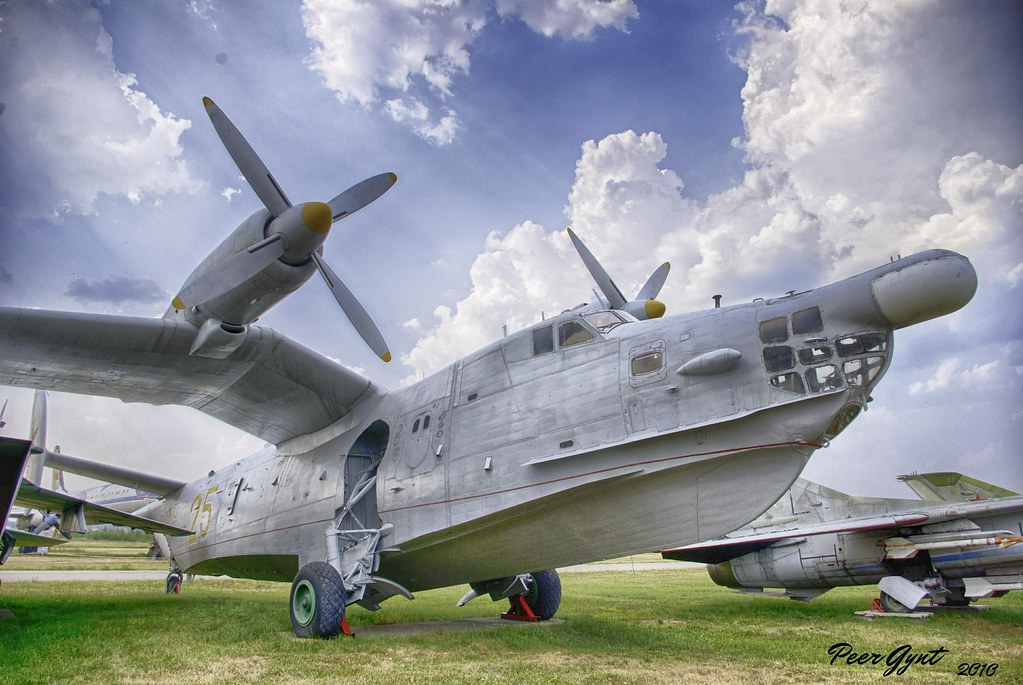
When Italian Typhoons were scrambled over the Baltic to meet a Russian Be-200 amphibious aircraft, it was not the usual cat-and-mouse game between fighters and bombers. It was a rare encounter between cutting-edge interceptors and one of the most unusual jets in military service, a flying boat better known for scooping up water than brushing past NATO airspace. The intercept turned a routine air policing shift into a snapshot of how strange and unpredictable modern deterrence can look at low altitude over cold gray seas.
At first glance, a firefighting amphibian edging toward the Baltic might sound like a curiosity, not a security concern. Yet for the crews sitting alert in northern Europe, any unidentified aircraft moving near NATO’s borders is treated as a live problem until proven otherwise. That is why Italian Typhoons were sent up at speed, why controllers tracked every turn of the Russian Be-200, and why this odd meeting in the sky has drawn so much attention from aviation watchers and defense planners alike.
Scramble over the Baltic: how the intercept unfolded
The intercept began the way most air policing stories do, with radar operators flagging an aircraft that was not squawking the right codes and was edging toward NATO-controlled airspace. Alliance planners rely on a standing network of alert fighters, and in this case it was Eurofighter Typhoons deployed at Ämari that were ordered into the air to meet the approaching contact. According to Nato Air Command, the jets were scrambled to intercept a Russian navy Be-200 aircraft approaching the Baltic Sea, a mission that quickly shifted from routine to noteworthy once the target was identified.
Once airborne, the Italian Typhoons closed the distance, visually identified the aircraft, and then slid into the familiar escort pattern that keeps a close eye on foreign military traffic without escalating the encounter. The Russian Be was flying in international airspace, which meant the job was less about confrontation and more about presence, signaling that NATO was watching and ready. The intercept was described as a successful scramble, a neat shorthand for a mission in which the fighters launched on time, found their target, and stayed with it until the situation was fully understood and the aircraft moved away from the alliance’s immediate neighborhood.
Italian Eurofighters on Baltic duty
For the Italian Air Force, this mission was another reminder that Baltic air policing is no longer a niche deployment but a core part of its contribution to collective defense. Italian Eurofighters have rotated through northern bases for years, yet the sight of Italian markings on Typhoons streaking over the Baltic still underlines how broad the alliance’s footprint has become. Reporting on the intercept notes that Italian Typhoons were on call for both air policing and national defence, a dual role that captures how quickly a quiet shift can turn into a front line of deterrence.
Details shared by regional defense observers add that Italian Eurofighters intercepted an unusual Be-200 amphibious aircraft of the Russian Naval Aviation in the Baltic On January, underscoring how southern European air forces are now deeply woven into the security fabric of the north. For pilots used to training over the Mediterranean, the Baltic’s tight airspace and constant Russian activity demand a different rhythm, one where scrambles can come at any hour and the next radar track might be anything from a bomber to, as in this case, a rare amphibious jet.
Why the Be-200 is such an odd visitor
What turned this intercept from just another entry in a logbook into a talking point was the type of aircraft involved. The Beriev Be-200 is not a bomber or a classic maritime patrol plane but the only amphibious jet aircraft in the world, a flying boat that can land on runways as well as bodies of water. Its primary role is as a firefighting aircraft, a platform designed to scoop up huge volumes of water and drop them on wildfires, a far cry from the sleek fighters that met it over the Baltic. As one technical overview notes, the primary role of the jet, which first flew in 1998 and entered operational use in 2003, is a firefighting aircraft also known for its ability to operate from both runways and water.
That unusual profile explains why aviation watchers sat up when they heard that a Be-200 had wandered into the Baltic’s crowded skies. The Russian Navy operates just a handful of multirole jet-powered amphibious flying boats, and The Russian Navy is known to keep only a very small fleet of these aircraft in service. That scarcity means each appearance is noticed, logged, and dissected, especially when it happens near NATO territory rather than over a remote reservoir or a domestic training range.
How rare is the Russian Navy’s amphibious fleet?
Part of the intrigue around this intercept comes from just how few Be-200s are actually flying under military colors. Analysts tracking Russian procurement point out that The Be is operated by the Russian Navy, although in very low numbers, with some estimates putting the total fleet at around 12 such aircraft. One assessment notes that The Be is a rare bird in naval aviation terms, a specialized platform that sits on the fringes of the order of battle rather than at its core.
That scarcity is why a single example moving near NATO airspace becomes a story in itself. The Russian Navy operates just a handful of multirole jet-powered amphibious flying boats, and While such close encounters regularly occur in the region, what makes this intercept noteworthy is the fact that the Beriev Be-200 is so rarely seen in that role. When only a small number of airframes exist, each deployment hints at how Moscow is choosing to use its niche assets, whether for training, signaling, or quietly testing how NATO responds.
NATO’s air policing posture and what it signals
For NATO, the intercept was less about the specific type of aircraft and more about proving that the alliance’s air policing posture along its eastern flank is as sharp as advertised. The mission underscored NATO’s continued air policing posture along its eastern flank amid sustained Russian military aviation activity, a reminder that the alliance treats every unidentified approach as a live test of its readiness. Reporting on the episode stresses that the scramble was handled by Italian Eurofighter jets, and that NATO used the intercept to reinforce both deterrence and air safety.
Behind the scenes, this kind of mission is also about avoiding miscalculation. Alliance planners know that Russian aircraft, whether bombers or amphibious jets, will continue to probe the edges of NATO airspace, and the safest response is a predictable, professional intercept that leaves no room for misunderstanding. That is why the Alliance’s Quick Reaction Alert to Escort Russian Navy Amphibious Aircraft, sending a pair of Italian Air Force fighters to meet the Be-200 and guide it away from any potential misunderstanding near the Baltic Sea.
Russian Naval Aviation’s playbook in the Baltic
From the Russian side, sending an amphibious aircraft into the Baltic’s busy air corridors fits into a broader pattern of keeping NATO guessing. Russian Naval Aviation has long used the region as a stage for bomber patrols, maritime surveillance flights, and the occasional surprise appearance of more exotic platforms. In this case, observers noted that the intercepted aircraft belonged to Russian Naval Aviation, which suggests the flight was part of a naval pattern of activity rather than a civilian or ad hoc mission.
That pattern has been visible in other recent operations as well. Russian bomber planes have patrolled over the Baltic in flights that are as much about geopolitics as they are about training, with commentators linking such missions to broader signaling between Russia and NATO. One widely shared clip highlighted the timing of the and framed it squarely in the context of Russia, NATO, and Geopolitics, reinforcing the idea that even a lone amphibious jet can be part of a larger messaging campaign when it skirts the alliance’s borders.
From firefighting to front line: the Be-200’s dual identity
What makes the Be-200 such a fascinating visitor to the Baltic is the tension between its civilian-friendly image and its military utility. On paper, it is a firefighting workhorse, a jet that can scoop up water from lakes or seas and dump it on burning forests, a role that has earned it a reputation as a life-saving platform. Yet the same design that lets it operate from water also makes it useful for maritime patrol, search and rescue, and even anti-submarine roles, especially when operated by a navy that is comfortable blurring the lines between civilian and military tasks. The Russian navy Be-200 is therefore more than just a flying fire engine, it is a flexible tool that can be adapted to different missions depending on what the Kremlin needs on a given day.
That dual identity is part of why NATO treats it with the same caution it would reserve for a more obviously military aircraft. When a Be-200 approaches alliance airspace, controllers cannot assume it is on a benign mission, particularly when it is flown by naval crews and routed through sensitive corridors. The fact that the Russian navy Be-200 was intercepted by Typhoons while approaching the Baltic Sea illustrates how quickly a platform built for disaster response can find itself at the center of a strategic stare-down.
Quick Reaction Alert in practice
For the pilots sitting on alert, the Be-200’s quirks matter less than the stopwatch. Quick Reaction Alert is built on the idea that fighters can be airborne within minutes of a scramble order, and that they can reach any potential intruder before it gets too close to sensitive airspace. In this case, the Alliance’s Quick Reaction Alert Forces Scrambled to meet the amphibious jet, with a pair of Italian Air Force fighters climbing fast to intercept. The description of the mission notes that Italian Air Force crews were the ones who executed the intercept, putting theory into practice in the cold air over the Baltic Sea.
Once they reached the target, the Typhoons settled into a familiar choreography: approach from a safe angle, identify the aircraft visually, establish radio contact if possible, and then fly alongside to monitor its path. The goal is not to force the other aircraft to land or turn back unless it crosses a hard line, but to make sure there are no surprises. That is why Alliance planners emphasize that their Quick Reaction Alert Forces Scrambled to Escort Russian Navy Amphibious Aircraft, a phrasing that highlights the escort role rather than any attempt to push the Be-200 into a confrontation it was not already seeking.
What this odd intercept says about Baltic tensions
Strip away the novelty of an amphibious jet and the intercept fits neatly into the broader story of rising tension and constant contact over the Baltic. NATO and Russia now operate in a kind of permanent low-level standoff, with aircraft, ships, and ground units all watching each other from just outside the lines that would trigger a crisis. The fact that a firefighting amphibian like the Be-200 can become part of that dance shows how blurred the edges of modern military competition have become. When Italian Typhoons intercepted the Russian Navy Be-200, they were not just ticking a box on an air policing checklist, they were participating in a rolling conversation about where the lines are and who gets to approach them.
At the same time, the episode is a reminder that even in a crowded and tense region, professionalism still matters. Both sides managed the encounter without drama, with the Be-200 continuing its flight and the Typhoons returning to base once their job was done. For NATO, the intercept is a useful case study in how to handle unusual aircraft types without overreacting, while for Moscow it is another data point on how quickly and calmly the alliance responds. In that sense, the sight of sleek fighters escorting a bulky amphibious jet over the Baltic is less an oddity and more a snapshot of how twenty-first century security looks when it plays out in real time at a few hundred knots.
More from Wilder Media Group: