

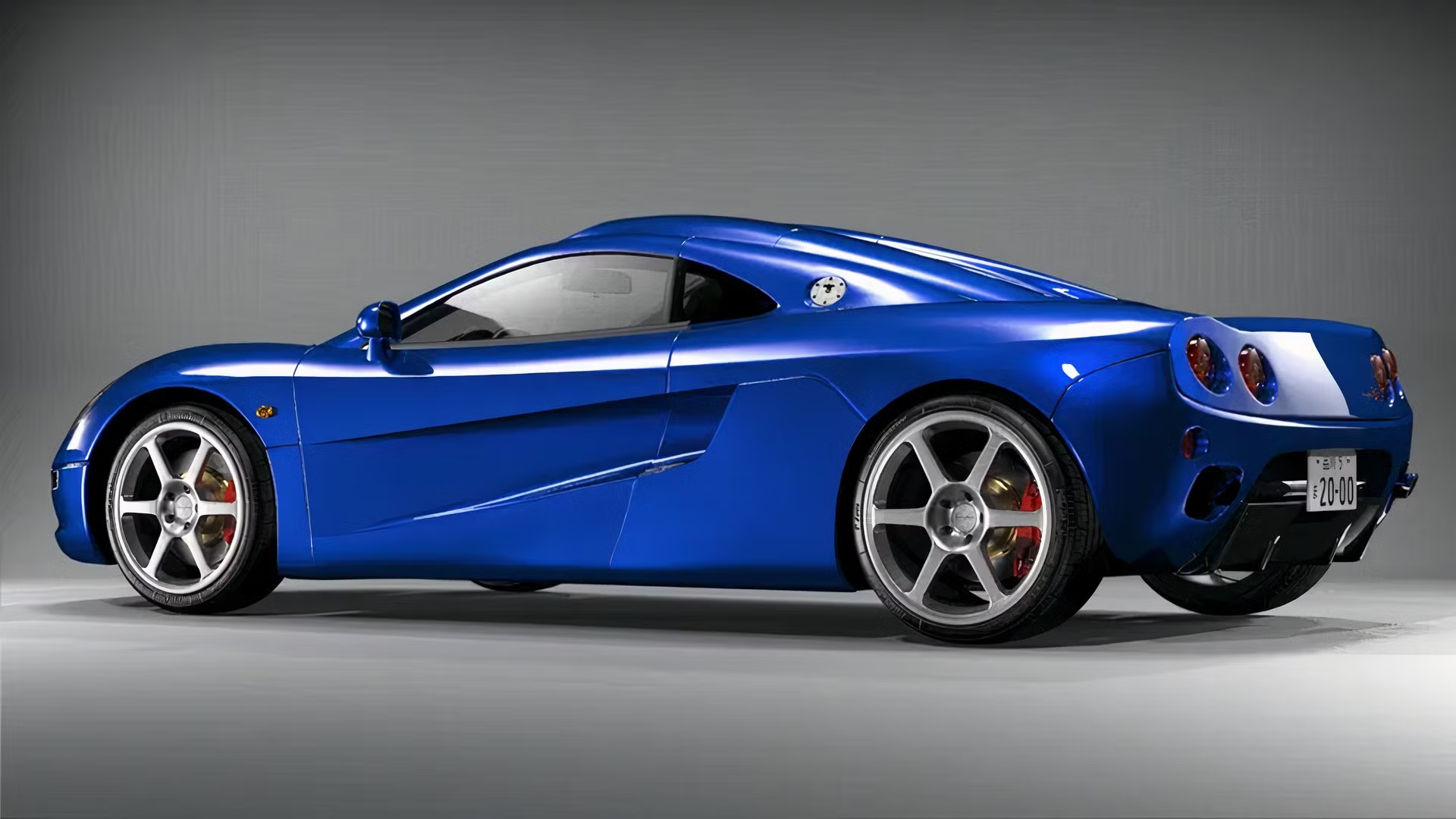
Japan spent the 1990s and early 2000s quietly turning out some of the sharpest performance cars on the planet, but one wild project pushed so far past the line that it never really got a chance. Bred to stare down America’s Chevrolet Corvette and Europe’s finest, the Tommykaira ZZ II was light, brutal, and, by most accounts, a little bit unhinged. It was exactly the kind of extreme machine enthusiasts dream about, and exactly the kind of car that makes risk-averse executives break into a cold sweat.
On paper, it looked like Japan’s clean shot at a homegrown supercar that could hang with a Dodge Viper or a Porsche 911 Turbo. In reality, the ZZ II’s mix of featherweight construction, huge power, and knife‑edge handling made it so intimidating that it never reached full production. The car was not just fast; it was unforgiving, and that is a tough sell when you are trying to move units rather than win bench‑racing arguments.
The wild formula behind Japan’s would‑be Corvette killer
The Tommykaira ZZ II started from a simple idea: beat the established sports car elite by stripping weight and cranking power, instead of relying on luxury or electronic safety nets. The company had already dipped its toes into performance with earlier projects, then set its sights on building a supercar that could run with the Corvette, Dodge Viper, and Porsche 911 Turbo, a goal that pushed the engineering brief into aggressive territory. That ambition is laid out in detail in reporting on Tommykaira, which describes how the brand moved from tuning to chasing the big names outright.
To make that leap, the ZZ II leaned on a lightweight chassis, a compact body, and a powertrain tuned far beyond what most road cars of its size attempted. The focus was on creating a machine that felt more like a race car with plates than a grand tourer, which meant minimal concessions to comfort and a setup that rewarded skill more than it protected mistakes. Coverage of the car’s specification highlights how this lightweight, beast of combination gave it enormous potential, but also set the stage for a car that could easily overwhelm drivers who were used to more forgiving performance machines.
Too fast, too sharp, and ultimately too risky to sell
That same purity is what ultimately made the ZZ II a nightmare from a business perspective. For a brand hoping to grow beyond niche status, building a car that was thrilling in the hands of experts but terrifying at the limit for everyone else was a serious problem. Reporting on the project notes that, for a company in that position, the car’s behavior at the edge of grip made terrifying at the, which is exactly the kind of phrase that keeps legal departments and insurers awake at night.
In an era when stability control and layered driver aids were quickly becoming standard on serious performance cars, the ZZ II’s raw character looked increasingly out of step with where the market was heading. The car’s extreme setup might have been perfect for a track toy or a limited competition special, but turning it into a road‑legal product meant accepting a level of liability that a small outfit could not easily absorb. Detailed accounts of the project describe how this too‑dangerous reputation effectively boxed the car out of mass production, even as its numbers and design kept enthusiasts fascinated.
How a cult hero slipped through the cracks
Like happens with so many ambitious performance projects, the ZZ II ended up as a victim of timing, money, and market reality. The 1990s and early 2000s were packed with underdog sports cars that promised to shake up the establishment, only to be sidelined when the costs of certification, safety, and marketing came due. Analysis of the car’s fate points out that, as with other niche efforts, the ZZ II struggled to move from prototype buzz to a sustainable business case, a pattern summed up in coverage that notes how many such projects never make it past the dream stage.
That leaves the Tommykaira ZZ II in a strange place: a car that, on merit, could have stood shoulder to shoulder with the Corvette and its European rivals, yet never got the chance to prove it in showrooms or on public roads in meaningful numbers. Enthusiasts still look back at the concept as a kind of alternate‑history chapter in Japan’s performance story, a moment when the country’s answer to the Corvette went so hard on speed and purity that it priced itself out of reality. Later deep dives into the car’s design and intent underline how much potential was left on the table, and how thin the line can be between a legendary showroom success and a cult icon that never quite made it.
More from Wilder Media Group: