
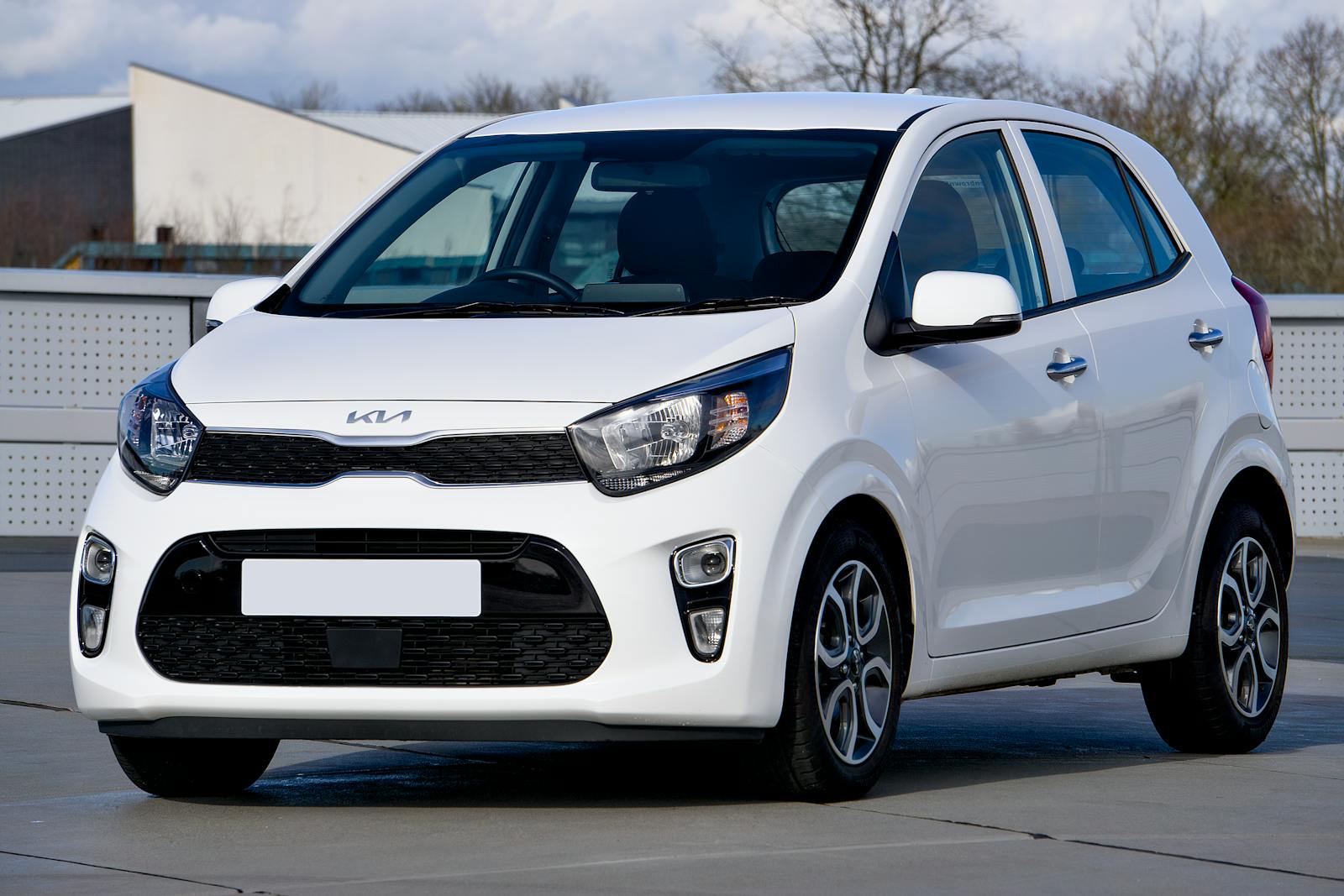

The city car segment has been hollowed out over the past five years. The Volkswagen up! is gone. The Peugeot 108 and Citroën C1 bowed out after 2021. The Škoda Citigo, Suzuki Celerio, and Ford Ka+ have all quietly disappeared from price lists. Even Smart abandoned the micro-car concept entirely, relaunching as a maker of compact electric SUVs. Yet Kia keeps building the Picanto, and the latest version of its smallest hatchback makes a surprisingly strong argument that the cars the industry abandoned are exactly the ones many drivers still need.
City cars are vanishing, but the need hasn’t gone anywhere
The exodus has been driven by economics, not by a sudden drop in demand for small cars. Margins on sub-€15,000 hatchbacks are razor-thin, and meeting tightening Euro 7 emissions standards costs roughly the same per vehicle whether it’s a city car or a large SUV. Manufacturers have followed the money toward crossovers, where higher sticker prices absorb those compliance costs more easily.
But urban congestion hasn’t eased, parking spaces haven’t grown, and fuel prices across Europe remain elevated. According to ACEA data, the A-segment (mini cars) accounted for just 5.3% of European new-car registrations in 2024, down from roughly 8% five years earlier. The buyers didn’t vanish; many were simply pushed into larger, more expensive vehicles because the small ones stopped being offered. The Picanto is one of the last cars standing in that space.
What Kia has done with the current Picanto
The facelifted Picanto, which arrived in European showrooms during 2024 as a model-year 2025 car, is not a token effort. Kia gave it the brand’s current “Opposites United” design language: a reshaped front end with the signature tiger-nose grille, new LED daytime running lights, and a rear that borrows cues from the larger Ceed hatchback. It looks like part of the family rather than a leftover from a cheaper era.
Under the bonnet, the core powertrain in most European markets is a 1.0-litre three-cylinder petrol engine producing 66 bhp, paired with either a five-speed manual or a four-speed automatic. A 1.2-litre four-cylinder with 83 bhp is available in selected trims and markets. Neither engine will pin you to the seat, but both are tuned for the kind of driving the Picanto actually does: short urban hops, school runs, and the occasional motorway merge.
Inside, the cabin has been meaningfully upgraded. Even mid-range trims now include an 8-inch touchscreen with Apple CarPlay and Android Auto, a digital instrument cluster, and a suite of active safety systems including autonomous emergency braking, lane-keeping assist, and rear parking sensors. A few years ago, that equipment list would have been ambitious for a car one class above.
Driving in the city: where the Picanto earns its keep
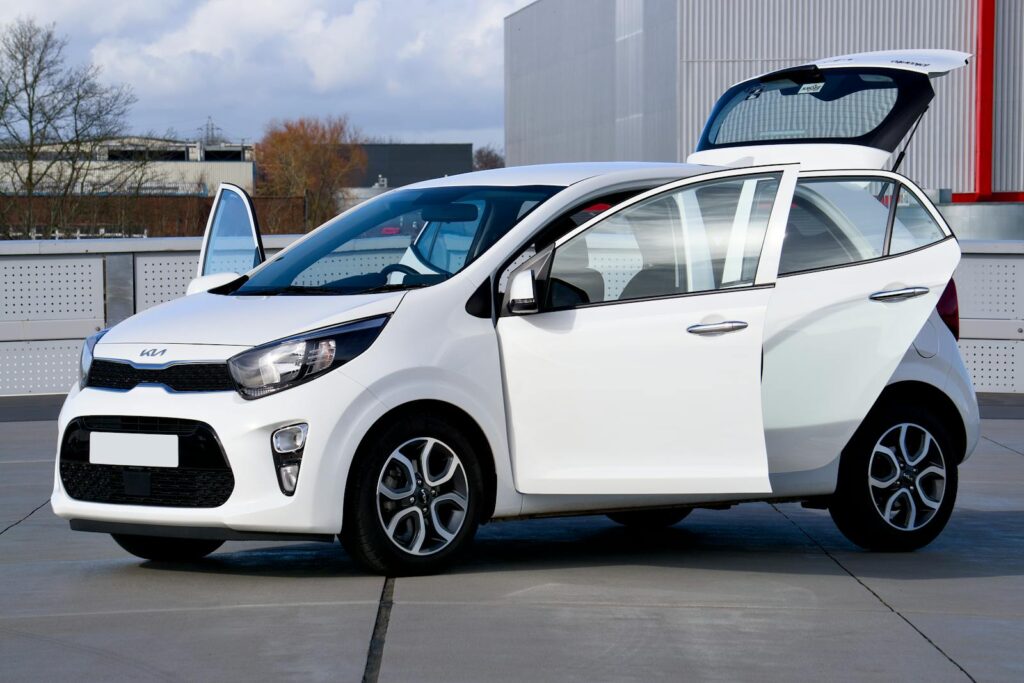
At 3,595 mm long and with a turning circle of just 9.4 metres, the Picanto is built for the parts of driving that frustrate owners of bigger cars. Parallel parking becomes a non-event. U-turns on narrow residential streets happen without a three-point manoeuvre. Threading through tight lanes in older European city centres feels natural rather than nerve-wracking.
The light steering and soft suspension tune won’t excite anyone on a B-road, but in stop-start traffic they reduce fatigue noticeably. The clutch on the manual is forgiving, and the elevated seating position (relative to older city cars, though still lower than any crossover) gives reasonable forward visibility. For the daily commute most owners actually do, the Picanto is more pleasant to drive than many cars costing twice as much, simply because it fits the environment.
Boot space is 255 litres with the rear seats up, which is enough for a weekly grocery shop or a carry-on suitcase. Fold the rear bench and that expands to 1,010 litres. It’s not cavernous, but it’s genuinely usable in a way that earlier city cars often weren’t.
Tech and comfort without the SUV bulk
The interior quality gap between city cars and mainstream hatchbacks has narrowed dramatically, and the Picanto is a good example of why. The dashboard layout is clean and logically arranged. The touchscreen responds without lag, and wireless smartphone mirroring means fewer cables cluttering the centre console. Six speakers deliver sound quality that’s more than adequate for a cabin this size.
Kia’s safety push is arguably the bigger story. The current Picanto earned a three-star Euro NCAP rating when tested under the organisation’s latest, stricter protocols. That’s a step down from the five stars some larger Kias achieve, but it reflects the physical limitations of a car this small rather than a lack of effort. The inclusion of autonomous emergency braking with pedestrian detection, driver attention warning, and lane-keeping assist puts it ahead of where most A-segment cars were just a few years ago.
Why buyers keep drifting toward SUVs anyway
If small cars make this much practical sense, the obvious question is why the market keeps tilting toward crossovers. The answer is partly rational and partly psychological. A higher seating position genuinely does make some drivers feel more confident in traffic. Extra cargo space matters for families. And the perception of safety in a larger vehicle, whether or not crash-test data supports it in every case, is a powerful motivator.
Marketing has amplified all of those instincts. Crossovers now dominate advertising budgets, showroom floor space, and dealer incentive programmes. A buyer who walks into a Kia dealership looking at a Picanto will almost certainly be shown the Stonic, which sits one size up, costs more, and earns the dealer a better margin. The gravitational pull toward “just a bit bigger” is constant.
But the trade-offs are real. A compact crossover like the Kia Stonic is roughly 250 mm longer, significantly heavier, and returns worse fuel economy. In a dense city, those differences translate directly into harder parking, higher fuel bills, and more time stuck in traffic jams that a smaller car could have filtered through.
What reviewers say after living with it
Short test drives tend to highlight what a car can’t do. Longer-term assessments of the Picanto consistently land on a different conclusion: it does what most people actually need a car to do, and it does it cheaply.
Australian outlet CarExpert noted in its review of the facelifted model that the Picanto remains one of the country’s most affordable new cars while now offering a level of safety and connectivity equipment that was unthinkable in this class a generation ago. UK-based reviewers at Autocar and What Car? have praised its low running costs, easy-going driving manners, and the reassurance of Kia’s industry-leading seven-year, 100,000-mile warranty, which outlasts the coverage offered by virtually every rival still on sale.
Owner feedback on forums and social media echoes those professional assessments. The recurring themes are predictable in the best sense: cheap insurance, excellent fuel economy (Kia quotes a combined WLTP figure of up to 53.3 mpg for the 1.0-litre manual), and the simple relief of never worrying about parking.
How it stacks up against a small crossover
A direct comparison sharpens the picture. Set the Picanto alongside the Toyota Yaris Cross, one of Europe’s best-selling small crossovers, and the contrasts are instructive.
| Kia Picanto 1.0 (manual) | Toyota Yaris Cross 1.5 Hybrid | |
|---|---|---|
| Length | 3,595 mm | 4,180 mm |
| Kerb weight | ~980 kg | ~1,180 kg |
| Combined fuel economy (WLTP) | Up to 53.3 mpg | Up to 64.7 mpg (hybrid) |
| Boot space (seats up) | 255 litres | 397 litres |
| Starting price (UK, approx.) | ~£13,000 | ~£27,000 |
| Warranty | 7 years / 100,000 miles | 3 years / 60,000 miles |
The Yaris Cross is the better car on paper if you need rear-seat legroom or regularly carry bulky loads. Its hybrid drivetrain also delivers strong fuel economy. But it costs roughly twice as much, is nearly 600 mm longer, and offers none of the Picanto’s parking-lot agility. For a driver whose typical journey is a solo urban commute, the price gap is hard to justify.
The question of what comes next
The Picanto’s long-term future is the one cloud over the nameplate. Kia has committed heavily to electrification, and the economics of building a combustion-powered car at this price point will only get harder as emissions regulations tighten further. The company has not confirmed a direct battery-electric successor to the Picanto, though it has shown concept vehicles suggesting interest in affordable small EVs.
For now, the current Picanto remains on sale and continues to sell steadily across Europe, the Middle East, and parts of Asia-Pacific. It is not available in North America, where the A-segment has been effectively dead for years. In the markets where it competes, it occupies a position that is increasingly rare: a genuinely affordable new car that doesn’t ask its owner to compromise on safety, connectivity, or dignity.
Why the Picanto’s survival matters
The Picanto is not the fastest, most spacious, or most technologically advanced car Kia sells. It isn’t trying to be. What it represents is a choice: proof that not every driver needs a crossover, and that a well-executed small car can still deliver daily satisfaction at a fraction of the cost.
Every city car that disappears from the market narrows the options for first-time buyers, urban renters, retirees on fixed incomes, and anyone who simply doesn’t want to spend more than they need to on transport. The Picanto keeps that door open. As of spring 2026, it remains one of the few new cars that does.
More from Wilder Media Group: