

China’s commercial launch sector is preparing for a major financial test as LandSpace moves ahead with plans to raise roughly $1 billion through an initial public offering. The reusable-rocket specialist wants to turn its technical momentum into capital for a new generation of methane-fueled launchers that can compete head-on with SpaceX. If regulators and investors cooperate, the deal could become a defining moment for how far China is willing to back private players in a strategic industry.
IPO ambitions and the 7.5 billion yuan question
LandSpace is seeking to convert years of engineering work into market firepower by selling shares on a domestic exchange and raising fresh capital at scale. The company has set a fundraising target of 7.5 billion yuan, a figure that translates to about $1.07 billion and signals that management is not interested in a modest listing but in a war chest sized for global competition. By pitching itself as a serious rival in the “battle of reusable rockets,” LandSpace is effectively asking Chinese investors to underwrite a long, capital-intensive race rather than a quick speculative trade.
The size of the ask matters because it would place LandSpace among the largest private space financings in China to date, and it comes as the firm’s IPO application in China has already been accepted by regulators. Reporting on the deal notes that LandSpace is looking to raise 7.5 billion yuan, explicitly framed as $1.07 billion, which would give the company the financial runway to build, test, and iterate reusable launch systems rather than relying on one-off government contracts. That scale of funding also sends a signal to foreign competitors that China is prepared to back its private launch champions with serious domestic capital.
From private stock to Shanghai trading floor
Until now, LandSpace has been accessible only to a narrow slice of investors, a reality that has limited both liquidity and public scrutiny. As a privately held company, it has been available mainly to accredited and institutional buyers, with no listing on public exchanges and no easy way for retail investors to participate in its growth story. That structure has suited early backers who were comfortable with opaque valuations and long lockups, but it is increasingly out of step with the capital demands of orbital launch and satellite deployment.
The planned listing would change that dynamic by shifting LandSpace from private placements to a regulated market, most likely on the main board in Shanghai where other advanced manufacturing firms have gone public. A current FAQ for prospective buyers underscores that LandSpace is still not listed on public exchanges, which makes the IPO a structural turning point rather than a routine capital raise. Once shares begin trading, the company will face quarterly disclosure requirements, market-driven pricing, and a broader investor base that includes domestic funds and, potentially, qualified foreign institutions that track China’s high-tech indices.
Reusable rockets at the core of the pitch
The heart of LandSpace’s investment story is not simply that it can reach orbit, but that it can do so repeatedly with the same hardware. The company is positioning its next-generation vehicles as fully reusable, methane-fueled launchers that can land, refurbish, and fly again, a model that has already reshaped economics in the United States. By emphasizing recovery and reuse, LandSpace is telling investors that the upfront capital from the IPO will be amortized over many flights, lowering per-launch costs and improving margins over time.
Chinese regulators have signaled more openness to this kind of private innovation by easing rules that previously constrained commercial launch providers, a shift that has helped LandSpace move its IPO application forward. Coverage of the deal notes that the company’s plans center on reusable structures, recovery, and reuse, with the IPO framed as a way to accelerate that engineering roadmap. One report on the Chinese rocket firm highlights that LandSpace is part of a broader cohort of at least ten commercial launch companies, but it stands out for its focus on reusable structures and recovery systems. That focus is central to the IPO narrative, which casts the company as a technology leader rather than a commodity launch provider.
Zhuque-3 and the Jiuquan proving ground
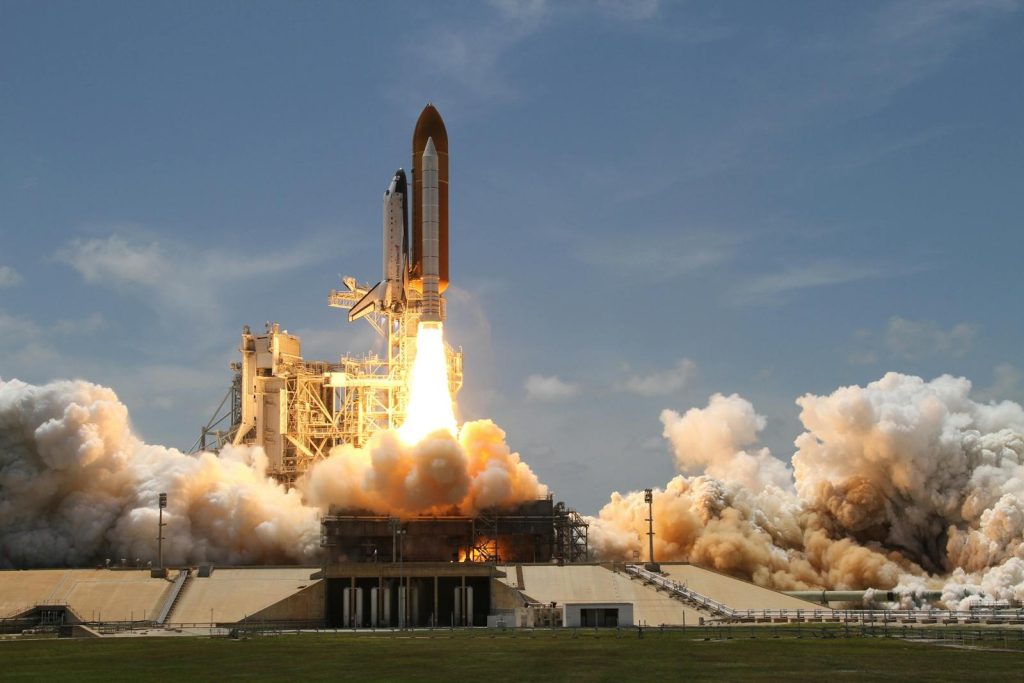
LandSpace’s technical credibility rests heavily on its Zhuque family of rockets, and particularly on Zhuque-3, which is designed as a large, reusable methane launcher. The first Zhuque-3 has already been rolled out to the pad at Jiuquan, one of China’s main inland spaceports, ahead of a debut launch attempt that is meant to validate both propulsion and recovery systems. By tying the IPO to a vehicle that is physically on the pad rather than just on paper, LandSpace is trying to reassure investors that the capital raise will scale an existing platform, not fund a speculative concept.
Reporting on the IPO notes that the first Zhuque-3 was on the pad at Jiuquan ahead of its debut launch attempt in Decembe, a milestone that underscores how far the company has progressed from early design work to integrated hardware. One detailed account by Andrew Jones December describes how the Zhuque series has become a flagship for China’s private launch sector, with the Jiuquan campaign serving as a high-profile demonstration of reusable technology. For IPO investors, the timing is significant: a successful flight campaign would validate the engineering assumptions behind LandSpace’s financial projections, while setbacks could test market patience just as the company seeks to price its shares.
Chasing Guowang and Qianfan constellation contracts
Beyond the rockets themselves, LandSpace is pitching a pipeline of potential customers that could fill its manifest for years. Central to that story are two massive Chinese satellite projects, the Guowang and Qianfan (Thousand Sails) megaconstellations, which are expected to require frequent, reliable launches to build out broadband and other space-based services. LandSpace is aiming to win contracts to launch batches of satellites for these constellations, positioning Zhuque-3 as a workhorse that can deliver large payloads at lower cost through reuse.
The scale of Guowang and Qianfan means that even a partial share of their launch needs could translate into steady revenue and high fleet utilization for LandSpace. Reporting on the IPO explicitly notes that the company is targeting contracts tied to Guowang and Qianfan, also referred to as Thousand Sails, as part of its growth plan. That focus aligns LandSpace with national priorities around secure communications and digital infrastructure, which could help it secure regulatory support and long-term contracts even as it competes with other private launch firms for the same business.
Rivalry with SpaceX and the global reusable race
LandSpace’s IPO is not happening in a vacuum; it is unfolding against the backdrop of a global contest over who can dominate reusable launch. In the United States, SpaceX has already demonstrated the economic power of flying boosters multiple times, and LandSpace is frequently described as a SpaceX competitor as it pursues similar methane-fueled, vertically landing rockets. By explicitly embracing that comparison, the Chinese firm is signaling that it wants to play in the same league, not just serve as a domestic backup for state missions.
Coverage of the planned listing repeatedly frames LandSpace as a SpaceX competitor that is eyeing a billion-dollar IPO in China, with the company’s 7.5 billion yuan, $1.07 billion target presented as a direct response to the capital intensity of reusable launch. One report on the Competitor notes that LandSpace has already submitted its IPO application, underscoring that this is not a hypothetical plan but a live regulatory process. The rivalry with SpaceX is as much about perception as performance: if LandSpace can show reliable reuse and competitive pricing, it could attract international customers who want alternatives to American launchers, especially in markets where geopolitical considerations favor Chinese technology.
Shareholding structure and the Zhang Changwu factor
Behind the rockets and regulatory filings sits a specific ownership structure that will shape how LandSpace is governed once it goes public. One of the larger shareholders in the company is Zhang Changwu, identified as LandSpace’s Founder, who holds about 14.68 percent of the firm. That stake gives him significant influence over strategic decisions while still leaving room for institutional investors and possibly state-linked funds to take meaningful positions in the IPO.
The presence of a founder with a double-digit stake is likely to reassure some investors who prefer continuity of vision in a technically complex business, while raising questions for others about checks and balances once the company is listed. A detailed analysis of the planned Shanghai listing notes that One of the key shareholders, Zhang Changwu, holds exactly 14.68 percent, with additional stakes distributed among other investors. How that cap table evolves through the IPO, including any secondary sales or new strategic entrants, will influence LandSpace’s ability to balance long-term R&D spending with the short-term earnings pressures that come with public markets.
Regulatory green lights and Shanghai’s role
LandSpace’s path to market has been eased by a gradual shift in Chinese policy toward private space ventures, particularly in how regulators treat commercial launch approvals and capital raising. Authorities have accepted the company’s IPO application, a procedural but important step that indicates comfort with both its business model and its alignment with national industrial goals. That acceptance also reflects a broader trend in which rules that once limited private participation in space have been relaxed to encourage innovation and attract capital.
Shanghai’s stock exchange is emerging as a preferred venue for such listings, offering a platform that combines domestic investor depth with a reputation for hosting advanced manufacturing and technology firms. Reporting on the IPO in Shanghai notes that LandSpace is part of a wave of commercial launch companies seeking to tap public markets as regulators ease constraints. For policymakers, the listing is a test of whether domestic capital markets can support frontier technologies that are strategically sensitive yet commercially driven, without relying on foreign listings that might trigger geopolitical friction.
What a $1 billion raise could unlock
If LandSpace succeeds in raising roughly $1 billion, the proceeds will likely be deployed across a mix of hardware, infrastructure, and market development. On the technical side, the company needs to fund serial production of Zhuque-3 stages, expand test facilities, and refine recovery and refurbishment processes that are still in their early iterations. It will also have to invest in ground systems at sites like Jiuquan to support higher launch cadence, as well as in software and mission integration capabilities that can handle complex constellation deployments for customers such as Guowang and Qianfan.
On the commercial front, a well-capitalized LandSpace could offer more aggressive pricing and flexible contract terms to win share from both domestic rivals and foreign launch providers, while also absorbing the inevitable setbacks that come with developing reusable systems. The company’s decision to target 7.5 billion yuan, or $1.07 billion, as highlighted in multiple reports on its $1 billion goal, suggests that management understands the scale of investment required to make reuse routine rather than experimental. For investors, the key question is whether that capital will translate into a durable competitive advantage in a market where technical breakthroughs and policy shifts can rapidly redraw the landscape.
More from Wilder Media Group: