

Israel’s Elbit Systems is betting that a new kind of engine will give its tactical unmanned aircraft a serious edge in the sky. By turning to Lowental Hybrid for propulsion systems, the company is looking to stretch flight times, cut acoustic signatures, and keep its drones relevant as battlefields get more demanding and more connected. The deal pairs a heavyweight in defense electronics with a younger propulsion specialist that has built its reputation around hybrid power for mission-focused aerial platforms.
At the heart of the move is a promise that Elbit’s tactical UAVs will fly farther, stay up longer, and still slip into electric-stealth mode when commanders need them quiet. Lowental Hybrid’s technology is pitched as a “world’s first” approach to hybrid propulsion for drones, and Elbit is now preparing to weave that system into some of its best-known unmanned aircraft.
Why Elbit wants a “true hybrid” for its tactical UAV fleet
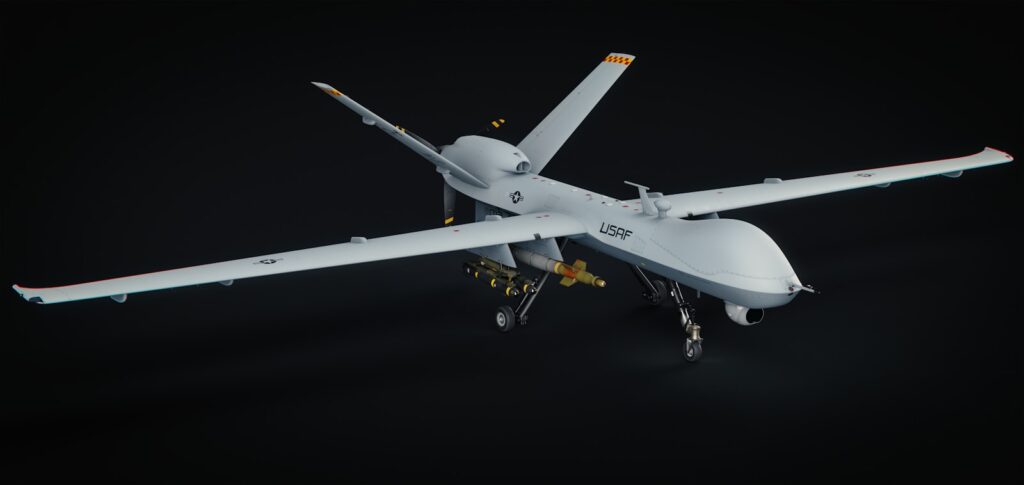
Elbit has spent years refining tactical UAVs that can loiter for hours, feed back high-resolution video, and plug into wider command networks, but endurance and noise have always been hard tradeoffs. The company has now selected Lowental Hybrid to supply what it describes as the World’s First True Hybrid UAV Propulsion System, a setup that blends combustion and electric power in a single integrated package. For Elbit, the attraction is straightforward: a propulsion unit that can cruise efficiently on fuel, then switch to electric-only operation when a mission calls for low acoustic and thermal signatures.
The company’s tactical portfolio, which includes the Skylark 3 system, is expected to be among the first beneficiaries of the new propulsion line. Elbit has been clear that it wanted a solution that complies with NATO standards for electric-stealth operation while still delivering the reliability that frontline units demand. That combination of long-range performance and standards-compliant stealth is what pushed the company toward a hybrid system rather than a pure battery-electric upgrade.
Inside Lowental Hybrid’s Native Parallel Hybrid approach
Lowental Hybrid has built its pitch around what it calls a Native Parallel Hybrid architecture, designed from the ground up for unmanned aircraft rather than adapted from automotive tech. The company, established in 2018 by CTO Jan and led by Chairman Maj. Gen. (ret.) Amika, focuses on compact, mission-ready systems for mission-focused aerial platforms. In practice, Native Parallel Hybrid means the combustion engine and electric motor can both drive the propeller directly, giving operators flexibility to prioritize range, climb performance, or quiet running without swapping hardware.
The company’s LH-01 propulsion unit is DESIGNED FOR FIXED aircraft, which lines up neatly with Elbit’s mix of runway-launched and catapult-launched drones. By packaging the engine, generator, power electronics, and battery management into a single compact module, LH-01 aims to simplify integration for airframers that want hybrid performance without a complete redesign. For Elbit, that modularity is key, because it opens the door to retrofitting existing UAVs as well as equipping new designs that are still on the drawing board.
From lab concept to operational collaboration
What makes this partnership stand out is how quickly a relatively young startup has moved from concept to a marquee defense contract. Lowental Hybrid’s Native Parallel Hybrid system has been described as the world’s first true solution purpose-built for drones, and Elbit’s decision to adopt it signals confidence that the technology is ready for operational use. A close-up of the system, highlighted as a Native Parallel Hybrid design from Lowental Hybrid, shows how tightly the components are packaged to keep weight and drag under control.
Elbit’s agreement with Lowental Hybrid has been framed as a long-term collaboration rather than a one-off procurement. Company statements describe it as a Long-Term Collab that will see the propulsion systems rolled out across multiple tactical UAV lines, with room for follow-on upgrades as the technology matures. For Lowental Hybrid, that kind of anchor customer provides both validation and a steady pipeline of operational feedback, which is likely to shape future iterations of the Native Parallel Hybrid family.
More from Wilder Media Group: