
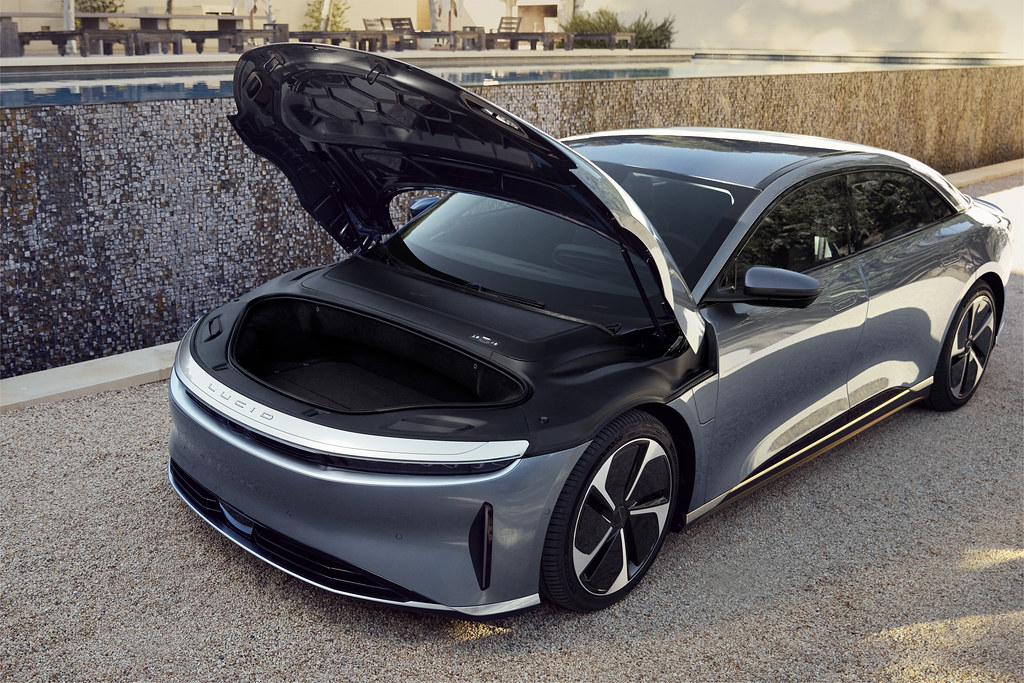

Lucid Motors is making a major push into the mainstream electric vehicle market with two new models that will arrive later this year. The luxury EV maker confirmed plans for the Lucid Cosmos and Lucid Earth, a pair of mid-sized vehicles with starting prices below $50,000—significantly less than the company’s current Air sedan, which begins at $72,400.
This announcement represents a pivotal moment for the automaker, which has thus far focused on high-end luxury vehicles. The Cosmos and Earth mid-sized SUVs will be built on an entirely new platform designed to compete directly with Tesla’s Model Y and other popular electric crossovers in the mass market.
During its recent Investor Day, Lucid revealed that these two models are actually part of a three-vehicle midsize lineup, all sharing the same underlying architecture. The company also announced that these new vehicles will feature mechanical doors instead of the electronic ones found on current models—a change that drew cheers from attendees.
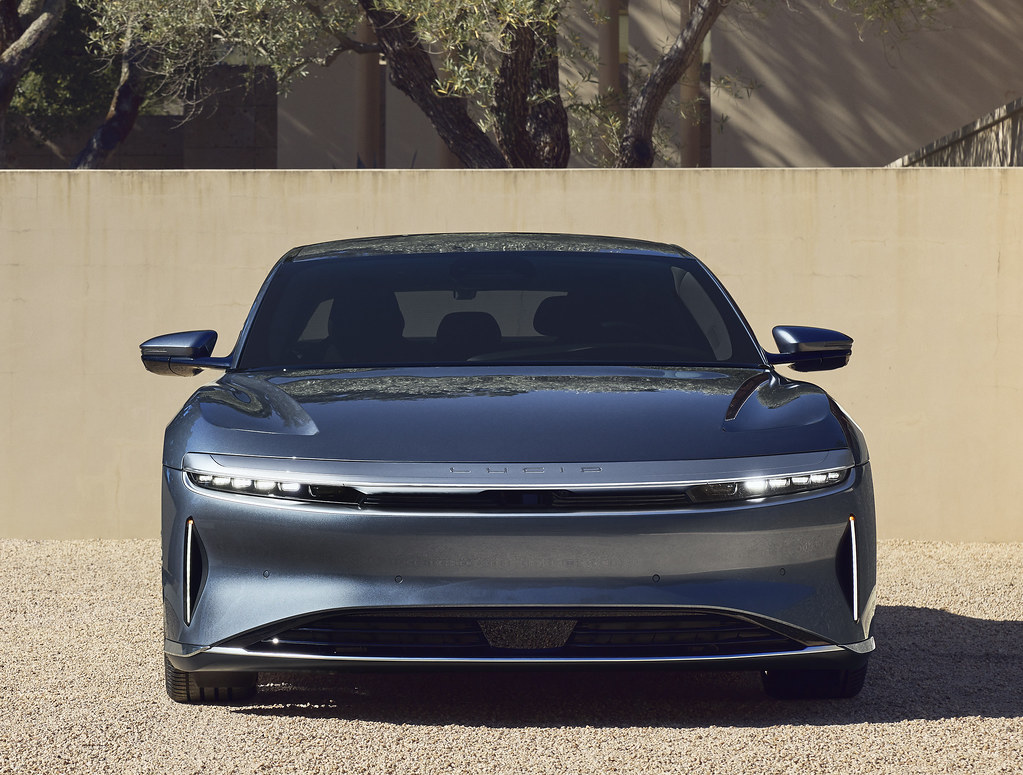
Lucid Cosmos and Earth: Models, Features, and Positioning
Lucid Motors unveiled the Cosmos and Earth as its first vehicles built on a new midsize EV platform, with the Cosmos targeting efficiency and performance while the Earth caters to adventure-focused buyers. Both models will launch later this year with starting prices below $50,000, positioning them as more accessible alternatives to the luxury-priced Lucid Air sedan and Gravity SUV.
Key Specs and Performance Targets
The Lucid Cosmos will deliver 300 miles of range from a 69 kWh battery pack while achieving up to 4.5 miles per kilowatt-hour. This efficiency rating makes it 10% more efficient than its closest competitor in the electric SUV segment.
Lucid’s new Atlas drive unit powers both models with 30% fewer parts and 37% lower costs compared to the Zeus unit found in the Gravity. The midsize platform can regain over 200 miles of range in just 14 minutes of charging.
Both vehicles feature 800-volt architecture and bidirectional charging capabilities, enabling Vehicle-to-Home (V2H), Vehicle-to-Load (V2L), Vehicle-to-Everything (V2X), and Vehicle-to-Vehicle (V2V) functionality. The Earth SUV will likely incorporate adventure-ready elements like all-terrain tires, tow hooks, and skid plates to differentiate it from the road-focused Cosmos.
Distinctive Design Elements and Interior Highlights
Derek Jenkins, Lucid’s senior vice president of design and brand, emphasized that these vehicles deliver unmistakable Lucid design while embracing a simpler manufacturing approach. The Cosmos and Earth will feature a gigantic centrally-mounted display and traditional door handles, marking a departure from some luxury vehicle trends.
Interior space represents a key advantage, with the Cosmos offering 8% more second-row legroom, 10% more couple distance, and 4% more passenger space than comparable vehicles. The midsize platform also provides class-leading cargo volume, making these models practical for families despite their efficiency focus.
The Earth’s design philosophy embraces what Lucid calls an “even more adventurous spirit,” suggesting styling cues and functional elements that appeal to outdoor enthusiasts beyond what the performance-oriented Cosmos offers.
Price Point, Trim Levels, and Launch Timeline
Both models will start below $50,000, positioning them to compete directly with vehicles like the Rivian R2 and other premium midsize electric SUVs. This price represents roughly half the cost of the current Lucid Air and Gravity models while maintaining the brand’s focus on range and efficiency.
Production is scheduled to begin later in 2026, though Lucid hasn’t specified exact trim levels or configuration options yet. The company also teased a third adventure-focused model on the same midsize platform but hasn’t revealed its name or detailed specifications.
Peter Rawlinson and the leadership team view this midsize platform as crucial for reaching profitability through higher sales volumes in the premium segment.
Technology, Platform, and Lucid’s Growth Strategy
Lucid’s new midsize platform represents a fundamental shift in the company’s approach to manufacturing and cost structure. The platform will power multiple vehicles while incorporating advanced electric drive technology and new production methods designed to reach profitability.
Midsize Platform Innovations and Atlas Electric Motor
The midsize platform has been engineered from the ground up to deliver vehicles starting below $50,000 while maintaining the company’s efficiency standards. At the heart of this platform is Atlas, Lucid’s all-new electric drive unit that advances the company’s integrated efficiency approach through a smaller, lighter, and simpler design.
Atlas features identical front and rear housings and mounts to improve manufacturing scale and cost efficiency. This design choice reduces complexity while maintaining performance.
The platform’s efficiency advantage translates directly to cost savings. Industry-leading efficiency enables required range with significantly smaller battery packs, which is critical since batteries represent approximately 30-40% of an electric vehicle’s cost. Lucid also implemented a radically simplified design-for-manufacturing philosophy, including eliminating traditional beltline moldings on doors to reduce part count, assembly time, and cost.
Production Plans, Profitability, and Scaling for the EV Market
Lucid outlined its path to profitability at Lucid Investor Day 2026 on March 12, 2026. Interim CEO Marc Winterhoff emphasized that the strategy focuses on near-term execution while building for future scale.
The company identified four key levers for reaching profitability: midsize platform scale to increase addressable market and fixed-cost absorption, radical efficiency in engineering and manufacturing to reduce material costs, diversified revenue streams including software and services, and capital-efficient partnerships.
In 2026, Lucid is focused on scaling Lucid Gravity, expanding global commercial reach, and advancing software offerings while maintaining strict capital allocation discipline. CFO Taoufiq Boussaid noted that while the midsize platform fundamentally improves unit economics in the mid-term, near-term progress is driven by scaling Gravity and diversified revenue streams. Analysts project the midsize segment to generate $1.1 billion in revenue by 2027 and $6.4 billion by 2030.
Future Robotaxi Applications and Fleet Opportunities
Lucid is expanding its strategic relationship with Uber to deploy midsize platform vehicles at scale. The companies are finalizing an agreement to deploy vehicles similar to the Gravity robotaxi program, with intention to increase over time.
Uber CEO Dara Khosrowshahi described Lucid as a key strategic partner for deploying autonomous vehicles globally. He cited Lucid’s efficiency, autonomy-ready vehicle architectures, and customer-centric approach as key factors.
Lucid also introduced Lunar, a purpose-built two-seat robotaxi concept based on the midsize platform. The concept is designed to maximize efficiency, utilization, and lifetime operating economics. While still in the concept phase, Lunar demonstrates the potential of the midsize platform to support future autonomous and commercial applications beyond traditional consumer vehicles.
More from Steel Horse Rides: