

The badge on the trunk might read the same, but the two M5s you are looking at could not be more different. On one side you have the latest BMW super sedan, a plug‑in hybrid bruiser aimed at devouring autobahn miles. On the other, a Kubota M5 tractor that trades lap times for loader specs and fieldwork. Lining them up side by side lets you see how far the idea of “performance” can stretch when the same two characters, M and 5, sit on wildly different machines.
By walking through powertrains, heritage, design, and real‑world usability, you can decide which M5 actually fits your life, your driveway, or your paddock. You might come in thinking the comparison is a joke, but by the end you will understand why some testers genuinely struggled to pick a winner when the BMW M5 and Kubota M5 went head to head.
Two M5s, two worlds
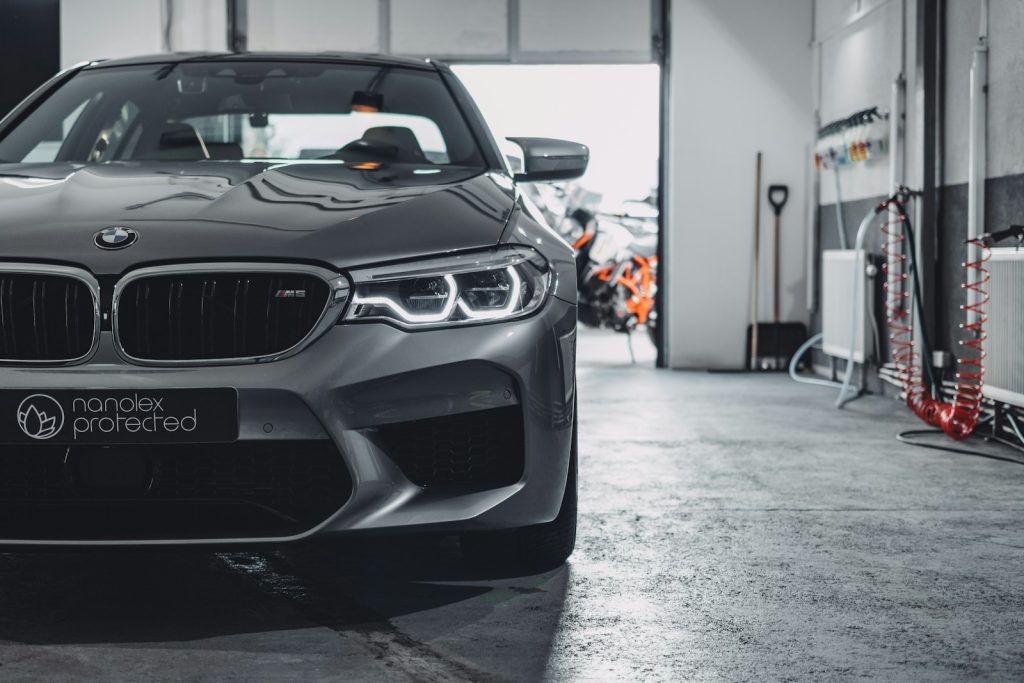
When you say M5 in a car conversation, most people picture a low, wide sedan with swollen fenders and a snarling exhaust, not a bright orange tractor with a roll bar. Yet the latest comparison tests have deliberately put the BMW M5 and Kubota M5 in the same frame to highlight how each one dominates its own environment. In one detailed matchup, evaluators concluded that The BMW M5 is the machine they prefer on pavement, while the Kubota M5 is superior when the surface turns to dirt and grass, a verdict that underlines how the same alphanumeric code can crown two very different champions on two very different stages, with the final judgment summed up under the line And the Winner Is.
For you as an enthusiast, that split personality is the hook. The BMW M5 is built to be a high performance machine that can commute, road trip, and attack a circuit, while the Kubota M5 is engineered to lift, tow, and plow with the same seriousness. The tractor’s model range, including versions like the M5‑111 and M5‑091, is tuned around torque curves, hydraulic output, and implement control, not Nürburgring lap times. Yet when both are pushed hard in their natural habitats, each M5 delivers the kind of purpose built focus that makes its badge feel fully earned.
Powertrains: plug‑in punch vs diesel grunt
If you care about what happens when you press the right pedal, the BMW M5’s latest evolution is where you start. The newest generation adopts plug‑in hybrid power, pairing a combustion engine with an electric motor so you get instant torque and the ability to cruise quietly on battery power when you want to. Reports on the 2025 model bound for New Zealand describe how the all‑new BMW M5 arrives with plug‑in hybrid technology that lets you cover short distances on electricity alone while still delivering the kind of combined output you expect from an M car, with the brand confirming that this configuration is headed to markets like NZ in the near term through an official Share announcement.
That electrified setup builds on a long line of muscular engines. Earlier M5s leaned on naturally aspirated V10s and twin turbo V8s, and the M5 Competition version showcased a 4.4-litre V8 unit with M TwinPower Turbo tech that pushed power and response to new heights, a specification highlighted in launch material that celebrated More power and exceptional performance from the Competition The package and its Turbo hardware. The Kubota M5, by contrast, is not chasing revs or top speed. Its diesel engines are tuned to deliver steady torque at low rpm, the kind of shove that lets you pull a loaded trailer or run a front loader all day without complaint. Instead of quoting 0 to 100 km/h times, Kubota talks about PTO horsepower and hydraulic flow, the real world numbers that matter when your “track” is a field and your “lap” is a harvest.
Heritage: from autobahn icon to workhorse legend
To understand why the BMW M5 carries so much weight with enthusiasts, you have to look back at its lineage. Since the late 1970s, the M5 has evolved from a discreetly tuned sedan into a full blown super saloon, each generation layering on more power and technology. When BMW launched the sixth generation 5 Series and followed it with the F10 M5, the company shifted from the high revving V10 of its predecessor to a twin turbocharged V8, a move that marked a new era of forced induction performance and helped cement the M5’s reputation as the flagship of the BMW Series performance lineup.
The Kubota M5’s heritage is quieter but no less serious. It sits in a family of compact and mid size tractors that farmers and landowners rely on for daily work, often logging thousands of hours in conditions that would make a sports sedan wilt. Where BMW’s story is about motorsport and autobahn development, Kubota’s is about durability, uptime, and the ability to handle everything from mowing to front loader duty without drama. That is why, when testers compare the two M5s, they talk about the tractor’s ability to outclass the car in tasks like lifting and hauling, even as they acknowledge that The BMW remains the obvious choice when the job involves a winding road instead of a hay field.
Design and ergonomics: cockpit vs cab
Slide into the BMW M5 and you are greeted by a low seating position, thick rimmed steering wheel, and a dashboard that wraps around you like a cockpit. The latest generation leans heavily on digital displays and configurable drive modes, but the core idea is the same as it has been for decades, to make you feel like you are sitting in a focused driver’s car, not a generic luxury sedan. Exterior photos of the 2025 BMW M5 show a wide stance, aggressive intakes, and muscular rear haunches that telegraph its performance intent even when it is parked, details captured in image sets that place the car alongside its agricultural namesake and credit the visuals to Photography By Clint Davis.
Climb into the Kubota M5 and the priorities flip. You sit high, with huge glass areas and simple, glove friendly controls laid out for long days in the cab. Instead of carbon fiber trim and ambient lighting, you get sturdy plastics, big levers, and a seat designed to absorb hours of vibration. The tractor’s exterior is all function, from the loader mounts to the three point hitch, and its styling is dictated by visibility and implement clearance rather than aerodynamics. For you as a user, that means the BMW M5 feels like a precision tool for driving quickly, while the Kubota M5 feels like a command center for getting work done, each one ergonomically honest about its mission.
Performance metrics: lap times vs loader stats
When you compare spec sheets, the contrast between the two M5s becomes almost comic, and that is exactly the point. BMW talks about horsepower, torque, and acceleration, but it does not publish the M5’s maximum dump angle, attachment rollback time, or cubic feet of heaped material bucket capacity, the kind of stats that Kubota happily shares for its M5 tractors. That gap in data is not an oversight, it is a reflection of focus, and it is highlighted in reporting that notes how BMW does not publish those loader style metrics at all, while Kubota treats them as central selling points.
On the road, the BMW M5’s performance is measured in how quickly it can cover ground and how composed it feels when you push it. Video comparisons of the new G90 generation against the outgoing F90 show how the latest car uses its hybrid system to deliver even more explosive acceleration and sharper responses, with reviewers calling the head to head a mind blowing BMW M5 G90 vs F90 performance test that underscores just how far the sedan has come, a reaction captured in a detailed Dec breakdown. In the field, the Kubota M5’s performance is judged by how quickly it can move a pile of gravel, how steadily it can run a mower, and how confidently it can handle a heavy bale on the loader, metrics that never show up on a dyno chart but matter enormously when your workday depends on them.
Everyday usability: commute, canyon, or cornfield
When you think about living with either M5, your daily routine becomes the deciding factor. The BMW M5 is built to be a car you can drive to the office, take on a long highway trip, and then enjoy on a favorite back road, all without feeling like you are sacrificing comfort. The plug‑in hybrid system in the latest model lets you slip through city streets on electric power for short stretches, cutting noise and fuel use, before unleashing the full combined output when you merge onto a motorway or head for the hills. Earlier M5 generations, from the E39 to the F10, already proved that you could have a sedan with supercar pace and real back seat space, a balance that has kept the car at the top of many enthusiasts’ wish lists across multiple BMW Series eras.
The Kubota M5, on the other hand, is not something you are likely to drive to dinner, but if you own land, it can be the most important vehicle you have. Its usability is measured in how easily you can hook up implements, how comfortable the cab is during a long day of mowing or plowing, and how reliably it starts on a cold morning. Testers who put the tractor through its paces alongside the BMW M5 noted that while the car is the obvious choice for pavement, the Kubota M5 simply outclasses it when the task involves towing, lifting, or operating in rough terrain, a reminder that “everyday usability” looks very different when your “everyday” includes fence lines and feedlots instead of parking garages and office parks.
Which M5 fits you?
By the time you have weighed powertrains, heritage, design, performance metrics, and daily usability, the question is less “which M5 is better” and more “which M5 matches your life.” If you crave a car that can devour a mountain road, sprint down a motorway, and still carry your family in comfort, the BMW M5 is the obvious fit, especially in its latest plug‑in hybrid form that blends brutal acceleration with a veneer of efficiency. Its lineage through generations like the F10 and its evolution into the G90 show a clear throughline, a commitment to making the fastest, most capable version of the 5 Series that still feels like a proper luxury sedan.
If your world revolves around acreage instead of apexes, the Kubota M5 is just as compelling. Its diesel torque, loader capability, and implement friendliness make it a tool you can build a business or a homestead around, and in that context it is every bit as “high performance” as the BMW is on a racetrack. The playful comparison between the two M5s works because it forces you to think about what performance really means, not just in terms of speed, but in terms of how well a machine helps you do what you need to do. Once you are clear on that, the right M5, whether it wears a roundel or a tractor badge, practically chooses itself.
More from Wilder Media Group: