

You will gain clearer mobility, safety, and access as regulators ease rules and let more self-driving vehicles operate on public roads.
They’ll see how shifting federal and state frameworks are opening testing lanes, trimming some reporting burdens, and creating pathways for domestic prototypes — steps that could speed deployment and lower costs while raising important safety and transparency questions.
Follow how policy changes intersect with real-world effects on commutes, job access, and urban design, and what the trade-offs mean for communities that stand to benefit most.
How Evolving Regulations are Unlocking Self-Driving Benefits
Regulatory changes are making testing safer, clarifying who answers for crashes, and letting companies scale pilot fleets. Agencies, state legislatures, and major developers now balance reporting rules, operational permissions, and data-sharing that directly affect deployment speed and public access.
Current Regulatory Landscape
Regulation today mixes federal guidance from the National Highway Traffic Safety Administration (NHTSA) with dozens of state rules that govern testing, insurance, and on-road operations. NHTSA issues voluntary safety guidance and a Standing General Order for crash reporting that shapes manufacturer disclosures and public accountability.
States meanwhile set permits, require safety drivers in some cases, or allow fully driverless operations in others. The National Conference of State Legislatures tracks this patchwork and shows more than 35 states with AV laws, so compliance teams must adapt vehicle software and operations region by region.
That patchwork affects consumers directly: differing rules on emergency protocols, liability, and whether an automated driving system may carry passengers determine where autonomous taxi services and commercial pilot programs can operate.
Federal vs State Approaches
Federal agencies focus on broad safety standards, data collection, and vehicle equipment rules; for example, NHTSA’s updated reporting and prototype exemption programs influence how firms scale testing nationally. Federal rules aim for consistent crash metrics and baseline cybersecurity expectations without replacing state-level decisions on insurance and road access.
States act faster on operational details: who may be the “operator,” local permitting, and police interaction protocols. State lawmakers often write practical requirements—black-box recording, signage, or human-operator mandates—that directly affect companies’ business models. The result: developers plan multi-jurisdiction rollouts with modular compliance layers.
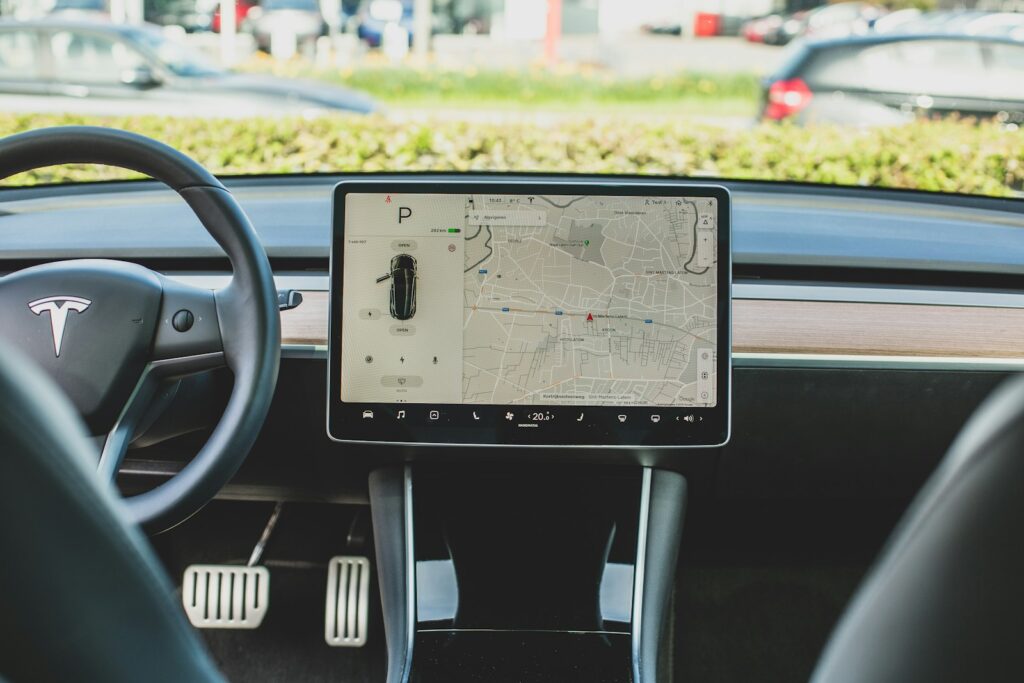
Industry standards bodies like the Society of Automotive Engineers provide technical definitions (e.g., levels of automation) that both federal and state regulators reference, helping align vehicle capabilities—such as Tesla Autopilot or Full Self-Driving labels—with legal expectations.
Key Industry Players and Pilot Programs
Waymo and Cruise run large-scale autonomous taxi pilots in limited urban zones under state permits and municipal agreements. Their fleets operate under detailed safety cases, third-party audits, and NHTSA reporting expectations when incidents occur. Those programs demonstrate rider accessibility gains and data-driven safety improvements.
Tesla’s Autopilot and Full Self-Driving features follow a different path: incremental consumer software releases paired with state-level scrutiny and regulatory inquiries about labeling and driver responsibilities. That contrast highlights two deployment models—fleet-based robotaxi services versus consumer-facing driver-assist rollout—each triggering distinct regulatory responses.
Pilot programs funded by cities, transit agencies, and private firms often include mandated data sharing, simulation requirements, and predefined disengagement metrics. These operational rules accelerate real-world learning while giving lawmakers evidence to refine statutes and expand permissions for autonomous vehicles.
The Real-World Impact of Self-Driving Technology
Self-driving technology promises practical gains for daily travel, freight movement, and public transit. It affects who can travel, how safe trips are, and how quickly commercially scaled services like robo-taxi fleets and autonomous shuttles expand.
Mobility and Everyday Convenience
Autonomous vehicles can extend mobility to people who cannot drive: older adults, people with disabilities, and teens without licenses. Autonomous ride-hailing and robotaxis can provide door-to-door trips on demand, reducing wait times and the need to own a car.
Fleets operating fixed routes—autonomous shuttles—can serve short hops near transit hubs, lowering first-mile/last-mile friction. Operators can schedule vehicles dynamically, smoothing peaks and filling gaps in low-density neighborhoods.
Cost matters: as companies cut per-mile operating costs, rides in driverless cars may become cheaper than private ownership for many urban trips. That shift could change car-buying decisions and reduce parking demand in city cores.
Vehicle Safety and Accident Reduction
Automated driving systems aim to reduce crashes caused by human error: distraction, impairment, and poor judgment account for most collisions today. Self-driving cars use continuous sensing and redundancy—lidar/camera/radar combos and fail-safe software—to detect hazards faster than a human often can.
Early data from limited deployments show potential for lower crash rates in controlled conditions, but outcomes depend on oversight, testing rigor, and regulation. High-risk artificial intelligence systems used for real-time control must meet strict evaluation before scaling.
Regulators and manufacturers must manage edge cases—bad weather, complex intersections, and unusual human behavior—that continue to challenge systems. Transparent reporting and clear rules about liability and safety metrics will shape public trust and real-world safety gains.
Future Outlook for Full Autonomy
Fully self-driving vehicles remain constrained by technical edge cases, regulatory differences, and public acceptance. Some regions prioritize testing and commercial robotaxi services; others require slow, conservative rollouts. See how policy variation affects deployment timelines and commercial models in reporting on how innovators and regulators interact.
Commercial use is likely to scale first in geofenced, well-mapped urban corridors and in controlled fleet contexts—logistics vehicles and robo-taxi services—where operators can manage updates and monitoring centrally.
Widespread, driverless personal cars will need advances in long-tail scenario handling, harmonized rules across jurisdictions, and cost reductions in hardware and maintenance before they become common on mixed roads.
More from Steel Horse Rides: