
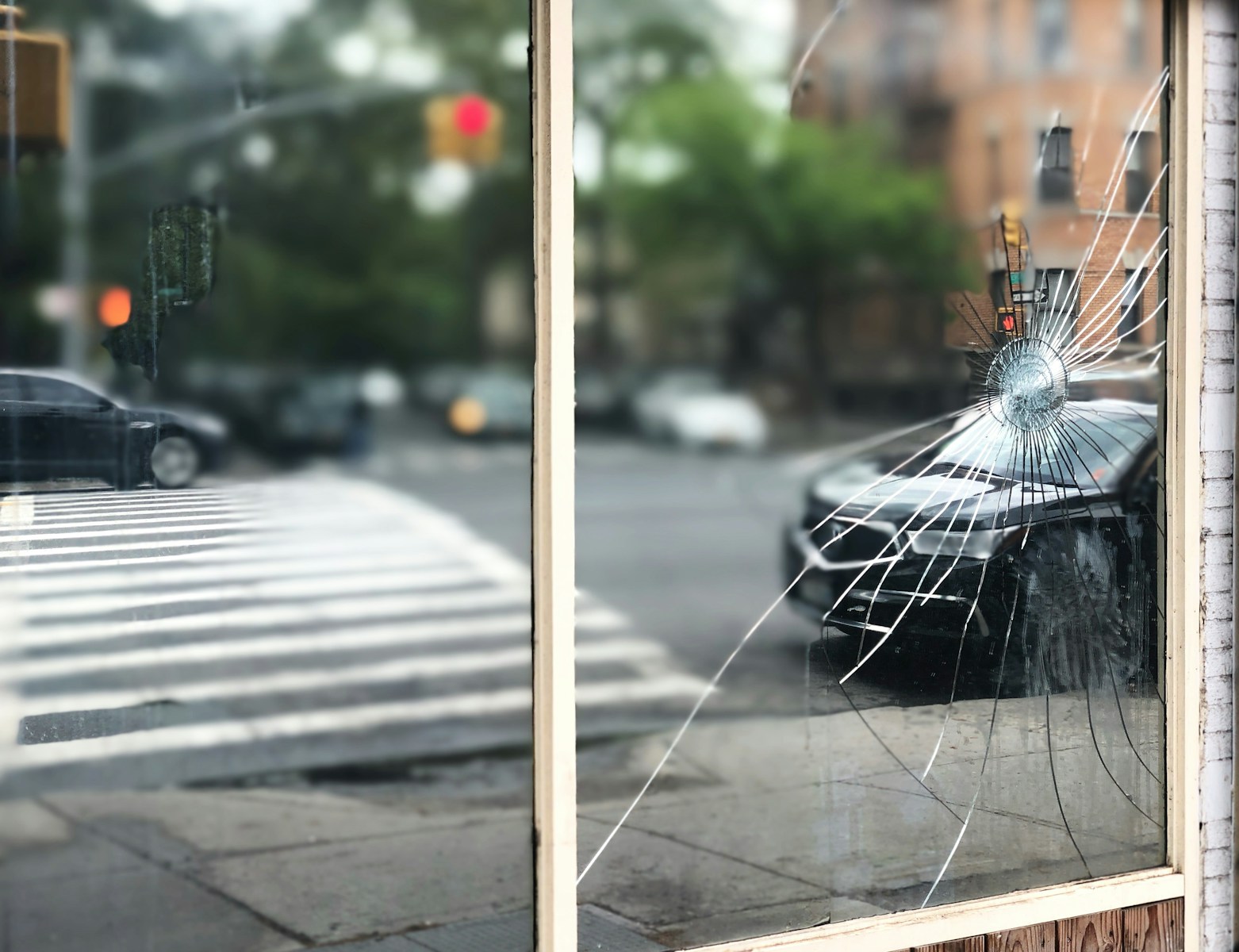

A routine fast-food stop can turn chaotic in seconds when a driver mistakes the accelerator for the brake. In one recent drive-thru incident, a new motorist did exactly that, surging forward instead of stopping and sending the vehicle straight into the building. The crash fits a broader pattern of pedal confusion events that have damaged storefronts, injured bystanders and raised fresh questions about how modern roads and businesses are designed around cars.
From coffee shops to martial arts studios, and from suburban gas stations to hardware stores, vehicles are colliding with buildings in ways that are both startling and, increasingly, predictable. Police reports, security footage and eyewitness accounts show how a split-second error at low speed can have outsized consequences, especially in tight spaces like drive-thru lanes and parking lots.
The split-second mistake behind a drive-thru crash
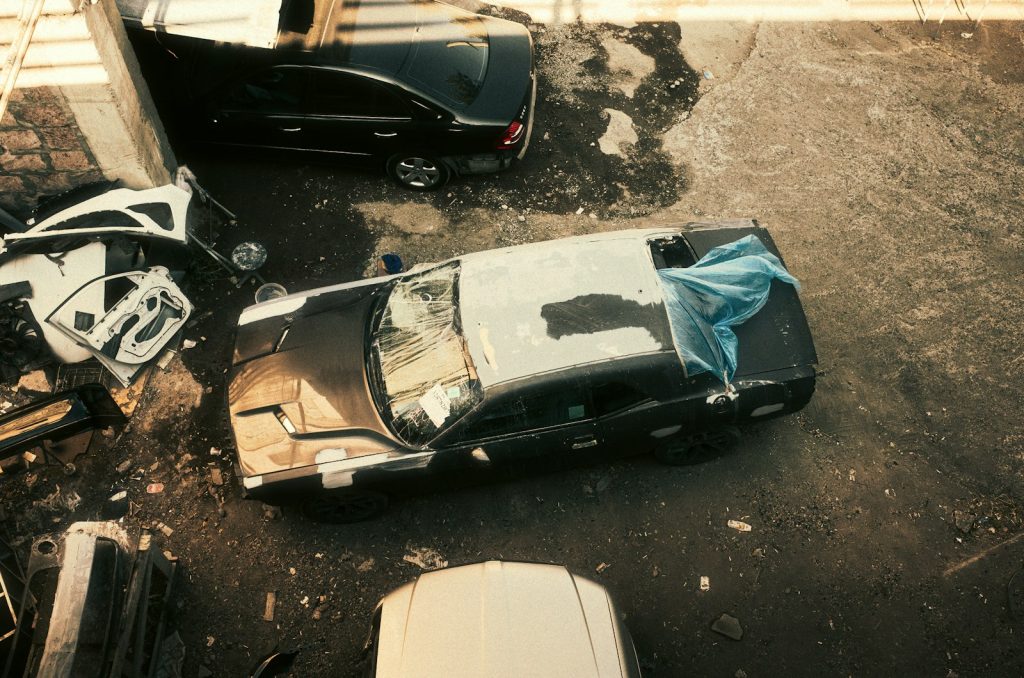
Investigators who study low-speed collisions describe a common pattern in drive-thru crashes: a driver eases forward in line, intends to brake, then suddenly feels the car lurch as the wrong pedal is pressed. In the case that inspired the headline, a new driver in a drive-thru lane reportedly mixed up the pedals while inching toward the window, sending the car directly into the wall instead of stopping at the speaker box. The impact shattered glass, crumpled metal panels and left the front of the vehicle embedded in the structure before stunned staff could react.
Police accounts from similar incidents show how quickly such errors escalate. In one McDonald’s lane at 1511 Scrn Carb Hwy in Dickson City, an older driver hit the gas instead of the brake, turning a routine order into an MVA that left a car lodged against the restaurant. On another night in New Haven, a motorist in a closed McDonald’s lane was found passed out at the wheel with a foot still on the brake, a reminder that fatigue and impairment can sit just upstream of the same kind of sudden surge that sends vehicles into buildings.
From coffee run to structural damage at Stone Creek
Even when drivers are not brand new, the combination of tight parking lots and quick decisions can be unforgiving. In Delafield, a woman in her early 50s pulled into the Stone Creek Coffee location on Hillside for what should have been a simple stop. Instead, Delafield Police Lt. Ryan Jacobs said she appeared to confuse the brake and gas pedals, sending her vehicle into the front of the shop. The crash punched through the façade, scattering debris across the seating area and forcing an immediate evacuation.
Stone Creek Coffee’s director of retail, Karen Strange, arrived to find restoration crews already assessing the damage at the Hillside address. She described how the building had to be stabilized and secured for neighbors while staff scrambled to reroute customers to other locations. The Delafield crash underscores how a single pedal error can ripple outward, disrupting a business, displacing workers and raising safety questions for every café that backs its seating area up against a parking lot.
New year, same problem: early 2026 crashes into buildings
The first weeks of 2026 have already delivered a string of collisions that echo the same theme. On the very first day of the year, social media posts from South Charleston, West Virginia, captured the aftermath of a car that had plowed into the front of Kang’s Tae Keon Do studio. The post, framed with the phrase FIRST DAY of 2026, showed shattered glass and a crumpled façade where students would normally be practicing kicks and forms. The driver’s mistake turned a quiet holiday into a cleanup operation, and it fit the same low-speed, high-impact pattern seen in drive-thru lanes.
Elsewhere in January, deputies in Allen County described another driver who was simply trying to park and collect mail when things went wrong. According to the sheriff’s office, the motorist later told investigators that a foot slipped off the brake and onto the accelerator, sending the vehicle into a structure and adding yet another entry to a growing album of crash scenes. These early-year incidents show that pedal confusion is not confined to fast-food lanes or any single type of driver, but instead cuts across errands, ages and vehicle types.
When health emergencies collide with everyday driving
Not every car that hits a building does so because of a simple mix-up between pedals. In some cases, a medical emergency turns a driver into a passenger in their own vehicle, with similar destructive results. In Oregon, a woman behind the wheel began choking on a french fry while pulling into a gas station, losing control as she struggled to breathe. Her vehicle slammed into the station’s awning, causing a partial collapse that left twisted metal hanging over the pumps and drew a heavy emergency response.
Video from that scene showed crews working under the damaged canopy as investigators pieced together how a moment of distraction and distress could bring down a structure. The report noted that the woman’s choking episode preceded the crash, linking a mundane snack to a serious collision that compromised the gas station’s awning. While this case did not hinge on pedal confusion alone, it highlights how fragile the margin of safety can be when drivers are multitasking, eating or dealing with sudden health issues in motion.
Hardware stores, martial arts studios and the myth of “safe” storefronts
For pedestrians and workers, the front wall of a shop can feel like a solid barrier between them and the traffic outside. Recent crashes suggest that confidence is often misplaced. In Redwood City, California, a car punched through the wall of a hardware store, narrowly missing employees at the registers and sparking a fire inside the building. The vehicle’s path, captured in photos and video, showed how little resistance a standard commercial wall offers when a car jumps the curb and accelerates into the structure.
The Redwood City incident, shared widely by national broadcasters, emphasized how close the employees came to being struck as the car tore through the hardware store wall. Combined with the damage at Kang’s Tae Keon Do and the shattered front of Stone Creek Coffee, it paints a picture of storefronts that are far more vulnerable than their brick and glass suggest. In each case, the people inside had little warning and even less time to react, underscoring why safety advocates push for stronger barriers between parking spaces and occupied rooms.
Legal fallout when cars meet buildings
When a car ends up inside a building, the legal consequences can extend long after the glass is swept up. In Stoke-on-Trent, police charged a man after a vehicle crashed into a property on Scotia Road in Tunstall, an incident that drew attention not only for the damage but for the accountability that followed. The case, which named Jason Powner in connection with the crash, illustrates how prosecutors weigh factors like alleged recklessness, impairment or deliberate risk-taking when deciding whether to bring charges.
By contrast, many pedal confusion crashes are ultimately treated as traffic violations or insurance matters rather than criminal cases, especially when there is no evidence of intoxication or intent. Yet the Stoke-on-Trent example shows that once a vehicle crosses the threshold into a building, investigators look closely at the driver’s behavior before and after impact. For businesses and property owners, the distinction matters, influencing how they pursue civil claims and how insurers assess future risk on streets like Scotia Road and in neighborhoods such as Tunstall.
Drive-thru culture and the pressure to keep moving
Modern drive-thru design encourages drivers to keep rolling, inching forward in tight queues while juggling orders, payment apps and conversations. That constant motion can amplify the risk of a misstep. In New Haven, a post labeled Driver Halts Closed McDonald’s drive-thru described a motorist found unresponsive at 3:30 a.m., foot still on the brake, vehicle idling in the lane. While that car did not surge into the building, the scene captured how fatigue and late-night habits intersect with spaces built for constant throughput.
The culture around these lanes can also blur the line between serious risk and novelty. In one widely shared stunt, a cyclist rode 300 miles around a single McDonald’s drive-thru in a 24 hour challenge, later admitting the feat felt “pointless” afterwards. While no crash occurred, the spectacle highlighted how drive-thru lanes have become stages for endurance tests, social media content and late-night dares, all in spaces where a single pedal error can send a vehicle into walls, windows or people waiting on foot.
Why older drivers and tight lots are a risky mix
Age alone does not cause crashes, but several recent incidents have involved older drivers navigating cramped commercial lots. In the Dickson City McDonald’s case, a Lucas County sheriff’s sergeant noted that an older driver hit the gas instead of the brake at the Scrn Carb Hwy location, turning a routine stop into a collision with the building. The phrase “Someone took the phrase ‘Drive Thru’ too literally” in the social media description captured the dark humor that often follows such events, even as crews worked to keep the restaurant open.
In Utah, an elderly woman in Murray drove into a building after confusing the gas and brake pedals, a crash detailed by reporter Jonathan May of KUTV. Murray police described how the vehicle mounted the curb and struck the structure, echoing the same pattern seen in Delafield and Dickson City. Advocates for older drivers argue that better signage, clearer lane markings and physical barriers could help reduce these incidents, shifting the focus from blaming individuals to redesigning environments that are more forgiving of human error.
Design fixes and the limits of personal responsibility
As these crashes accumulate, urban planners and safety experts are asking whether the built environment is doing enough to protect people from inevitable mistakes. Simple interventions like steel bollards, raised planters and reinforced walls can dramatically reduce the chance that a car will penetrate a storefront. Yet many businesses, from coffee shops to martial arts studios, still rely on painted lines and low curbs to separate parking from people, even in busy corridors like Hillside or commercial stretches of Scotia Road. The result is a landscape where a single misapplied pedal can send a two ton vehicle into a room full of customers.
Technology offers some help, with newer cars adding automatic emergency braking and parking sensors that can detect obstacles in front of the bumper. But many of the vehicles involved in recent crashes are older models without such systems, and even advanced features can be disabled or misunderstood. In neighborhoods from Redwood City to Tunstall, the pattern is clear: relying solely on individual vigilance is not enough. The drive-thru crash that sent a new driver into a building is less an isolated blunder than a symptom of a car centric system that leaves very little room for ordinary human error.
More from Wilder Media Group: