


NIO is racing to secure the brains of its next generation of electric vehicles, tightening control over key automotive chips while turning its own silicon into a business line. After years of heavy investment in in-house processors and painful exposure to supply disruptions, the company is now pairing self-developed hardware with a web of new partnerships to stabilize supply and cut costs. The strategy is emerging just as NIO pushes for profitability and scales past one million vehicles on the road, raising the stakes for every chip that goes into its cars.
At the center of this shift is NIO’s Shenji NX9031 intelligent driving chip, a flagship component that the company is starting to share with the wider industry even as it doubles down on securing its own access to memory and automotive-grade processors. The move to lock down chip supply is not only about avoiding the next shortage, it is also about building an ecosystem around NIO’s technology that can support long term growth in China and abroad.
From cash-burning chip project to licensing platform
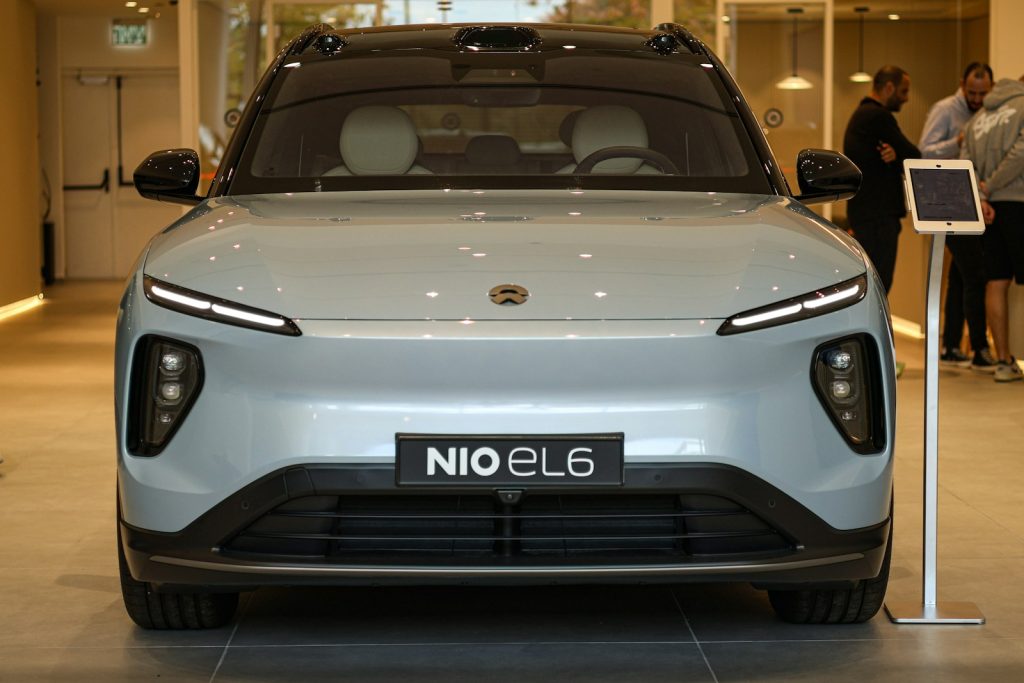
NIO’s decision to design its own advanced intelligent driving chip was a costly bet, and Nio CEO William Li has said the research and development expenditure for the NX9031 was equivalent to the cost of building a complete vehicle platform, underscoring how central the processor is to the company’s technology stack. The Shenji NX9031 now powers core autonomous functions in models such as the ES6 and EC6, and the technology underpinning the chip has been opened to external customers through a structured licensing program that lets NIO share its design while maintaining absolute control over the architecture, according to detailed descriptions of the self-developed advanced intelligent driving chip. That balance between openness and control is designed to turn a once cash-burning project into a scalable platform.
The licensing push has already moved from theory to practice. Nio has begun licensing its Shenji NX9031 autonomous driving chip to an external automotive chip company under a technology licensing arrangement, creating a new revenue stream that sits alongside vehicle sales and services and that is expected to reach hundreds of millions of RMB over time, according to reports that detail how Nio has begun licensing its Shenji NX9031. Earlier reports on the first external supply of the chip noted that NIO would start to generate revenue from one of its most cash-intensive projects and quoted Suki describing how, on November 19, NIO told potential partners that if they need high performance computing for intelligent driving, they can come to NIO, a message captured in coverage of how Suki reported NIO’s first external supply. By turning its in-house chip into a licensable asset, NIO is trying to amortize years of spending while embedding its technology deeper into the broader automotive supply chain.
Cost pressures and the profitability imperative
The pivot to chip licensing is also a response to intense cost pressures and a renewed focus on profitability. Analysts tracking the company have framed the Shenji NX9031 program as part of a broader effort to accelerate cost-cutting and push toward sustainable margins, with one assessment explicitly grouping the initiative under the banner of “Cost Pressures And Profitability Goals” and noting that Nio is seeking to reduce its reliance on third party system-on-chips that can be more expensive for similar workloads, a point underscored in commentary on how Cost Pressures And Profitability Goals shape Nio’s chip strategy. By owning the design and then spreading it across more units, NIO can lower per vehicle costs while also earning licensing income that is not tied to the cyclical swings of car demand.
That logic is reflected in financial projections around the chip program. Commentators have described how “Chip Licensing Forms A New Revenue Stream Beyond Firefly” and suggested that the licensing business could eventually contribute hundreds of millions of yuan, positioning it as a meaningful offset to the capital intensity of battery swapping, charging networks, and new model launches, as detailed in analysis that highlights how Chip Licensing Forms A New Revenue Stream Beyond Firefly. A separate market note on Nio (NIO) has similarly emphasized that the company has started external supply of its Shenji NX9031 chip technology and that the potential revenue from this business could reach hundreds of millions of RMB, reinforcing the idea that the chip is now both a strategic component and a financial lever, as outlined in a briefing that explains how Nio (NIO) has started external supply of its Shenji. For investors, the message is clear: chip control is no longer just a technical hedge, it is a core part of the path to profit.
Partnerships to industrialize automotive chips
Alongside its internal chip design, NIO is building alliances to industrialize automotive semiconductors at scale. The company has signed collaborative agreements with Chery, JAC, and Lontium Semiconductor that focus on automotive chip industrialization, and to date NIO has invested a cumulative 65 billion yuan in technology R&D and 18 billion yuan in charging and battery swapping, figures that illustrate the depth of its commitment to a vertically integrated ecosystem in Anhui and Hefei, as laid out in reports on how NIO has invested a cumulative 65 billion. These partnerships are meant to ensure that as NIO’s own chip designs mature, there is sufficient domestic manufacturing and packaging capacity to support both its vehicles and external customers.
The industrial push is part of a wider coalition effort in China. Four Chinese Companies Join Forces to Accelerate Automotive Chip Industrialization, a grouping that includes NIO alongside other automakers and semiconductor players, with the explicit goal of speeding up the development and mass production of automotive grade chips after repeated shortages over the past few years, according to detailed accounts of how Four Chinese Companies Join Forces. A parallel report on the same initiative, framed under the same “Four Chinese Companies Join Forces to Accelerate Automotive Chip Industrialization” banner, reinforces that the alliance is designed to address structural bottlenecks that have plagued the sector over the past few years, highlighting how the partners aim to Accelerate Automotive Chip Industrialization through joint R&D and coordinated investment, as described in coverage that again stresses how Accelerate Automotive Chip Industrialization. For NIO, these alliances are a way to share risk, influence standards, and ensure that its own silicon roadmap is backed by a robust domestic supply base.
Shortages, memory constraints, and the push for resilience
NIO’s urgency around chip supply is rooted in recent pain. The company has warned customers that a chip shortage affecting its ES8 rear seat entertainment system would force it to adopt a modified technical solution, explaining that starting December 22 newly produced ES8 cars would use a temporary configuration for the rear screens while keeping screen mirroring functions largely unaffected, a compromise detailed in notices about how Starting December 22 newly produced ES8 cars. A separate account of the same issue noted that Nio said a chip shortage for the ES8 rear seat entertainment system, on top of existing battery constraints, would require a temporary hardware change while keeping core driving functions largely unaffected, underlining how even non safety critical chips can disrupt production and customer experience, as captured in reports that quote how Nio said a chip shortage affecting its rear-seat entertainment system. These episodes have made clear that chip resilience is not optional for a brand that sells premium technology heavy SUVs.
The pressure is not limited to specialized automotive processors. NIO has flagged potential cost pressures from memory chips, with executives warning that for memory chips the company needs to compete for resources with AI players and computing centers, and that demand for data center and artificial intelligence workloads is pushing up prices, a dynamic that has already led suppliers such as Deegares to hike prices by 15 percent, according to detailed coverage of how Demand for data center and AI memory is squeezing automakers. These constraints help explain why NIO is so focused on locking in long term supply agreements and why it is willing to invest heavily in chip industrialization partnerships that can give it more bargaining power in a tight global market.
Retail expansion, brand scale, and the chip narrative
Even as it retools its chip strategy, NIO is expanding its retail footprint and celebrating major volume milestones, both of which increase the importance of a stable semiconductor pipeline. The company has announced plans to build integrated stores in lower tier markets, with NIO and William Li emphasizing that these outlets will combine sales, delivery, and service functions while further strengthening supply chain coordination, a point made explicit in briefings that describe how NIO to build integrated stores in lower-tier markets. At the same time, NIO has passed 1 million vehicles delivered and used the event to launch the ET9 Milestone Edition, highlighting its own innovation in areas such as high end intelligent driving and chassis technology, as recounted in coverage of how NIO passed 1 million vehicles and launched the ET9 Milestone Edition. Scaling to that level means that any chip disruption can quickly translate into thousands of delayed deliveries, making the case for deeper control over critical components.
NIO’s international ambitions add another layer. Reports on its European performance note that Nio Germany Sales Reach Highest Level in Over Two Years and that sales of the Chinese EV maker Nio in Germany have nearly doubled in 2025 to 19,390 units, signaling that the brand is gaining traction in one of the world’s most competitive premium markets, as detailed in analysis that highlights how Nio Germany Sales Reach Highest Level. To support that growth, NIO is partnering with Chery and JAC to co build an automotive innovation platform that spans intelligent driving, powertrain, and chip technology, aligning its semiconductor strategy with a broader push to create a shared development base for future models. In parallel, technical reports on how the technology underpinning Nio’s Shenji NX9031 autonomous driving chip is now available to external customers, and how the chip is already deployed in the ES6 and EC6 models, underline that Nio is positioning its silicon as a reference design for both its own vehicles and partner programs, as described in detailed notes on how Nio reportedly licenses out its AV chip technology. Together, these moves show a company that is not only trying to lock down its chip supply, but also to turn that control into a competitive advantage at home and abroad.
More from Wilder Media Group: