
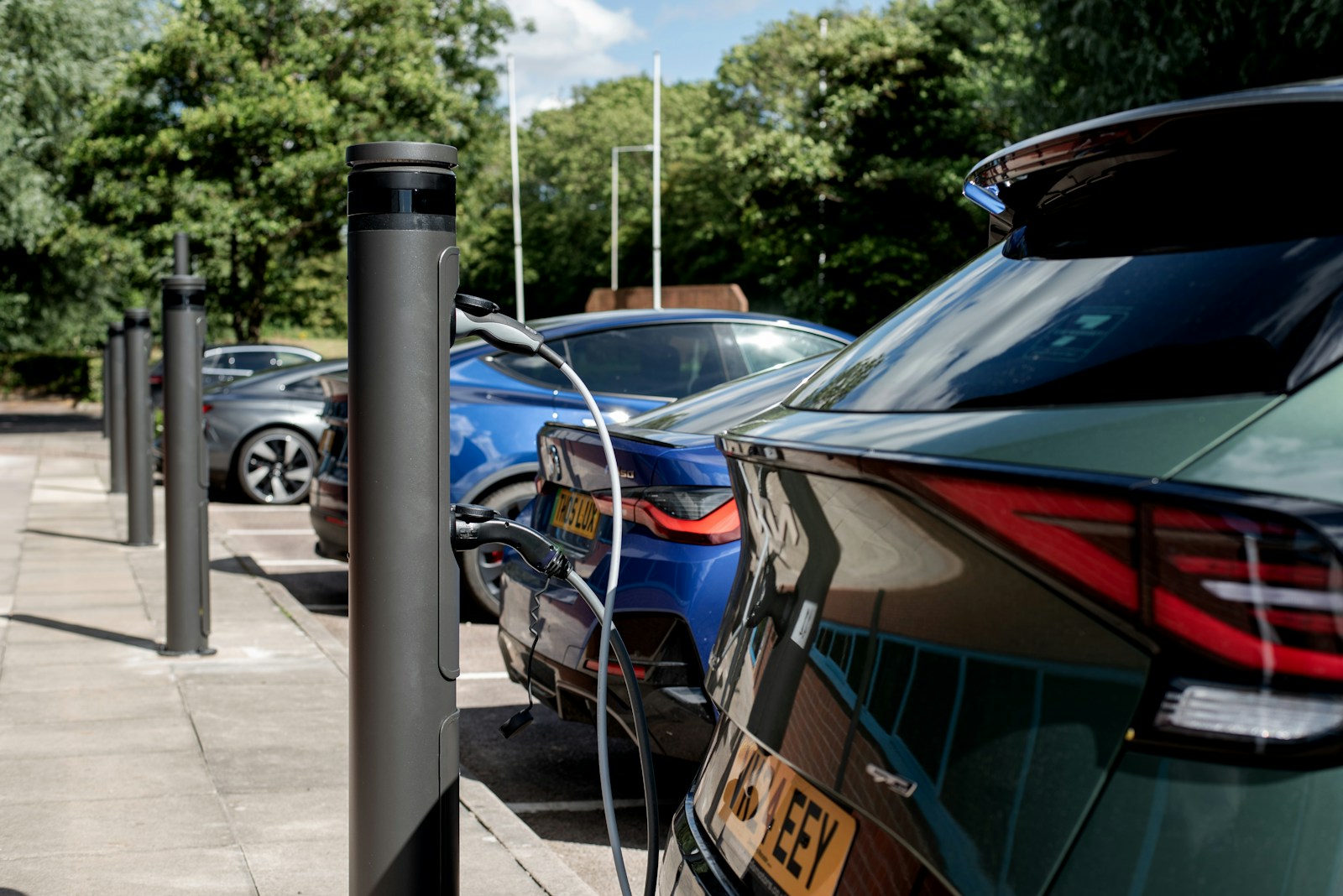

Electric vehicle drivers are used to waiting their turn at public chargers, but patience is wearing thin. A wave of viral clips and photos has turned long queues, broken hardware, and bad manners into a running online feud over what counts as fair play at the plug. The anger is not just about one driver cutting in line, it is about a system that often leaves people stranded and scrambling.
As more drivers plug in, the gap between expectations and reality is getting painfully visible. Videos of crowded stations, photos of vandalized equipment, and posts about “saving” spots are feeding a broader debate about how EV charging should work in the real world. The fight over line jumping is really a fight over who gets priority when the infrastructure is not keeping up.
The viral queues that set the mood
The clearest snapshot of the tension comes from videos that show EVs stacked up in long, unmoving lines. In one widely shared clip from India, a single highway charger turned what should have been a 3.5-hour drive between Delhi and Jaipur into an all day slog as a line of electric vehicles waited for their turn. Nobody in that clip is visibly cutting the queue, but the frustration in the comments is exactly what fuels outrage when someone even looks like they might be skipping ahead.
Similar scenes have played out in North America when weather or power problems hit. After a stretch of winter storms, one broadcast segment showed long lines of EVs waiting at public stations while nearby neighborhoods dealt with outages. Drivers stuck in those queues describe the same mix of anxiety and resentment that shows up under every viral charging video, a sense that one person’s selfish move could be the difference between getting home and getting towed.
Why “line jumping” hits such a nerve
When people complain about line jumping at chargers, they are really talking about a fragile social contract. Unlike gas stations, where a dozen pumps can clear a rush in minutes, many EV sites have only a handful of working plugs, and some drivers arrive with almost no range left. That is why etiquette guides warn that a lack of basic courtesy can quickly turn a quiet parking lot into a shouting match.
In that context, even the perception that someone is sneaking into a spot ahead of their turn can feel like a personal attack. Drivers who have already watched a queue crawl for an hour are primed to see any ambiguous move as a deliberate snub, especially when chargers are scarce or unreliable. That is why so many online arguments over charging behavior escalate into full blown pile ons, even when the original clip does not clearly show anyone breaking the rules.
Broken hardware and vandalism make tempers worse
The anger around charging etiquette is not happening in a vacuum, it is layered on top of real hardware problems. Research on public charging finds that Current and potential EV owners routinely complain about non functional chargers, long waits, and high costs, all of which turn a simple top up into a minor ordeal. When drivers finally reach a station and discover that half the units are offline, the idea of someone casually cutting ahead becomes even harder to swallow.
On top of that, vandalism is quietly shrinking the number of usable plugs. One EV driver who pulled into a newly upgraded site found that An EV charger after another had been deliberately damaged, leaving almost no working stalls. In Oakland, Nearly a dozen cables were sliced off and stolen from an EVgo site, leaving drivers literally powerless. In that kind of environment, every remaining working plug feels precious, and any hint of unfairness around access becomes explosive.
Photos that fuel the outrage cycle
Social media is doing a lot of the work in turning local frustration into a global argument. One Driver posted a photo of a brand new charging site in Bellingham, Washington, that had already been hit by vandals, sparking a wave of anger in the comments about wasted investment and poor oversight. Another viral post from an EV owner showed a supposedly upgraded station where almost every charger was unusable, prompting warnings that this kind of neglect hurts both communities and the environment.
Those images are not about line cutting in a literal sense, but they prime viewers to see every charging conflict through a lens of disrespect and mismanagement. When people scroll from a shot of severed cables in Oakland to a clip of a crowded queue, it is easy to assume the worst about any driver who appears to move out of turn. That is how a simple parking lot misunderstanding can be framed as a symbol of everything that is going wrong with the EV transition.
Etiquette rules that everyone is arguing over
Underneath the viral drama, there is a surprisingly detailed conversation about what good manners at the plug should look like. Utilities and EV advocates have pushed out guidelines that say drivers should move their car as soon as charging is complete, avoid unplugging others without permission, and never block a stall if they are not actively charging. Those reminders are not abstract, they are a response to real conflicts where a lack of etiquette has led to arguments and even threats.
Online, drivers have added their own unwritten rules, like “first come, first served” regardless of battery level, or informal systems where people leave notes with phone numbers so they can be called when it is time to move. Some of those norms are now being formalized in homeowner association policies, where boards spell out who can use shared chargers and when. In one such policy, the management company suggests that One way to keep the peace is to let Electric car owners reserve specific time slots, so nobody feels the need to hover or rush the line.
Reservation apps and “Charging 2.0”
As the fights over who was there first get louder, some in the industry argue that the answer is to stop relying on informal queues altogether. A growing number of charging networks and software companies are pushing reservation based systems that let drivers book a plug in advance and show up at a specific time. One analysis of the queuing problem warns that The queuing problem may actually get worse as more providers experiment with reservations, unless the rules are clear and fair.
Some companies are already branding this shift as a new phase of the EV era. In one viral clip from a gas station in Sheffield, a caption explains that At GO TO the team calls this evolution EV Charging 2.0, a move toward smarter, app based control of who gets to plug in and when. The idea is that if a driver has a confirmed booking, there is no argument about line jumping, because the “line” lives in the app instead of the parking lot. Whether that feels fair to someone who shows up on low battery without a reservation is another question.
Reliability problems behind the rage
Even the best etiquette and reservation tools will not calm people down if the chargers themselves do not work. Technical reviews of public networks point out that EV Chargers Have a serious Reliability Problem, with stations often installed in awkward locations and plagued by software and hardware faults that keep them from working as intended. For a driver who has already detoured to reach a site, discovering that only one or two plugs are actually delivering power can feel like a betrayal.
That sense of being let down by the system shows up again and again in driver testimonials. In one widely shared warning, an EV owner described arriving at a station and finding nearly all the units vandalized or offline, calling the situation “What a nightmare.” When people are already on edge because they do not trust the infrastructure, it takes very little, including a perceived slight in the queue, to push them into open confrontation.
How viral outrage shapes policy and perception
The constant stream of charging drama is starting to influence how both drivers and officials think about EVs. Clips of crowded stations and angry confrontations are easy fodder for skeptics who argue that the technology is not ready for prime time. At the same time, policymakers are watching how Videos of emotionally charged incidents can fuel public anger and force rapid responses, whether the topic is immigration enforcement or transportation.
For EV charging, that pressure is already visible in calls for clearer signage, better enforcement of time limits, and faster repair of broken equipment. Researchers who track driver sentiment note that Current and potential owners cite infrastructure headaches as a major barrier to adoption, which gives governments and networks a strong incentive to fix the pain points that keep going viral. The more often people see footage of chaotic queues and alleged line jumping, the more urgent those fixes start to look.
What calmer charging could look like
For now, EV drivers are mostly relying on a mix of apps, etiquette, and sheer patience to get through busy charging days. Some communities are experimenting with simple tools like shared group chats where people waiting at a station can coordinate who is next, or printed cards that drivers leave on their dashboards with a phone number and an estimated finish time. Others are leaning into reservation systems, with property managers encouraging residents to use online portals so that One shared charger can serve multiple Electric vehicles without constant conflict.
On the industry side, the push toward EV Charging 2.0 is about more than slick apps. It is about building networks that are reliable enough, and social norms that are clear enough, that drivers do not feel the need to film every tense moment in the queue. That means fixing the Reliability Problem, cracking down on vandalism, and making sure etiquette expectations are posted as clearly as parking rules. Until that happens, every crowded station will remain a potential flashpoint, and every ambiguous move near the front of the line will risk becoming the next viral fight over who really gets to plug in first.
More from Wilder Media Group: