
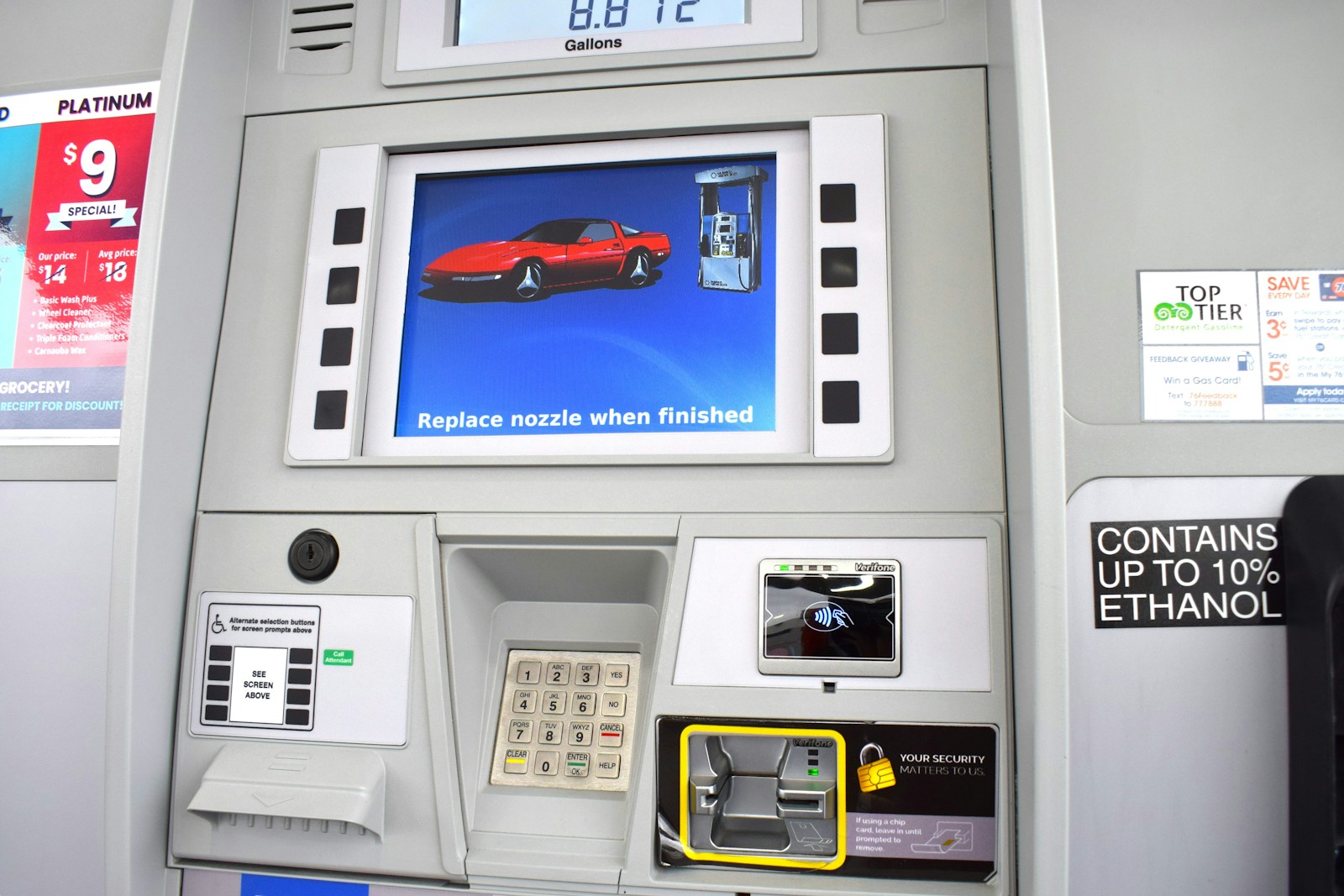

Gas stations are supposed to be quick in and out, not a place where a simple fill up quietly drains a bank account. Yet police across the country are now telling drivers to slow down for a few seconds and actually look at the pump before they pay. Hidden card skimmers are turning everyday pit stops into prime hunting grounds for thieves who can copy a card in a single 90-second transaction and cash out long after the tank is full.
The warning is blunt: treat every card reader like it might be compromised until you have checked it yourself. Officers say that tiny devices, often invisible from the outside, are capable of stealing thousands of dollars from a single gas station, and they want drivers to build a quick “scan the pump” habit before they ever swipe, insert, or tap.
The New Push From Police To Catch Skimmers Early

Law enforcement is not waiting around for victims to notice strange charges anymore, it is going straight to the pumps. In Rockland County, New York, Detectives and Community fanned out to every gas station in Clarkstown in a coordinated sweep, physically checking pumps for hidden hardware. Reporting by Jeff Edwards, Patch, notes that the operation was designed to find devices before they could quietly harvest card data from unsuspecting drivers.
Similar work is happening in nearby communities, where Haverstraw Police teamed up with investigators from other agencies to inspect local businesses, including fuel stations, on a Tuesday in Jan. That sweep was explicitly framed as prevention rather than cleanup, with officers stressing that finding a skimmer in place is far better than responding after dozens of cards have already been cloned. The message from these operations is consistent: police can clear a lot of ground, but they still need drivers to act as the first line of defense at the pump.
Why Gas Pumps Are Such Easy Targets
Criminals love gas stations because the setup works in their favor. Pumps sit outside, often far from the cashier, and many older units still rely on simple locks that can be opened with generic keys. Once a thief gets into that panel, they can tuck a device inside that looks like part of the wiring, so from the outside it may look like a regular card reader even though, as officials in Virginia warned after a recent arrest, the hardware inside could be quietly stealing thousands of from drivers who never see a thing.
On top of that, gas stations are high volume, low interaction spaces. Drivers are in a hurry, juggling kids, coffee, or work calls, and they rarely walk inside to pay. One investigation into pump fraud pointed out that Gas stations make easy targets because criminals can slip in, install a device, and be gone in minutes, then let the steady stream of customers do the rest. When “pay at the pump” is the default, a skimmer can quietly clone card after card without anyone noticing until the statements arrive.
How Skimmers Actually Steal Your Card
Under the hood, the scam is simple. A skimmer is a small piece of hardware that either sits on top of the card slot or hides inside the pump, intercepting the data on the magnetic stripe as the card is swiped or inserted. In some cases, thieves pair that with a tiny camera or keypad overlay to capture PINs, turning a basic credit card theft into full access to a debit account or benefits card. Public safety officials explain that to pull off this kind of theft, criminals install a device capable of copying every card that passes through, which is why a single compromised pump can quickly Gas Pump Skimmer hundreds of victims.
Some of the newer setups do not even need to be retrieved. Instead of storing data on the device, they use Bluetooth to broadcast stolen card numbers to a nearby phone or laptop, letting thieves sit in a car and collect data in real time. That is part of why federal officials now warn that card skimmers are not just a nuisance but a serious drain on public money. The USDA estimates thieves have stolen $12 billion worth of funds meant to feed American families, and those losses include benefits siphoned off through the same kind of card skimming technology now turning up at gas pumps.
What Police Are Finding On The Ground
When officers actually open up pumps, what they see is a mix of crude and sophisticated gear. In Arizona, investigators documented how Both the Secret have been tracking devices that can be installed in seconds and then left to quietly rack up victims across the state. Those skimmers have cost drivers thousands of dollars, and agents say the speed of installation makes it easy for crews to hit multiple locations in a single night.
Elsewhere, local departments are pairing education with enforcement. In one Virginia case, officials used an arrest tied to pump tampering as a chance to remind drivers that it may look like a regular card reader but inside could be a device capable of stealing thousands. A related warning from the same incident, shared again through a separate clip, underscored that the device can be nearly impossible to spot without a closer look, which is why officials warn drivers to physically inspect the reader before they pay.
Simple Visual Checks Drivers Can Do In Seconds
Police and fraud experts keep coming back to the same starting point, use your eyes and your hands. Before sliding a card, drivers are urged to Check the pump panel for tampering, especially the lockable door that gives access to the wiring. If the seal is broken, the lock looks scratched, or the panel is slightly ajar, that is a red flag. The Federal Trade Commission adds that customers should make sure the gas pump has not been opened or altered and should review their statements regularly to spot unauthorized charges quickly.
Hardware on the outside can also give the game away. Security guides advise people to Look for a large device mounted to the panel that seems bulkier than the reader on the next pump, since Point-of-service, or POS skimmers are often designed to slip over the existing slot. Another tip is to compare the keypad and card reader to the one on the other side of the same pump, if one looks newer, misaligned, or a different color, that is a sign to walk away or pay the cashier inside instead.
The “Tug, Tap, Track” Habit And Other Hands-On Tricks
Visual checks are good, but police want drivers to get a little more hands on. One department boiled its advice down to a simple phrase, as Chief McCulla put it, “Remember the three T’s: tug tap and track.” The idea is straightforward, tug on the card reader and keypad to see if anything wobbles or pops off, tap the surrounding panel to feel for loose or hollow spots, and then track your account activity afterward so you can catch any bad charges quickly.
Consumer security guides echo that approach, telling drivers that before they use a card at a gas station or ATM, they should always check the reader and just grab it with a firm pull. Advice collected under the banner of How to Spot Skimmers and Protect Yourself stresses that if anything feels loose or out of place, drivers should stop the transaction and alert staff or police as soon as possible instead of trying to pry the device off themselves.
Using A Smartphone As A Skimmer Detector
Because so many modern skimmers rely on wireless tech, a smartphone can double as a quick scanner. One bank’s fraud team walks customers through the process, explaining that Here is how to use your phone to check for suspicious Bluetooth signals. Once at the pump, drivers can open their phone’s Settings, Select the Bluetooth menu, and look for odd device names or strings of numbers that do not match anything in their car. If a strange device keeps popping up right next to the pump, that is a sign to move on.
Public safety officials also fold this into broader advice about staying ahead of fraud. A Public Safety Tip on how to Spot a Gas Pump Skimmer notes that if anything about the reader or the wireless signals around it feels off, drivers should not use that pump. Instead, they can choose a different station, pay the cashier inside, or switch to a mobile wallet that uses tokenized payments. Pairing those choices with transaction notifications and event alerts in banking apps gives drivers a better shot at catching fraud within hours instead of weeks.
Why Benefits Cards And ATMs Are Caught In The Same Net
The same tricks that hit gas pumps are also hammering government benefits and ATM users. Investigative reporting into food assistance fraud found that Millions in SNAP benefits have been lost through card skimmers and other schemes, with Close to Billions in taxpayer dollars disappearing from the aid system. Another deep dive reported that Gendrea and her team found that thieves are getting harder to catch as they adapt skimming tools to work on the same terminals low income families use to buy groceries.
That overlap is why ATM safety tips now sound a lot like gas pump advice. Guides on Spot Skimmers and tell people to inspect any ATM or point of sale device before inserting a card, tug on the reader, and shield the keypad from hidden cameras. A separate explainer on WHAT DOES a SKIMMING DEVICE LOOK LIKE breaks down how subtle the differences can be, noting that if customers look carefully they should be able to see the real reader underneath a fake DEVICE that does not quite LOOK LIKE it belongs. The bottom line is that if a card is being used in a slot, whether at a pump, a store, or an ATM, the same quick checks apply.
How Drivers Can Stack The Odds Back In Their Favor
Even with police sweeps and federal investigations, the fastest way to cut into skimmer profits is for drivers to change a few habits. Fraud experts suggest choosing pumps that are closer to the station entrance, since those are harder for criminals to tamper with unnoticed, and using credit instead of debit so thieves cannot pull cash directly if a card is compromised. Some security pros also recommend using mobile wallets like Apple Pay or Google Wallet at stations that support them, because those systems do not transmit the actual card number and can blunt the impact of a hidden ATM style skimmer.
Education campaigns are trying to make those moves feel routine. One video guide bluntly notes that even if drivers are looking for them, gas skimmers are designed to be discreet, but it then walks through a few things people can look out for so they become a much harder target. Another explainer on how to see if a skimming device has been attached to a store’s reader reminds shoppers that the difference can be hard to spot, yet a careful glance at the edges and a quick feel of the slot can reveal a fake DEVICE. When drivers combine those habits with the “tug tap and track” mindset and keep an eye on their statements, they give police and regulators a better chance to shut down skimmer crews before the damage spreads.
More from Wilder Media Group: