
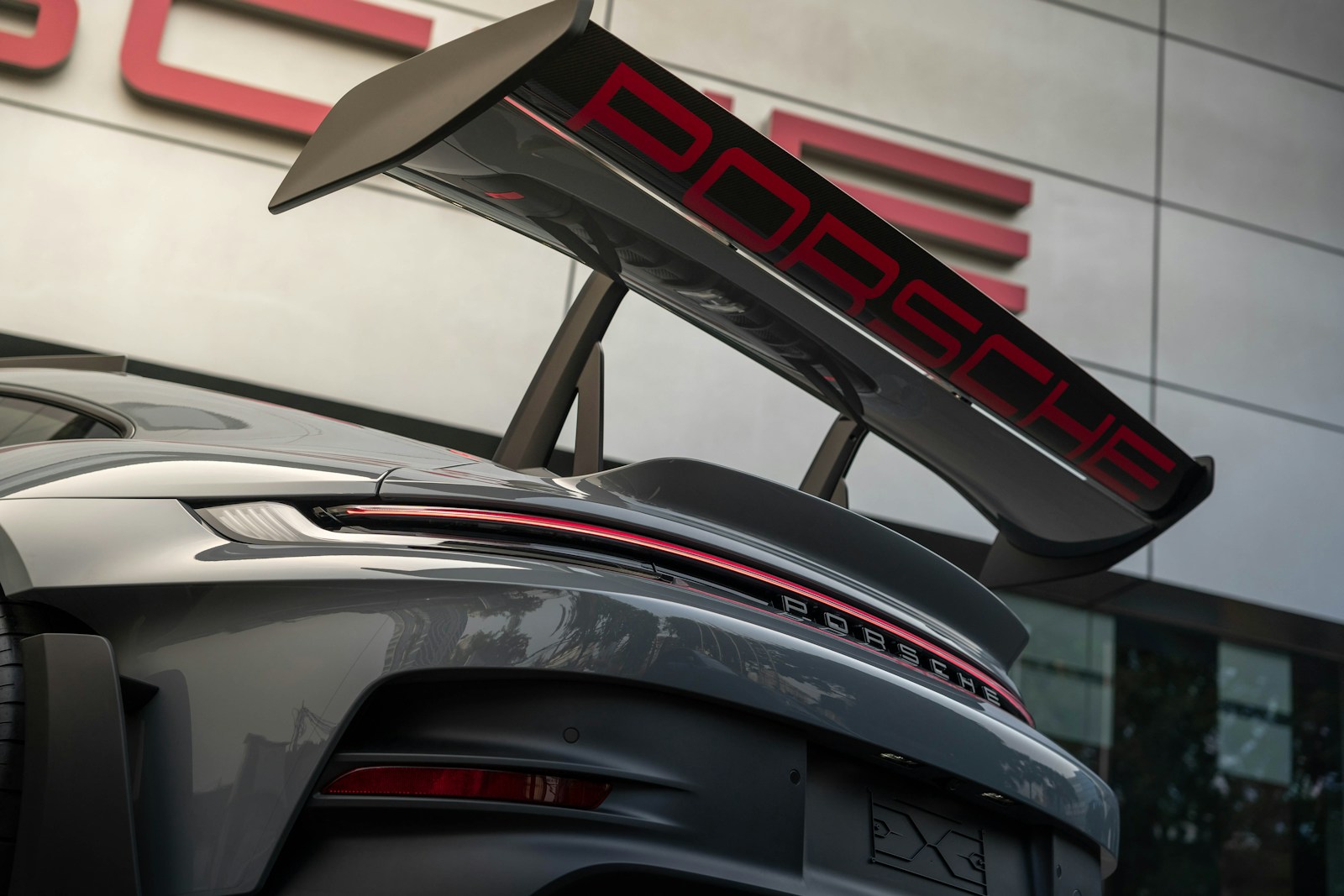

The Porsche 911 GT3 Touring has become the connoisseur’s choice in the 911 range, delivering track-bred performance in a package that looks almost understated in traffic. By toning down the visual aggression while keeping the hardcore hardware, it turns everyday roads into a proving ground without shouting about its capabilities. The result is a car that hits just as hard in terms of impact and emotion as the winged GT3, but does so with a quieter kind of confidence.
Understated Design, Uncompromised Intent
The 911 GT3 with Touring Package is built around a simple idea: remove the towering rear wing, keep the motorsport heart. Visually, it trades overt aero for a cleaner silhouette that could pass for a well-specced Carrera to the untrained eye, yet every surface still serves performance. Official material describes how the 911 G T3 with Touring Package turns every location into an attraction and every trip into an experience, underlining that this is not a softer car, only a subtler one in appearance.
That sense of restraint is deliberate, with the Touring Package pitched as the choice for drivers who want maximum engagement without constant attention. Porsche leans into the notion that, Especially on public roads, understatement can be more appealing than track-car theatrics, while still insisting that perfection in every detail is crucial for the 911 G T3’s mission as a road and circuit tool. The result is a car that looks almost discreet, yet carries the same intent as its more extroverted sibling.
Core GT3 Hardware Beneath the Calm Surface

Strip away the Touring’s subtler styling and the fundamentals are pure GT3. The car shares its naturally aspirated 4.0 liter high revving flat-six, rear axle layout, and motorsport-derived chassis with the standard 911 G T3, so the engineering brief is unchanged. Official specifications highlight that this engine delivers 502 hp, 331 lb-ft of torque and a 194 m top speed, figures that place the Touring firmly in supercar territory despite its low-key look.
The drivetrain is tuned for relentless use at the limit, with the high revving 4.0 liter 6 cylinder designed to thrive on repeated hard laps rather than just headline numbers. Porsche’s own description of the car’s Performance notes that seldom has the term “understatement” been more appropriate, because the Touring’s calm exterior hides a powertrain calibrated for life at the redline where every fraction of a second counts. On the road, that shared hardware means the Touring is not a detuned variant, but a full GT3 wearing a different suit.
Acceleration, Rev Range and the Numbers That Matter
For all its visual restraint, the Touring’s performance figures are anything but modest. The 911 G T3 is quoted with a 90 F. A. Porsche 3.7 s sprint from 0 to 60 m and 502 hp Max engine power, numbers that apply to the GT3 family and underline how little compromise exists beneath the Touring’s cleaner bodywork. Porsche lists these figures alongside a Manufacturer Suggested Retail Pr reference, reinforcing that this is a series-production car with race-car statistics.
Those numbers are backed by the same drivetrain options and calibration as the winged car. The official 911 G T3 data notes the shared engine and gearbox, chassis and braking systems, and even details such as the option to Confirm selection of track-focused components at no extra charge, which makes clear that the Touring is not a cosmetic package but a full member of the GT3 line. In practice, that means the Touring delivers identical straight-line pace and rev-hungry character, only with a different aerodynamic philosophy.
Lightweight Construction You Can Feel
The Touring’s impact on the road is shaped as much by what has been removed as by what has been added. Porsche emphasizes lightweight design throughout the GT3 program, from the body panels to the interior, to keep mass low and responses sharp. In official material on the 2025 911 G T3, the company highlights how weight saving extends even to the battery, which is reduced from 60 Ah to 40 Ah compared with the previous model, illustrating the obsessive approach to trimming every unnecessary kilogram.
Inside the Touring, that same philosophy is visible in details such as lightweight door panels and carbon fiber reinforced plastic grab handles, which are specifically cited as contributing to the car’s ability to reach 60 mph in 3.7 s. Porsche notes that these lightweight components reduce the weight of the 911 G T3 with Touring Package and help it achieve that 3.7 second 0 to 60 mph time, proving that even seemingly minor parts play a role in the overall performance equation. The result is a car that feels agile and alert in everyday driving, not just on a circuit.
Chassis, Anti-Dive and Real-World Road Manners
What separates the Touring from many other high performance cars is how effectively it translates track capability into real-world composure. Reviewers of the 992.2 generation note that the anti-dive system from the latest GT3 noticeably reduces pitching under braking, helping keep the balance of the car more consistent as weight transfers forward. One detailed road test describes how the car feels lightweight and positionable, with the biggest benefit of the chassis tuning felt through mid corner bumps where lesser setups would be unsettled, a point underscored in a review that remarks, However, anyone who fails to notice this might not have a pulse.
Video analysis of the 911 GT3 and GT3 Touring explains how the updated suspension and control systems work together, with the anti dive calibration singled out as a key contributor to stability when braking hard on uneven surfaces. In that coverage, the Dec presentation of the system notes that it noticeably reduces pitching when braking and helps keep the balance of the car more consistent, which is exactly the kind of behavior that matters on fast, imperfect public roads. For drivers, that translates into confidence to use more of the car’s performance more of the time.
Touring Cabin: Focused, Not Flashy
Inside, the Touring’s cabin is less about luxury excess and more about creating a focused environment that still works for daily use. A detailed specification overview of the 2026 Porsche 911 GT3 points out that the car is Powered by a naturally aspirated 4.0 liter flat six with 502 hp, yet is less luxurious than other 911 models, with a cabin that prioritizes Lightweight construction and driver focus over plush materials. That balance suits the Touring’s brief as a car that can cover long distances without fatigue while still feeling like a serious driving tool.
Technical documentation on the 2026 Porsche 911 GT3 Touring (992.2) lists elements such as CFRP full bucket seats within its Technical Specifications table, underlining how even the seating is chosen for support and weight saving rather than pure comfort. The same table organizes data by Category and Specification, showing how the Touring’s interior equipment is carefully curated to support its performance role. For buyers, that means a cockpit that feels special and purposeful without the overt track car ambience of a stripped-out racer.
Digital Interfaces and Analogue Sensations
While the Touring leans heavily on analogue sensations, its technology package is thoroughly modern. Coverage of the 2026 911 GT3 notes that, Technology wise, the car carries over key systems from the standard 911 Carrera, including a 12.6-inch curved digital driver’s display that can show a central rev counter and track focused data. That 12.6-inch screen sits alongside a broader infotainment system, but the emphasis remains on presenting information that helps the driver exploit the car rather than distracting from the experience.
The same review explains that, although the 911 interface is shared with the Carrera, the vehicle configuration is vastly different, with bespoke drive modes, shift indicators and a focus on lap timing and performance metrics. Another section of that analysis points out that purists will be happy to see traditional controls retained where they matter, while still benefiting from modern assistance systems and a shift flash that helps time upshifts perfectly on track. The result is a cabin that blends contemporary Technology with the raw feedback that defines the GT3 lineage.
How the Touring Drives Compared With the Winged GT3
On the road, the Touring’s most significant difference from the standard GT3 is aerodynamic rather than mechanical. Without the fixed rear wing, the car generates less downforce at high speed, but many testers argue that this is a worthwhile trade for road use. One in depth review of the 2026 Porsche 911 (992.2) GT3 Touring notes that the car’s 911 and 992.2 underpinnings are unchanged, and that the Touring still delivers a shrill, motorsport style soundtrack that makes it clear this is no ordinary 911, with the writer adding that drivers who are not prepared to engage with that intensity otherwise needn’t have applied.
Earlier impressions of the GT3 Touring from another road test describe it as a ten out of ten car for road driving, with the author interjecting comments like How’s the new second generation car, Let me interrupt you there, Have the manual, There are plenty of other choices to make, before concluding that the Touring’s gearing and engine character make it more enjoyable at legal speeds. That assessment highlights how the Touring’s slightly calmer aero and more subtle stance do not blunt its engagement, but instead make its performance feel more accessible on typical roads where the full downforce package of the winged GT3 is rarely exploited.
Configuring and Positioning the GT3 Touring
The GT3 Touring sits in a very specific niche within the broader 911 family, and Porsche’s own tools reflect that positioning. The official online configurator for the 992.2 GT3 Touring, accessible through the dedicated 992822 model page, allows buyers to tailor paint, wheels, interior trims and performance options while keeping the core mechanical package fixed. That configurator shows how the Touring is treated as a distinct variant rather than a simple option pack, with its own combinations of colors, seats and Lightweight Package choices.
Technical documentation on the new 911 G T3 confirms that a Lightweight Package for the GT3 with Touring Package Conversely, Lightweight Package options are available specifically for the Touring, reinforcing its role as a serious driver’s car rather than a styling exercise. At the same time, official communications on the 911 G T3 and 911 G T3 with Touring Package stress that the 4.0 litre naturally aspirated engine has been engineered to meet significantly stricter exhaust regulations while still delivering up to 313 km/h, a reminder that the Touring is as much about future proofed engineering as it is about heritage. For enthusiasts, that combination of configurability, compliance and character is what makes the GT3 Touring deliver such maximum impact on real roads.
Details That Elevate Everyday Use
Beyond the headline specs, the Touring’s appeal is reinforced by small touches that matter in daily driving. A detailed walkaround of a Guards Red 911 GT3 Touring, filmed in Dec, highlights features such as leather wrapped air vents with painted Guards Red slats and a matching matte interior package, showing how the car can be personalized to feel special even at low speeds. Those visual details sit alongside the more serious hardware, reminding owners that this is still a premium 911 as well as a track capable machine.
Additional video coverage of the 911 GT3 and GT3 Touring explains how systems like the revised suspension and stability control contribute to comfort as well as speed, with the Dec presentation emphasizing that the setup noticeably reduces pitching when braking and keeps the car’s balance more consistent. Combined with the spine tingling sounds described in official material on the 2025 911 G T3, which notes that Despite the powerful emission control system the engine still revs to 9,000 rpm, these details show how the Touring blends everyday usability with the drama and precision expected of a GT car. It is this duality that ultimately defines its impact on the road.
More from Wilder Media Group: