
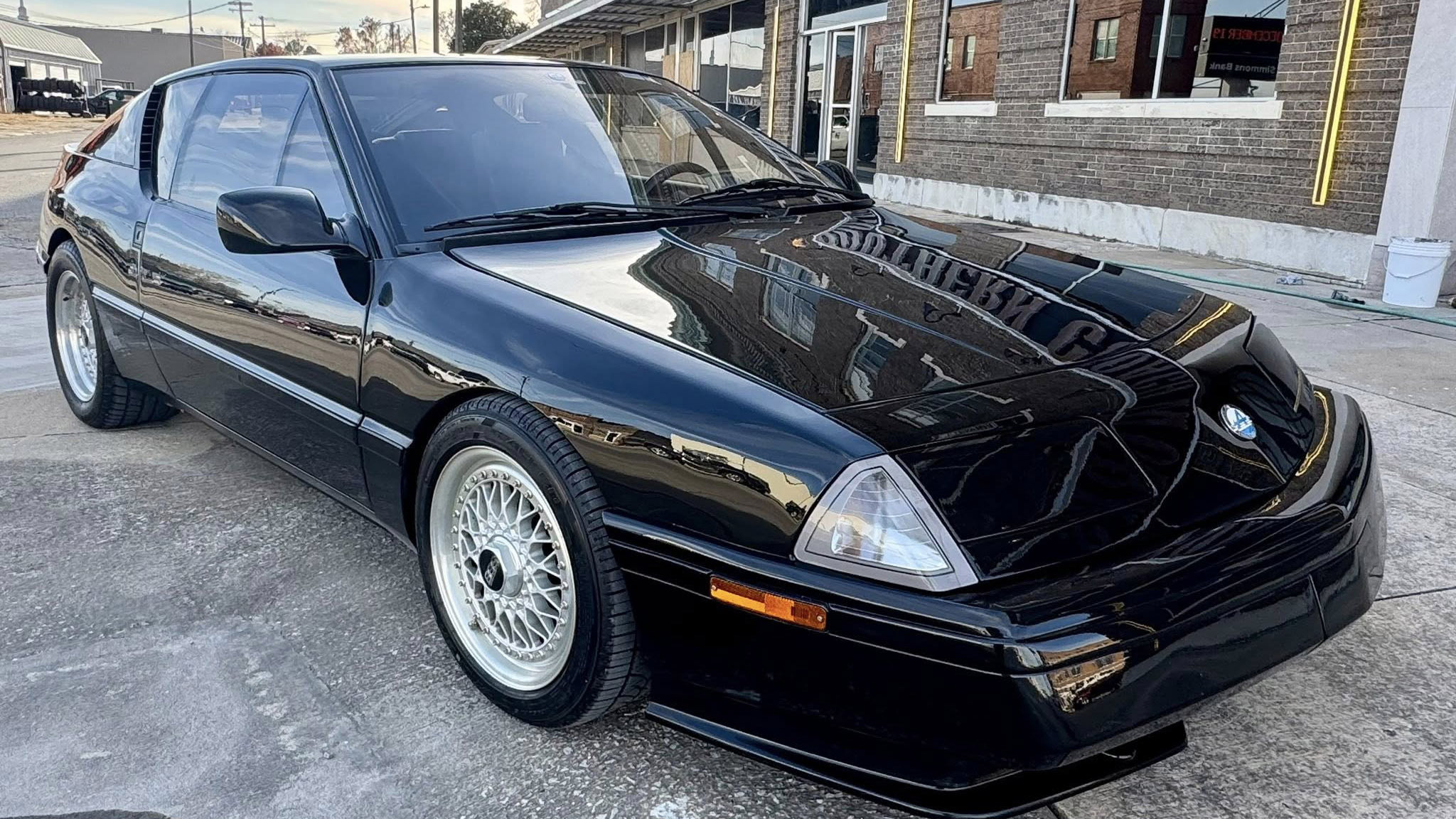

Renault once poured roughly 30 Million To Make This French into the dream of selling a rear engined sports car that could stand beside a 911 in American showrooms, only to walk away after a handful of cars were built. The saga of the Renault Alpine GTA and its successor, the Renault Alpine A610, is a case study in how regulatory ambition, corporate politics, and niche engineering can collide in the most expensive way possible. What remains is a tiny batch of U.S. legal coupes and a long tail of what ifs for enthusiasts and historians.
The French “911” That Aimed For America
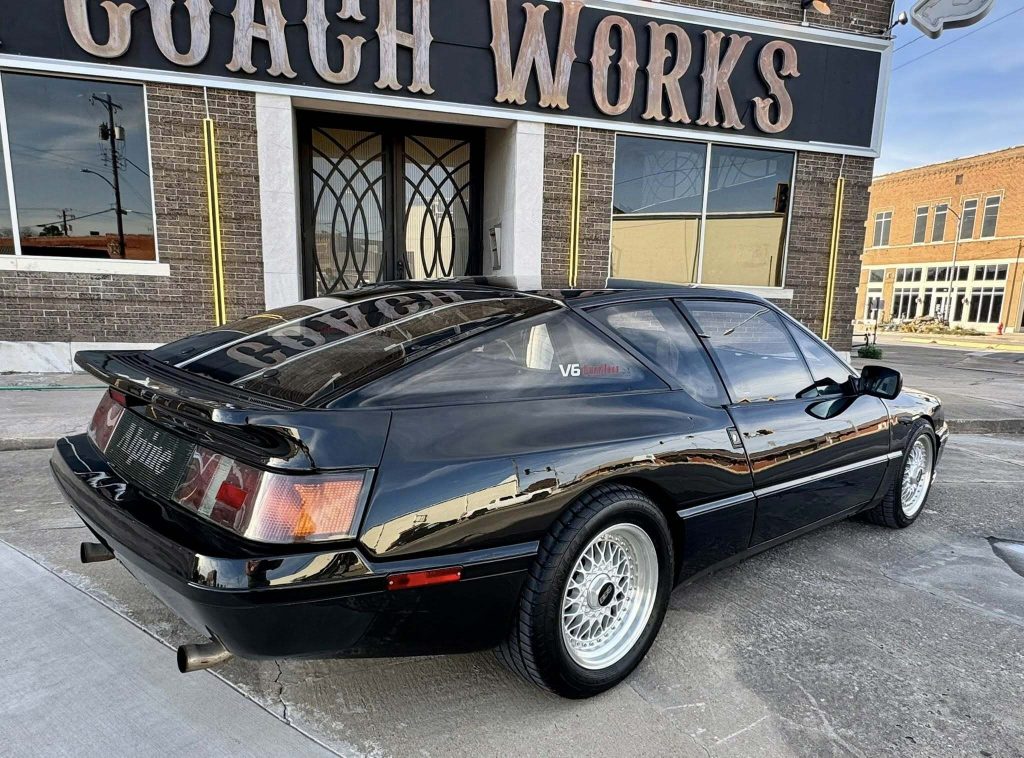
By the mid 1980s, Renault and Alpine had created a sleek, rear engined grand tourer that looked ready to challenge established German rivals. The Renault Alpine GTA arrived as a low slung 2+2 coupé with a V6 mounted behind the rear axle, a layout that inevitably invited comparison with the 911 and positioned it as a halo car for the French brand. In period, the GTA and the later A610 were pitched as sophisticated long distance machines rather than raw track specials, with the Renault Alpine GTA and the succeeding A610 described as sports coupé automobiles produced by the Renault performance arm to carry Alpine into a new era of composite bodywork and turbocharged power, a lineage that would eventually be replaced by the A610 in 1991 according to Renault Alpine GTA.
Inside Renault, the United States was seen as the ultimate proving ground for this French 911 rival, and the company was already embedded in the market through its stake in American Motors. Corporate planners believed that Renault and Alpine could quickly leverage that relationship, and Renault and Alpine quickly considered exporting the GTA to the United States through American Motors, then partially owned by Rena, using AMC’s dealer network and regulatory experience to smooth the path for the imported coupé as described in GTA. That strategy would prove far more complicated in practice than it looked on paper, especially once Renault’s American adventure with AMC began to unravel.
Thirty Million Dollars, Twelve Cars, And A Wall Of Regulations
The core of the story is the staggering mismatch between investment and outcome. To crack the U.S. market, Renault Spent $30 Million To Make This French 911 Legal In America, Then Built Just 12, a figure that reflects not only engineering work but also crash testing, certification, and the logistics of adapting a low volume European coupé to some of the toughest rules in the world, as detailed in Renault Spent. To meet American safety and emissions standards, each car received a series of mandated updates that, while necessary, chipped away at the purity of the original Alpine recipe, adding weight and complexity to a platform that had been engineered around lightness and simplicity.
Those changes went far beyond a few extra reflectors. Engineers had to integrate Safety beams into the doors, rework the crash structure beneath the skin, and adjust suspension geometry, with period documentation noting that beneath the body there were mainly changes that allowed the GTA to meet stringent US safety requirements, including revised impact structures and ride height that sat several millimetres higher on the wheels, as outlined in Beneath the. On top of that, the American versions needed upgraded cooling systems and air conditioning to cope with local expectations and climates, with reports noting that to meet American safety and emissions standards, the cars gained new bumpers, lighting, cooling systems, and air conditioning that further distinguished them from their European siblings, as described under American. The result was a U.S. legal GTA that was heavier, more complex, and vastly more expensive to certify than anyone in Boulogne Billancourt had anticipated.
Corporate Retreat And The Rarity That Followed
Just as the U.S. compliant GTA was ready, the corporate ground shifted under Renault’s feet. The company’s partnership with AMC, which had given it a foothold in American showrooms, began to unwind, and Renault ultimately sold its controlling interest in American Motors, a move that effectively pulled the distribution rug out from under the Alpine project, as enthusiasts later recalled when discussing how Renault used to have a deal with AMC for funding and distribution and then exited that stake, as noted by Renault. Without a robust dealer network or marketing push, the business case for a niche rear engined coupé collapsed, leaving the U.S. specific GTA as an orphaned program with sunk costs and no clear future.
Alpine itself moved on to the Renault Alpine A610, a more refined evolution that carried the concept into the early 1990s. The Renault Alpine A610 was a lightweight V6 grand tourer built during Alpine’s final standalone years, with subtle styling updates, rear engine packaging, and a focus on long distance comfort that marked it as the Alpine flagship of the period, as enthusiasts describe in Renault Alpine. Yet the lesson of the U.S. GTA lingered: despite its engineering sophistication and grand touring credentials, the A610 never made a serious push across the Atlantic, and the earlier decision to spend tens of millions on federalization for only twelve cars turned into a cautionary tale about chasing prestige markets without secure distribution or scale.
More from Wilder Media Group: