
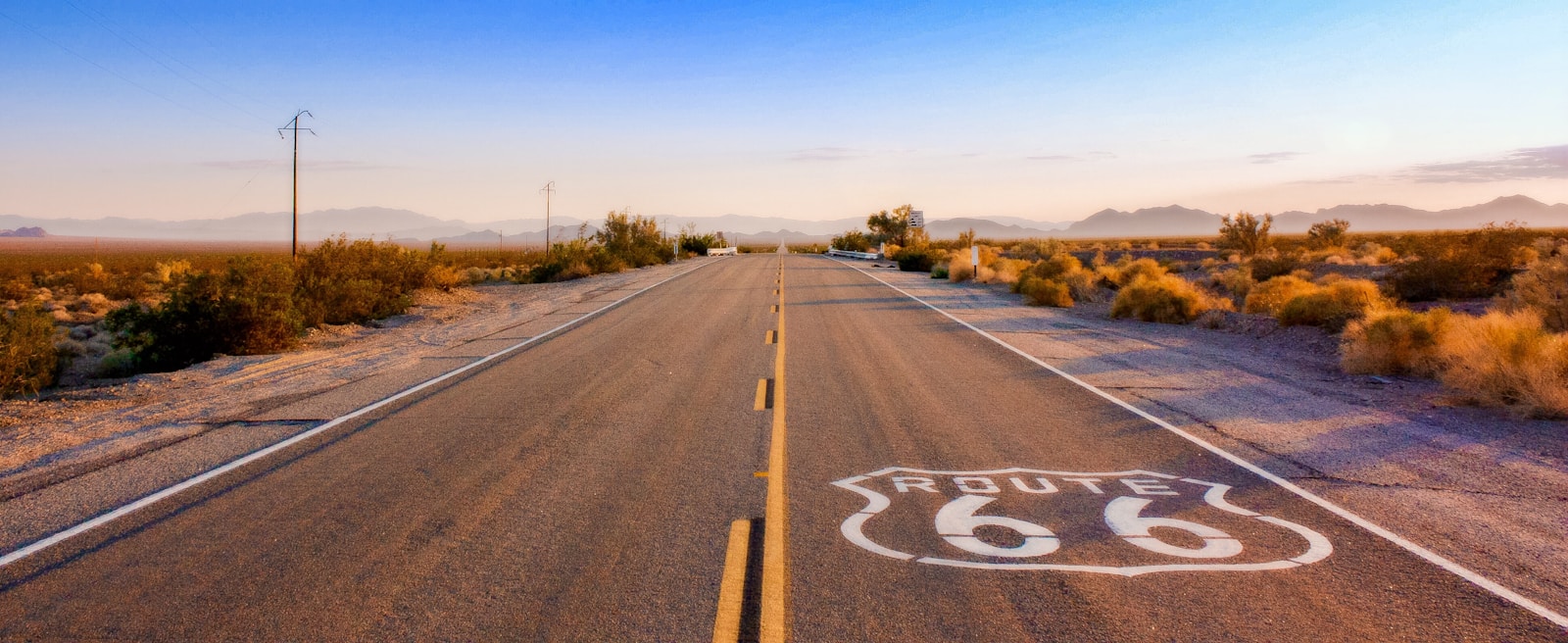

Route 66 has always been more than a line on a map, and as it approaches its centennial it is again becoming the country’s most talked‑about drive. A century after the highway number first appeared on roadside signs, travelers are rediscovering how this cross‑country ribbon still concentrates American history, pop culture, and small‑town reinvention into one long, open‑ended journey.
From Arizona mining towns to Oklahoma neon strips and the Santa Monica waterfront, communities are treating the 100th anniversary as a chance to restore landmarks, stage festivals, and welcome a new generation of road trippers. The result is that Route 66, once written off as a relic, is now defining what a modern, meaningful American road trip looks like again.
The road that turned 100 and why that matters now
Route 66’s centennial is not a vague marketing hook, it is a specific historical milestone that explains why the highway is back in the spotlight. On November 11, 1926, US Highway 66 was formally established as part of the original numbered federal network, and in 2026 the road turns 100, a neat symmetry that has prompted a wave of planning from state tourism offices, preservation groups, and local businesses that see the anniversary as a once‑in‑a‑lifetime chance to reintroduce the route to travelers who know it only from song lyrics and movie cameos. The fact that the number 66 itself has become shorthand for a certain kind of Americana gives the centennial extra resonance, especially for international visitors who have long treated the highway as a bucket‑list experience.
Arizona boosters describe the coming celebrations as “100 Years of Route 66,” emphasizing that the centennial is not just about a single day but about a full year of events that stretch from classic car parades to quirky local traditions like the Oatman Bed Races, all tied back to the original decision to designate Highway 66 as a continuous corridor across the Southwest. That framing, laid out in detail by organizers in their Years of Route materials, underscores why the centennial is being treated as a national cultural moment rather than a niche transportation anniversary.
How a decommissioned highway stayed America’s Main Street
Even after the federal government stripped Route 66 of its official status, the road refused to fade from the American imagination. Long before the centennial planning began, the highway had already been immortalized in pop culture as “America’s Main Street” and the “Mother Road of America,” phrases that still appear in contemporary travel coverage urging readers to “Get Your Kicks on Historic Route 66.” Those nicknames capture why the route endures: it connects big cities and tiny towns, desert mesas and Midwestern farm fields, in a way that feels more like a narrative than a commute, and that narrative has proved remarkably durable even as interstates siphoned off most of the traffic.
Recent roundups of iconic drives still single out Route 66 as the USA’s most recognizable road trip, noting that it remains the country’s most iconic corridor precisely because it combines roadside diners, neon motels, and wide‑open scenery into a single, coherent experience that travelers can follow at their own pace. One such list of Iconic American road trips frames the highway as a summer essential, proof that even in an era of cheap flights and streaming entertainment, the idea of pointing a car toward the horizon and following a storied route still holds powerful appeal.
Oklahoma’s big bet on the centennial
Among the eight states that once carried the full length of Route 66, Oklahoma is positioning itself as the emotional center of the centennial year. State officials in OKLAHOMA CITY have announced a sweeping program under the banner “Oklahoma Announces Plans for Route 66 Centennial Celebration in 2026,” treating the anniversary as both a heritage project and an economic development strategy. The announcement stresses that as the Mother Road marks its 99 year on the calendar, the state is already investing in signage, roadside improvements, and coordinated events so that by the time the highway officially turns 100, visitors will find a polished, easy‑to‑navigate corridor that still feels authentic.
The state’s tourism leaders have been explicit that they see the centennial as a chance to remind travelers why bold truly belongs here, leaning on the Route 66 brand to showcase everything from small‑town murals to revitalized main streets. Their detailed outline of how the Route 66 Centennial Commission will work with the Oklahoma Tourism & Recreation Department, laid out in the official Oklahoma Announces Plans for Route materials, makes clear that this is not a symbolic proclamation but a coordinated push to turn the 66 corridor into a marquee draw during the anniversary year.
Why Oklahoma’s stretch is being sold as the ultimate 2026 drive
National travel editors are already echoing that pitch, singling out Oklahoma’s segment of Route 66 as a standout journey for the centennial year. One widely circulated feature framed the question bluntly as “Why Oklahoma’s Route 66 is the ultimate American road trip for 2026,” arguing that as the iconic highway turns 100, the state offers a particularly concentrated mix of classic roadside attractions, Native American heritage sites, and newly restored motels that make it an ideal introduction to the broader route. The piece notes that travelers can move from big‑city arts districts to tiny towns in a single day, all while stopping to marvel at roadside curiosities that feel lifted from mid‑century postcards.
That argument rests on the idea that Oklahoma’s middle‑of‑the‑map location lets visitors sample the full spectrum of Route 66 experiences without committing to a multi‑week cross‑country odyssey. By highlighting how the number 66 itself has become a centennial hook and how the highway’s 100 year status adds urgency to planning a trip now, the feature positions the state as a natural starting point for anyone who wants to understand why this road still defines an American journey. The article’s framing of Why Oklahoma and its Route 66 towns matter in 2026 reinforces the sense that the centennial is not just about nostalgia but about seeing how communities are reinventing themselves along the old alignment.
From Santa Monica to Chicago, the route’s geography still shapes the story
Part of Route 66’s enduring pull is that its endpoints and waypoints still feel like narrative anchors in a cross‑country story. On the western side, travelers often pose at the “End of the Trail” sign on the Santa Monica Pier, but detailed local reporting points out that the true terminus sits a few blocks inland at Lincoln and Olympic, a reminder that the highway was designed as a practical urban connector long before it became a photo backdrop. That same reporting emphasizes that while the federal designation has changed, the physical roadbed still carries traffic through neighborhoods and business districts that depend on its visibility, which is why communities along the line continue to invest in preservation and signage.
Features that walk readers through standout Route 66 stops in Arizona and California stress that the road may no longer be a primary freight corridor, but it remains “America’s highway” in the cultural sense, a place where travelers can still find mom‑and‑pop diners, vintage motels, and roadside oddities that have survived multiple economic cycles. One such guide to Route 66 stops underscores that finishing a journey at Lincoln and Olympic feels more satisfying than simply following freeway signs, because it connects travelers to the original logic of the route and to the neighborhoods that grew up around it.
Centennial events turning a road into a year‑long festival
The centennial is not just inspiring individual road trips, it is generating a dense calendar of organized events that effectively turn Route 66 into a rolling festival across 2026. Travel planners have already compiled a Historic U.S. Route 66 2026 guide that describes the highway as one of the United State’s first continuous stretches of paved road and notes that the centennial, framed as “Route 66 Centennial: 1926‑2026,” will feature coordinated happenings in every state along the corridor. That guide points out that the number 66 itself has become a branding device for everything from car rallies to museum exhibits, and that travelers can use the centennial year as a scaffold for planning multi‑stop itineraries that link several events into a single trip.
Among the most ambitious of these is The Drive Home VII: Route 66, A Century of Adventure, an annual pilgrimage of vintage vehicles that will trace large portions of the route while stopping for public gatherings, car shows, and educational programs. Organizers describe it as part of a broader slate of Route 66 Centennial Events in 2026, a phrase that appears prominently in the Historic U.S. Route trip planner, which encourages travelers to time their drives so they can intersect with these moving celebrations rather than simply passing through empty stretches of pavement.
A national commission and a push to “Travel Native America”
Coordinating a centennial that stretches across eight states and thousands of miles requires more than local enthusiasm, which is where the national Route 66 Centennial Commission comes in. The commission’s official portal lays out a vision that goes beyond car culture, highlighting initiatives like Travel Native America, the Detroit Auto Show tie‑ins, The Great American Road Trip programming, a Centennial Speaker Series, and a Bridgeport Bridge Centennial Re dedication that together aim to connect the highway’s past to a more inclusive future. By placing tribal tourism, automotive history, and infrastructure preservation under the same umbrella, the commission is signaling that the centennial is as much about who gets to tell the story of Route 66 as it is about the story itself.
That broader framing is evident in the way the commission talks about moving “Into an Exciting Future,” language that appears alongside its list of signature programs and suggests that the centennial is being used as a springboard for long‑term investment rather than a one‑off party. The emphasis on Travel Native America in particular reflects a growing recognition that the highway crosses sovereign lands and communities whose histories were often sidelined in earlier Route 66 nostalgia. By foregrounding those perspectives on the official Route 66 Centennial site, organizers are inviting travelers to see the centennial as a chance to engage with a more complete, and more complicated, version of the road’s legacy.
State‑by‑state celebrations and the rise of “Across States” itineraries
Alongside the national commission’s work, individual states and regional groups are building their own centennial programs that together create a patchwork of experiences for travelers. A detailed roundup of Route 66 Centennial Events: Across States highlights how communities from Illinois to California are staging everything from film festivals to roadside art installations, often timed so that visitors can move from one celebration to the next over the course of the year. That same roundup notes that The Drive Home VII: Route 66 A Century of Adventure will intersect with several of these local happenings, turning the caravan itself into a moving centerpiece that draws attention to smaller towns along the way.
Organizers are also planning a Route 66 Centennial Great Race, described as a 9‑day event that will send participants along significant stretches of the historic alignment while stopping for public festivities in host communities. Details of that race, along with references to America’s Automotive Trust and the Detroit show that will help kick off centennial programming, appear in the official Centennial Events outline, which promises that a more detailed itinerary will be published closer to the start of the celebrations so travelers can plan around specific dates and locations.
Why 2026 will feel like the ultimate American road trip year
All of these strands, from Oklahoma’s aggressive promotion to Arizona’s “100 Years of Route 66” branding and the national commission’s Travel Native America push, are converging to make 2026 feel like a once‑in‑a‑century moment for road travel. Curated lists of upcoming experiences already frame the centennial as a top reason to plan a long drive, with one guide titled “30 Ways to Celebrate the Route 66 Centennial Next Year” laying out how travelers can hopscotch between car rallies, museum exhibits, and small‑town festivals without ever straying far from the old alignment. That guide’s section on Route 66 Centennial Events: Across States underscores that the centennial is not confined to a single flagship parade or ceremony but is instead a distributed celebration that rewards curiosity and flexibility.
For travelers who want structure, the same guide points to screenings and special programs that will begin in September 2026, giving late‑season visitors a chance to experience the centennial even if they miss the early‑year kickoff. By presenting the centennial as a menu of options rather than a fixed itinerary, the roundup of Route 66 Centennial Events reinforces the idea that the ultimate American road trip is not about ticking off a checklist but about choosing a slice of the highway that matches a traveler’s interests, whether that means classic cars, Indigenous history, neon nostalgia, or all of the above.
Planning a centennial drive without losing the road’s soul
For all the formal programming, Route 66 still works best when travelers leave room for serendipity, and the centennial planning reflects that tension between structure and spontaneity. Official trip planners encourage visitors to use the centennial as a framework while still allowing time to wander off the main drag, explore side streets, and talk with locals who can point out lesser‑known murals, diners, or historic buildings. The Route 66 Centennial Events in 2026 overview, for example, lists major happenings but also reminds readers that the numerical designation of “U.S. Route 66” was assigned on April 30, 1926, a detail that grounds the celebrations in a specific historical moment even as it leaves space for personal interpretation of what the road means today.
That balance is evident in the way organizers describe “The Mother Road” in their official Route 66 Centennial Events materials, which present the centennial as both a commemoration and an invitation. Travelers are encouraged to see the highway not as a museum piece but as a living corridor where new stories are still being written, whether that is a family taking its first cross‑country vacation, a solo driver chasing the sunset across the high plains, or a caravan of vintage cars retracing the path of earlier generations. In that sense, the centennial does not just mark 100 years of Route 66, it reaffirms why this road still defines what an American road trip can be.
Supporting sources: Untitled, Oklahoma Announces Plans for Route 66 Centennial …, Oklahoma Announces Plans for Route 66 Centennial …, 100 Years of Route 66, Oklahoma’s Route 66 in 2026: When to visit, where to stay …, Historic U.S. Route 66 2026 Travel Guide and Trip Planner …, Route 66 Centennial, Iconic American road trips that should be on your summer bucket list, Route 66 stops that prove it’s still America’s highway – 12News, Route 66 Centennial Events in 2026, Route 66 Centennial Events in 2026, 30 Ways to Celebrate the Route 66 Centennial Next Year.
More from Wilder Media Group: