

You might not notice a change in the intersection until a moment of confusion costs you time—or worse. Traffic engineers have introduced new signal designs that some safety experts say reduce visibility for certain drivers, and that issue can affect anyone behind the wheel or walking across the street.
If a new traffic-light design makes signals harder to see, it can slow reaction times and increase crash risk for vulnerable road users. This post explains what makes the lights confusing, who is most likely to be affected, and what solutions engineers and agencies are testing to restore clear, predictable signals.
Expect a closer look at the visual problems drivers face at these lights, real-world findings from recent studies, and practical fixes and emerging technologies that aim to make intersections safer for all.
Visibility Challenges and Safety Risks With New Traffic Lights
Drivers and pedestrians may miss or misread signals because the new lights change appearance, operate intermittently, and differ from long‑standing conventions. These factors create delayed reactions, unexpected stops, and conflicting right‑of‑way behaviors at intersections.
Why the New Traffic Light Design Is Hard to See
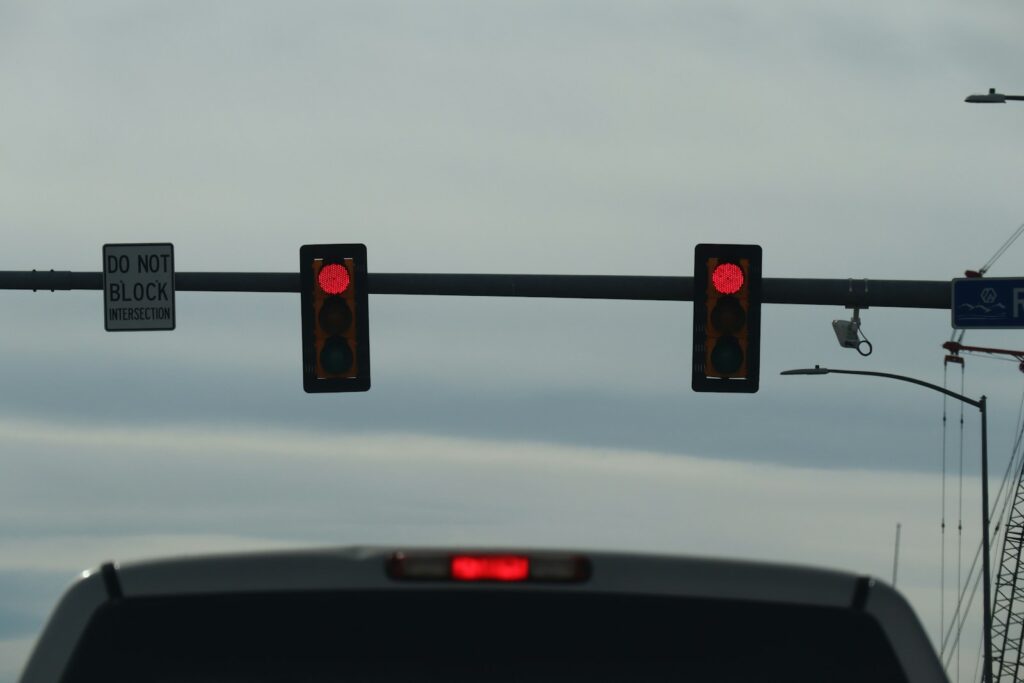
The new LED clusters and altered color hues reduce contrast in bright sunlight and against complex urban backgrounds. In winter, snow can mask LED lenses more than traditional incandescent bulbs, causing a solid red light to appear dim or disappear entirely.
Smaller or repositioned lenses narrow the visible angle, so drivers approaching from skewed alignments see only part of the signal. That increases reaction times and raises the chance that a motorist will run a red or brake abruptly.
Glare and reflection from adjacent glass facades and wet pavement further degrade legibility. Municipalities that switched to energy‑saving fixtures without addressing lens shielding or supplemental backplates saw measurable visibility problems.
Confusion Among Drivers at Pedestrian Hybrid Beacons
Pedestrian hybrid beacons (PHBs) that remain dark until activated differ from traditional signals and surprise drivers who expect continuous cycling. When a PHB activates, some drivers misinterpret the flashing sequence and either stop too late or proceed through the crosswalk.
The five‑stage operation used in some PHBs — dark, flashing yellow, solid yellow, solid red, alternating red — is unfamiliar to many motorists. Inconsistent messaging from municipal signage and limited public outreach magnify confusion.
Researchers and local journalists documented drivers “baffled” by PHBs in Massachusetts after installations, noting near‑misses and hesitation that disrupted vehicle gaps and crosswalk use. Clearer signage, driver education, and standardized timing can reduce these risks.
Impact on Pedestrian Safety and Traffic Flow
When drivers hesitate or misread signals, pedestrians face longer exposure times in the crosswalk and higher risk during multi‑stage cycles. Pedestrians may assume vehicles will stop at a solid red light that some drivers fail to see, increasing vulnerability at intersections.
Traffic flow becomes less predictable when drivers brake unexpectedly or ignore activated PHBs. That unpredictability propagates upstream, causing platoon dispersion, increased rear‑end collisions, and delays on arterial streets.
Cities confronting these problems have options: add larger backplates, use higher‑contrast hooding, program mandatory red phases for pedestrian requests, or improve outreach on PHB behavior. Each change targets either visibility or driver expectation to restore safer interactions between vehicles and pedestrians.
Emerging Technologies and Solutions for Safer Intersections
Many cities pair active lighting, sensor systems, and vehicle-based tech to reduce intersection conflicts and improve visibility for drivers, cyclists, and pedestrians. Practical fixes include targeted crosswalk lighting, timed flashing beacons, and design changes for midblock crossings that reduce surprise interactions and the temptation to “follow the car in front.”
Role of Crosswalk Lighting and Flashing Beacons
Crosswalk lighting illuminates the pedestrian zone, improving contrast between people and pavement at night and in bad weather. Well-placed LED in-pavement lights or overhead luminaires increase detection distance, giving drivers more time to brake.
Flashing beacons—rectangular rapid-flash beacons (RRFBs) or full traffic signal flashers—grab driver attention before the crosswalk. Studies show RRFBs reduce pedestrian-vehicle conflicts by prompting earlier yielding behaviors.
Cities must calibrate flash patterns, brightness, and mounting height so beacons don’t blend into urban lighting. Maintenance matters: burned-out LEDs or obscured fixtures can negate benefits. Combining steady crosswalk illumination with on-demand flashing beacons gives both passive and active cues to drivers.
Autonomous Vehicles and the Need for New Signal Colors
Autonomous vehicles rely on cameras, lidar, and machine vision to read signals and detect pedestrians; inconsistent or low-contrast signals degrade system performance. New signal palettes or enhanced spectral signatures can improve machine detection without confusing human drivers.
Researchers test signal variations and infrared markers that are visible to sensors but subtle to people. Deployment requires standards so self-driving cars from different manufacturers interpret signals the same way.
Until standards exist, mixed traffic situations risk misreads—particularly when human drivers “follow the car in front” through ambiguous signal states or novel light designs. Cities should pilot sensor-friendly signals in controlled corridors and coordinate with AV developers.
Design Improvements for Midblock Crosswalks
Midblock crosswalks present higher risk because drivers don’t expect crossings between intersections. Raised crosswalks, curb extensions, and high-visibility markings shorten crossing distance and force drivers to slow.
Pairing geometric changes with active devices—flashing beacons or pedestrian-activated overhead LEDs—further reduces vehicle speeds and increases yielding. Eye-level cues help drivers who might be distracted or who habitually follow the car in front.
Design must consider sightlines: remove visual clutter and locate crosswalks where approaching drivers have ample reaction distance. Regular monitoring of crash and near-miss data lets agencies refine treatments like beacon timing or light placement.
More from Steel Horse Rides: