

On a clear training flight over Sydney’s northern beaches, a routine lesson turned into a genuine life‑or‑death test when a light aircraft lost power and the instructor had seconds to act. Instead of panic, there was a calm hand on the controls, a sharp change of plan, and a landing on a suburban golf course that investigators now say almost certainly prevented a tragedy. The newly released safety report lays out, in clinical detail, how that split‑second decision making, backed by preparation and local knowledge, turned a looming disaster into a survivable crash.
What sounds like a miracle landing was, in reality, the product of an instructor who knew the terrain, understood the aircraft, and was willing to abandon the original plan the moment the situation changed. The report traces each choice, from the first sign of engine trouble to the final touchdown on the fairway, and in doing so offers a rare, close‑up look at how training, judgment and a bit of luck intersected on that Sydney golf course.
The training flight that suddenly went quiet
The flight started like countless others, with a student and instructor taking off in a light training aircraft over Sydney for what was meant to be another step toward a licence. The aircraft was a Piper Cherokee, a workhorse of flying schools, and the plan was to run through standard exercises rather than anything dramatic. Early in the flight, though, the engine began to lose power, a problem that would later be traced to a broken exhaust valve that robbed the engine of the ability to keep producing thrust.
At first, the loss of power was partial, the kind of issue that gives a crew a sliver of time to troubleshoot rather than an instant plunge into silence. That window was small but crucial. The instructor, sitting beside the student, had to decide whether to keep trying to coax performance from the engine or immediately start treating the situation as a forced landing. According to the safety report, the instructor chose the latter, declaring an emergency and taking control of the aircraft while the student shifted from learning mode to survival mode as the Piper Cherokee began descending toward Sydney’s coastline.
Why a golf course became the best bad option
Once it was clear the engine was not coming back, the instructor’s job shifted from diagnosis to geography. At low altitude, with limited glide range, the options were brutally simple: find a long, flat, obstacle‑free stretch of ground, or risk coming down in trees, houses or water. The instructor had already mentally mapped out potential emergency sites around the northern beaches, including several coastal golf courses that offered open fairways and relatively forgiving terrain. That local knowledge, built up over many flights, suddenly became the most valuable asset on board.
Investigators say the instructor initially eyed Long Reef golf course, which was attractive because it had fewer trees and more open space than some of the alternatives. The plan, in those first moments, was to stretch the glide to reach that course and use its broad fairways as an improvised runway. It was a calculated choice, balancing distance, wind and terrain, and it showed that even under pressure the instructor was thinking in terms of risk trade‑offs rather than simply pointing the nose at the nearest patch of green.
From Long Reef to Mona Vale: the mid‑air change of plan
As the aircraft descended, the instructor’s original plan started to unravel. The engine’s performance deteriorated further, and the glide that might have reached Long Reef began to look optimistic at best. About six minutes into the unfolding emergency, the crew realised that the remaining height and speed were not going to carry them to the first choice. That was the moment the instructor made the call to abandon Long Reef and instead aim for Mona Vale Golf Course, a closer but more cluttered option with more trees and tighter landing corridors.
The safety report notes that the instructor, already familiar with potential emergency landing sites in the area, quickly recalculated the glide and turned toward Mona Vale Golf Course. That decision meant accepting a more challenging touchdown environment in exchange for the certainty of reaching solid ground. It also meant re‑briefing the student in real time, shifting their focus from the original target to a new one while the aircraft continued to lose height. The report makes clear that this willingness to pivot, rather than stubbornly stick with the first plan, was central to why both people walked away.
The final approach over Mona Vale Golf Course
By the time the Piper Cherokee lined up with Mona Vale Golf Course, the crew were committed. As they closed in on the fairways, the engine’s power dropped again, with investigators later describing a further loss of the engine’s RPN that left the aircraft effectively gliding. The instructor had to manage speed, angle and configuration with almost no margin, threading a path between trees, bunkers and the kind of gentle slopes that look harmless from the clubhouse but can trip up a low‑flying wing. Every small control input mattered, because there was no spare power to correct a misjudged turn or a sink rate that got away from them.
Footage and later commentary shared by 7 News described how the approach into Mona Vale Golf Course was complicated by trees and terrain that made it difficult to land cleanly. As they got closer to the course, the crew realised just how tight the landing zone really was, and how little room there would be for a go‑around or last‑second change of mind. According to the same coverage, as they have got closer to that golf course they have realised there has been a further loss of the RPN of the engine and they have had to commit fully to the forced landing, riding the glide all the way to the grass.
Impact, wreckage and two people walking away
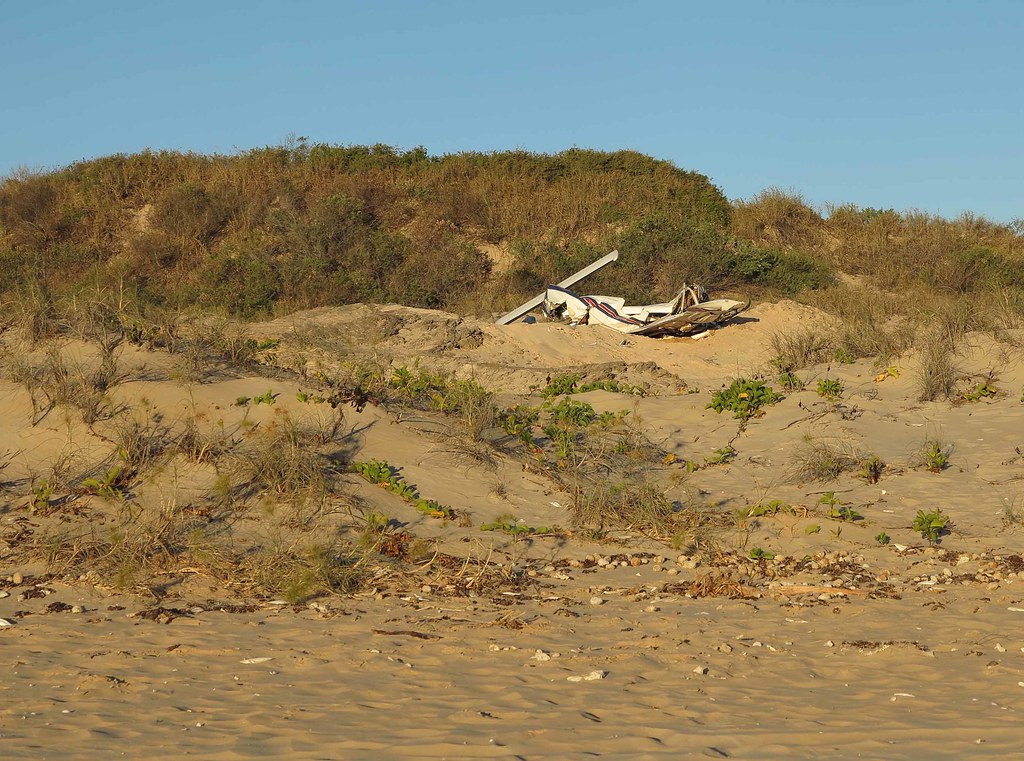
The landing itself was anything but gentle. The aircraft came down hard on the golf course, skidding and sustaining significant damage that left the airframe a write‑off. Photos released by investigators show a crumpled nose and bent wings, the kind of wreckage that usually signals serious injuries. Yet both the instructor and the student were able to escape the aircraft’s crash landing with only minor injuries, a result that safety officials have not hesitated to describe as remarkably fortunate given the circumstances and the confined space they had to work with.
New details from the moments leading up to the crash, highlighted in New reporting, underline just how close the outcome came to being far worse. The instructor had to manage not only the aircraft’s attitude and speed but also the risk of clipping trees or overshooting into nearby suburban streets. That both occupants escaped the plane’s crash landing without life‑threatening injuries is being treated as a direct consequence of the way the approach was flown and the decision to prioritise a controlled arrival on the fairway over trying to nurse the aircraft any farther.
What the safety report says about the instructor’s judgment
The official safety report does not read like a piece of hero worship, but its language around the instructor’s choices is unmistakably positive. Investigators point out that the instructor took control early, made an emergency declaration and immediately started working through the forced landing checklist rather than wasting time on unlikely engine fixes. They also highlight the value of the instructor’s prior mental mapping of emergency sites, noting that being familiar with potential emergency landing areas around the northern beaches gave the crew options that might not have been obvious to an outsider.
Crucially, the report frames the mid‑air switch from Long Reef to Mona Vale Golf Course as a textbook example of flexible thinking under pressure. Rather than fixating on the first plan, the instructor recognised that the aircraft’s performance no longer supported that choice and was willing to accept a more technically demanding landing zone in exchange for a higher chance of actually reaching it. That kind of judgment, the report suggests, is exactly what training organisations try to instil in instructors and students alike, and it is a big part of why the emergency landing on the suburban golf course did not end in multiple fatalities.
How investigators pieced together the six‑minute emergency
Reconstructing those frantic minutes in the cockpit meant pulling together radio calls, flight path data and eyewitness accounts from people on and around the course. New analysis of the sequence shows that the instructor initially wanted to reach Long Reef golf course, with fewer trees and more open space, before the worsening engine performance forced the change of plan. The timeline shows a steady descent rather than a sudden plunge, which gave the crew just enough time to talk through options and coordinate their actions, even as the situation deteriorated.
Visual material from the scene, including a Picture released by the ATSB, helped investigators understand the final attitude of the aircraft and the path it took across the Mona Vale Golf Course fairway. Combined with interviews, that evidence allowed them to map out the instructor’s control inputs and the way the aircraft responded as the engine’s RPN sagged. The end result is a minute‑by‑minute narrative that backs up the conclusion that the instructor’s quick decision making, rather than luck alone, was the decisive factor in avoiding a far more serious crash in Sydney.
Public reaction and praise for the “miracle” landing
Once images of the wrecked Piper Cherokee sitting on the manicured grass of Mona Vale Golf Course started circulating, public reaction swung quickly from shock to admiration. People who play the course, and locals who know how close it sits to surrounding homes and roads, were quick to point out how much worse it could have been if the aircraft had come down just a few hundred metres in another direction. The phrase “miracle landing” began to crop up in coverage, but safety officials have been careful to stress that what looked miraculous was, in large part, the result of disciplined flying and a cool head.
In interviews, the ATSB’s Chief Commissioner Angus Mitchell has been explicit in his praise for the instructor’s quick thinking, noting that the decision to use a Sydney golf course as an emergency runway almost certainly prevented serious injuries to the student pilot and people on the ground. Coverage across Australia and New Zealand has echoed that sentiment, with commentators pointing out that the instructor not only saved lives but also gave the aviation community a real‑world case study in how training and local knowledge can pay off when an engine fails over a densely populated area.
Lessons for pilots, students and everyone who looks up
For pilots and students, the Mona Vale Golf Course emergency is already being treated as a case study in how to handle the unthinkable. Instructors are likely to use it to reinforce the value of constantly scanning for potential landing sites, even on routine flights, and of mentally rehearsing what they would do if the engine suddenly went quiet. The fact that the instructor was already thinking about places like Mona Vale Golf and Long Reef before anything went wrong is a reminder that good airmanship starts long before an emergency actually hits.
The broader public takeaway is simpler but no less important. When people see a small aircraft overhead, they rarely think about the quiet planning happening in the cockpit, or the fact that instructors are constantly weighing up options like Long Reef and Mona Vale as potential lifelines. The safety report on this Sydney incident pulls back the curtain on that world, showing how a chain of small, smart decisions can turn a failing engine into a survivable story rather than a headline about lives lost. It is a reminder that while aviation will never be risk‑free, the people in the left seat spend a lot of time preparing for the day when everything suddenly stops working.
More from Wilder Media Group: