
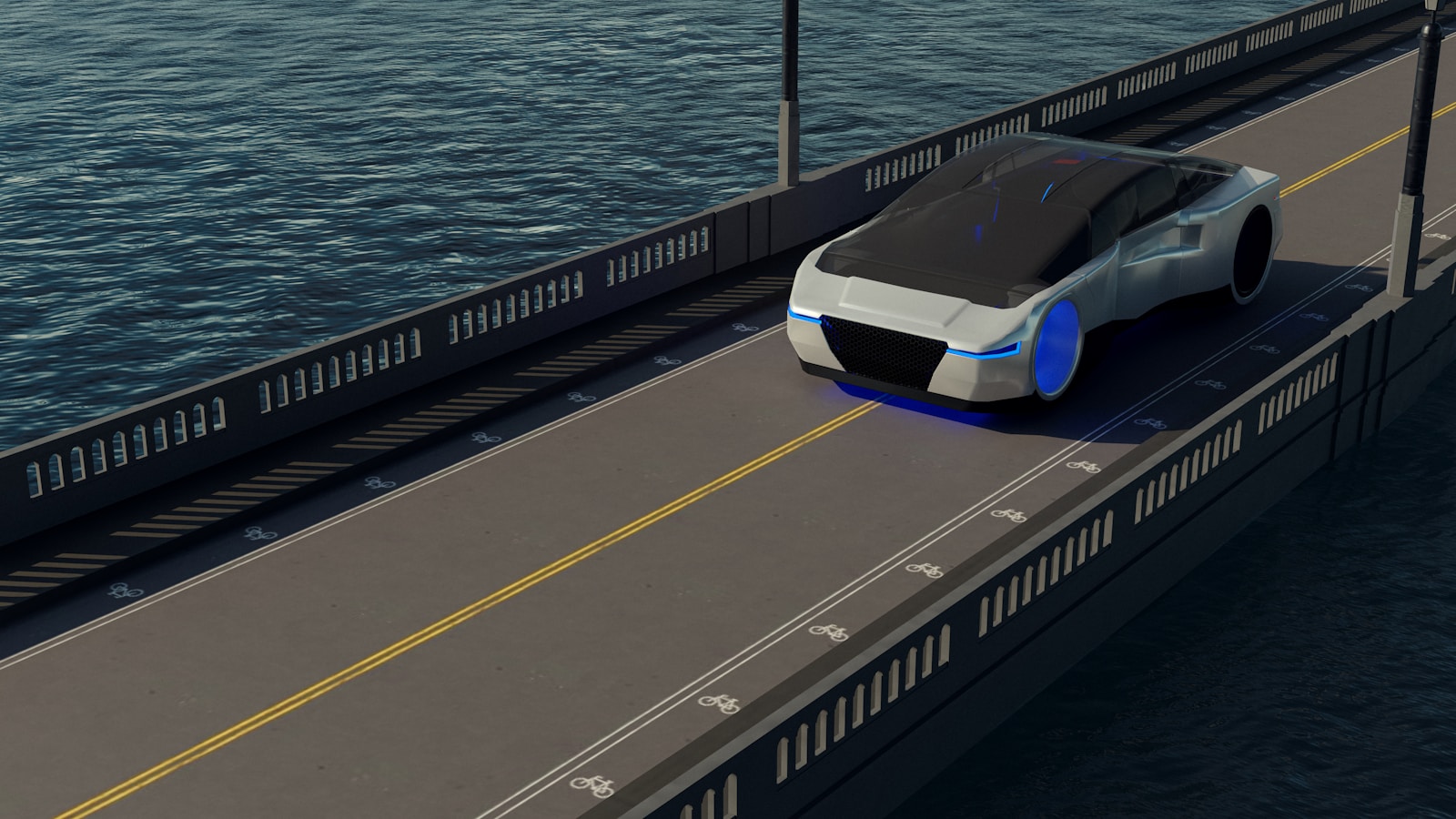

In March 2026, you can hail a driverless Waymo taxi in San Francisco, Phoenix, Los Angeles, and Austin. There is no safety driver behind the wheel, no one to honk at, and no small talk. The rides are real, the fleet is growing, and federal regulators are now rewriting decades-old vehicle safety rules to make room for cars that were never designed for a human driver at all. What happens next will determine whether autonomous vehicles become a genuine public safety tool or remain a niche curiosity limited to a handful of Sun Belt cities.
New federal rules clear a path for vehicles without steering wheels
The U.S. Department of Transportation is overhauling its approach to autonomous vehicles. At the center of the effort is a proposed framework that would treat an automated driving system, not a person, as the vehicle’s operator. That distinction matters because current Federal Motor Vehicle Safety Standards assume every car has a steering wheel, brake pedal, and a licensed human ready to use them. The agency’s AV framework plan, published by the National Highway Traffic Safety Administration, lays out a timeline for updating those standards so that purpose-built robotaxis and shuttles can be manufactured and sold legally at scale.
The DOT’s broader innovation agenda lists automated driving as a priority for improving both safety and mobility. For companies like Waymo, Zoox (owned by Amazon), and Motional, the signal is clear: Washington is moving from pilot-program tolerance toward a permanent regulatory structure. For cities that have hosted small test fleets for years, a federal green light could mean thousands more vehicles on their streets within the next few years.
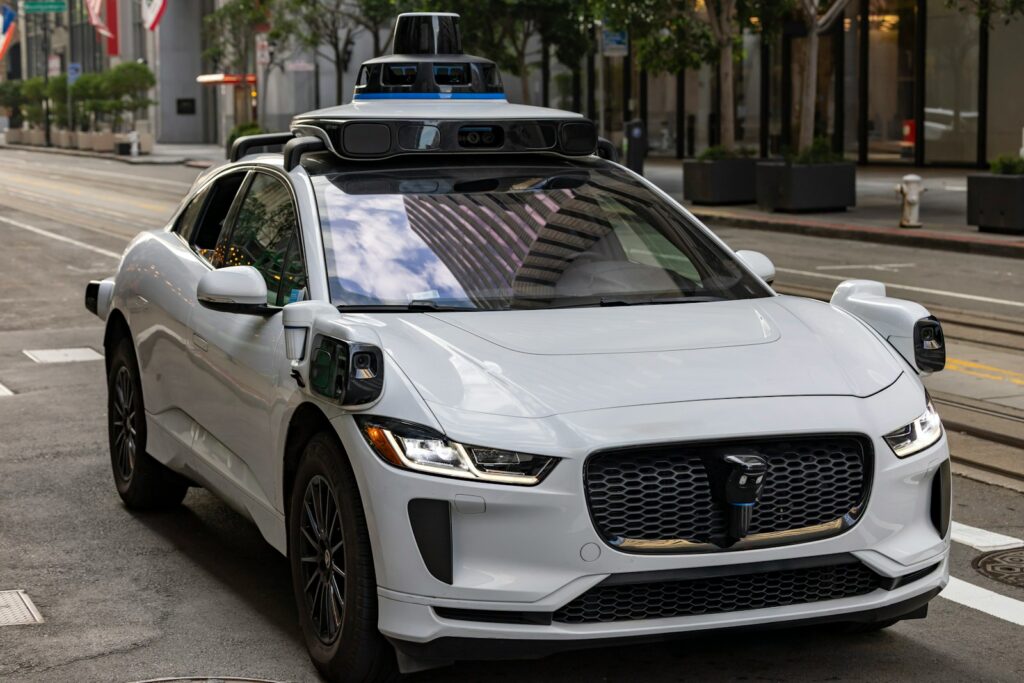
The safety case, by the numbers
Proponents of autonomous vehicles lean on a single, stubborn fact: human error contributes to roughly 94% of serious crashes, according to NHTSA’s own pre-crash causation research. Remove the distracted, drowsy, and impaired drivers, the argument goes, and the toll drops dramatically.
Waymo’s publicly released safety data offers the strongest real-world evidence so far. The company’s safety impact report compares its driverless operations in Phoenix, San Francisco, and other cities against human-driver benchmarks and shows statistically significant reductions in crash rates across multiple severity levels. A November 2025 analysis reported by the Detroit Free Press noted that Waymo’s system was involved in roughly one-tenth the rate of serious-injury crashes compared with human drivers in the same areas.
Those numbers come with a caveat: Waymo generates and publishes its own data. Independent verification is limited, and the company’s vehicles currently operate in relatively predictable environments with good weather and well-mapped roads. Scaling to snowy Midwestern highways or congested Northeast corridors will be a different test entirely. Still, for regulators who have spent years asking whether computers can actually outperform people behind the wheel, the early dataset is the most compelling answer the industry has produced.
Congress moves from curiosity to legislation
On Capitol Hill, the conversation has shifted from “should we allow this?” to “how fast can we write the rules?” In a Senate Commerce Committee hearing in 2025, lawmakers pressed executives from both Tesla and Waymo on timelines, safety benchmarks, and accountability. Waymo’s chief safety officer told the panel that the company’s driverless system is statistically less likely than a human driver to be involved in a crash, as covered by TNND reporting on the hearing. The session revealed a rare pocket of bipartisan enthusiasm, though senators from both parties pressed hard on who bears liability when a driverless car injures someone.
In the House, the SELF DRIVE Act (H.R. 7390) advanced out of the Energy and Commerce Committee and would, if enacted, require NHTSA to finalize federal autonomous vehicle safety standards by September 2027. The bill would also preempt some state-level restrictions that companies say create a confusing patchwork of local rules. Representative Bob Latta, the bill’s lead sponsor, has framed it as essential to keeping the U.S. competitive with China, where Baidu’s Apollo Go robotaxi service already operates in multiple cities. A summary of the legislation is available via Fox News’ coverage of the committee vote.
The bill faces resistance from some state officials and consumer safety groups who argue that federal preemption could strip local governments of the ability to protect their own residents. That tension between national uniformity and local control will likely define the legislative fight through the rest of 2026.
States are not waiting for Washington
While Congress debates, state legislatures are writing their own playbooks. Arizona remains the most permissive environment for AV testing and commercial service. California has a detailed permitting process run by the DMV and the Public Utilities Commission. Texas has taken a lighter regulatory touch. Michigan, home to the traditional auto industry, has invested in AV-friendly infrastructure and testing corridors. A Governing magazine review of state-level activity found that legislatures are moving quickly, motivated in part by the argument that higher levels of automation leave less room for human error and could reduce congestion.
The result, for now, is a map where a company might face one set of testing rules in Phoenix, a different permitting process in San Francisco, and yet another insurance requirement in Detroit. That uneven landscape is precisely what the SELF DRIVE Act aims to replace with a single national standard.
Beyond crashes: money, mobility, and independence
The case for autonomous vehicles extends well beyond collision statistics. Traffic crashes cost the U.S. economy hundreds of billions of dollars annually in medical bills, lost productivity, emergency response, and property damage, according to NHTSA estimates. Fewer crashes would mean lower insurance premiums, less strain on hospital emergency departments, and reduced public spending on road repairs and first responders.
For people who cannot drive, the stakes are more personal. The elderly, people with disabilities, and teenagers in car-dependent suburbs often rely on family members, expensive paratransit services, or simply go without. A July 2025 report from the National Council on Disability documented how missing curb cuts, unreliable transit schedules, and limited paratransit coverage trap Americans with disabilities at home, forcing them to skip medical appointments and job opportunities. Disability advocates have pointed to autonomous ride services as one of the most promising tools for closing those gaps, provided the vehicles themselves are designed to be wheelchair-accessible from the start.
That last point is not guaranteed. Most current AV fleets use standard passenger cars. Wheelchair-accessible vehicles remain a small fraction of Waymo’s fleet, and advocates warn that without explicit federal requirements, accessibility could be treated as an afterthought rather than a design priority.
Public skepticism and job fears are real obstacles
Polls consistently show that a majority of Americans are not yet comfortable sharing the road with driverless cars. A national study led by researchers at UC San Diego found significant public concern about job displacement, particularly among professional drivers, as well as anxiety about how autonomous vehicles will behave in mixed traffic with cyclists, pedestrians, and unpredictable human drivers. The UCSD findings also highlighted unresolved questions about liability: when a driverless car causes a crash, who pays?
High-profile incidents have reinforced that unease. The 2023 Cruise incident in San Francisco, in which a robotaxi dragged a pedestrian who had been struck by another vehicle, led to the suspension of Cruise’s California permit and ultimately contributed to General Motors’ decision to shut down the Cruise robotaxi program entirely in December 2024. That episode demonstrated that a single dramatic failure can set back public trust far more than thousands of uneventful rides can build it.
Labor groups have their own concerns. The Teamsters and rideshare driver organizations have argued that replacing human drivers with robots will eliminate hundreds of thousands of jobs in trucking, delivery, and ride-hailing without a clear plan for retraining or transition support. Lawmakers who support AV legislation have largely sidestepped the workforce question, a gap that critics say will need to be addressed before any national framework can claim broad public legitimacy.
What the next two years will decide
The window between now and September 2027, the SELF DRIVE Act’s proposed deadline for final federal standards, will shape the trajectory of autonomous vehicles in the United States for a generation. If Congress passes a workable national framework, companies will have the regulatory certainty they need to invest in larger fleets, new cities, and purpose-built vehicles. If the bill stalls, the state-by-state patchwork will persist, and deployment will remain concentrated in a few friendly jurisdictions.
The technology is no longer hypothetical. Thousands of people ride in driverless cars every week in American cities. The open questions are about governance, accountability, equity, and public trust. Getting those answers right matters more than getting them fast.
More from Wilder Media Group: