
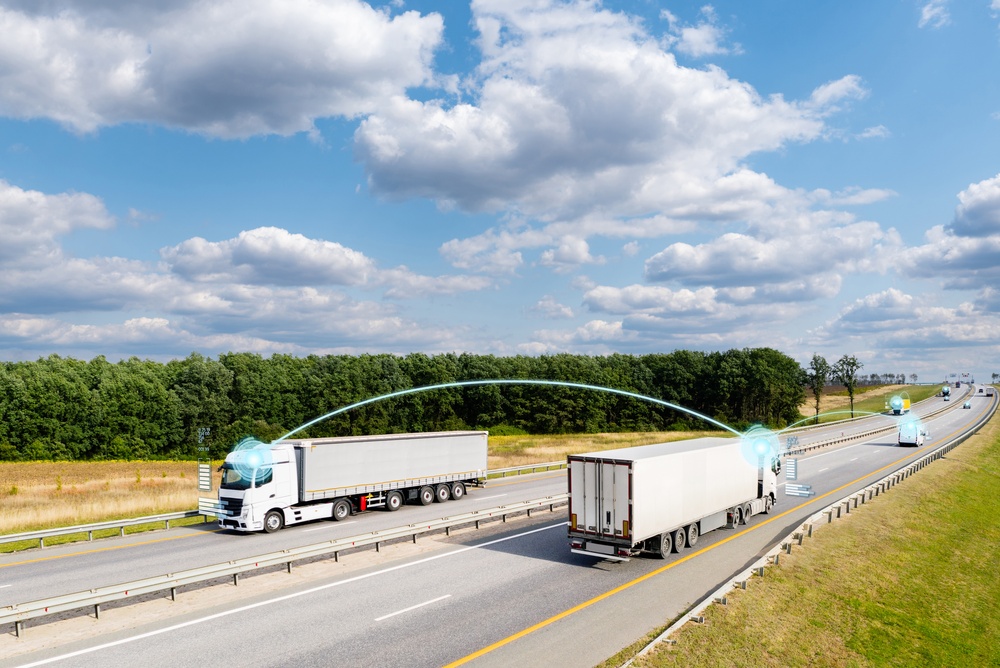

Autonomous semi-trucks are no longer a futuristic concept confined to test tracks and controlled environments. Aurora’s self-driving trucks have logged over 100,000 driverless miles on public highways in Texas, hauling real cargo between major cities without anyone in the driver’s seat. These vehicles can operate nearly around the clock without breaks, fundamentally changing how freight moves across America.
The technology that seemed perpetually stuck in the prototype phase has quietly shifted into commercial operation. Driverless big rigs are coming to American highways, with companies planning to deploy hundreds more trucks within the next few years. The shift raises questions that go far beyond engineering challenges.
What happens to the 2.3 million Americans who drive trucks for a living? Can software truly handle the unpredictability of highways in all weather conditions? The answers aren’t simple, and the implications reach into every corner of the economy that depends on moving goods from one place to another.
How Self-Driving Trucks Are Revolutionizing Freight
Companies have deployed autonomous trucks on public highways, completing thousands of miles without human drivers behind the wheel. The technology relies on sophisticated sensor arrays and redundancy systems, while major players are establishing commercial operations across key freight corridors.
Milestones in Autonomous Trucking Technology
Aurora Innovation launched its commercial self-driving trucking service in Texas on May 1st, 2025, marking a turning point for the industry. The company began running regular driverless deliveries between Dallas and Houston, with its Aurora Driver system completing over 1,200 miles without a human operator.
Driverless trucks are now running regular longhaul routes on American highways. Aurora started with a single self-driving truck and planned to expand the fleet by year’s end.
Industry projections suggest thousands of self-driving trucks could be on public freeways within three to four years. The technology allows trucks to operate nearly around the clock without breaks, which accelerates delivery times and potentially reduces shipping costs. Active test runs are happening in Texas, with companies preparing for broader market entries.
Key Companies Leading the Driverless Truck Movement
Aurora Innovation has taken the lead in commercial autonomous trucking operations with its Texas deployment. The company, co-founded by Chris Urmson, focuses on long-haul freight routes where autonomous technology shows the strongest economic case.
Kodiak Robotics operates as another major player in the autonomous trucking space, developing self-driving systems for heavy-duty trucks. The company has been testing its technology on highway routes and working with freight carriers to integrate driverless solutions.
Gatik specializes in autonomous middle-mile logistics, focusing on shorter-haul deliveries between distribution centers and retail locations. Atlas Energy Solutions has partnered with autonomous trucking providers to transport materials in the energy sector, demonstrating how specific industries are adopting driverless freight technology. These companies represent different approaches to autonomous trucking, from long-haul operations to specialized industrial applications.
Inside the Technology: Sensors, Lidar, and Redundancy Systems
Self-driving trucks use sensors, radar, and camera systems to create a 360-degree view of their surroundings. The systems can detect pedestrians and obstacles even in challenging conditions.
Lidar serves as a critical component in autonomous trucking technology. It creates detailed 3D maps of the environment by measuring distances with laser pulses. This allows the vehicles to identify objects, measure their speed, and predict movement patterns.
Redundancy systems ensure safety by duplicating critical functions across multiple independent systems. If one sensor or computer fails, backup systems immediately take over without interrupting operations. The trucks process data from multiple sources simultaneously, cross-referencing information to verify accuracy before making driving decisions. Self-driving trucks operate at different automation levels, from driver-assist features at Level 2 to full autonomy without human control at Level 5.
The Big Questions: Safety, Jobs, and the Road Ahead
The expansion of autonomous trucks onto American highways has sparked intense debate over whether the technology is ready for widespread deployment and what it means for the millions of people who drive for a living. Questions about emissions reductions and environmental benefits add another layer to an already complex conversation.
Safety Concerns and Regulatory Oversight
Autonomous vehicle companies point to millions of logged miles as evidence their systems work, but critics argue the data doesn’t tell the whole story. Many of those miles included a safety driver ready to take control during testing phases.
The regulatory landscape remains fragmented across state lines. California Governor Gavin Newsom vetoed legislation that would have required human operators aboard self-driving trucks, a decision that followed significant industry lobbying. The veto highlighted tensions between technological advancement and road safety concerns.
Driverless semis now operate regular routes between Dallas and Houston. But questions persist about how these vehicles handle unexpected situations, severe weather, and complex urban environments. Federal oversight remains limited, leaving states to develop their own approaches to regulating autonomous freight transportation.
Labor Impacts and the Future of Commercial Drivers
The trucking industry employs approximately 3.5 million drivers nationwide. Research suggests autonomous vehicles could displace 1.7 million commercial driver jobs by 2040.
Labor unions like the Teamsters have voiced strong opposition to fully autonomous trucks. They argue the technology threatens middle-class jobs that can’t easily be replaced in other sectors. A commercial driver typically earns a stable income with benefits, supporting families across rural and urban America.
Companies developing the technology counter that driver shortages plague the industry and autonomous trucks could fill gaps rather than eliminate positions entirely. They suggest humans might transition to different roles within logistics operations.
Sustainability, Emissions, and Climate Change Considerations
Autonomous trucks could potentially reduce emissions compared to traditional diesel trucks through optimized driving patterns and fuel efficiency. Computers can maintain steady speeds and avoid aggressive acceleration that wastes fuel.
However, the environmental calculus isn’t straightforward. If autonomous trucks make shipping cheaper and faster, they might actually increase total freight volume and miles traveled. The technology’s impact on climate change depends heavily on whether it replaces diesel engines with electric powertrains or simply makes existing combustion systems more efficient.
Some autonomous vehicle developers are pairing self-driving technology with electric trucks, which could meaningfully reduce transportation sector emissions if charged with renewable energy.
More from Steel Horse Rides:
- 13 Most Powerful Muscle Cars of All Time
- 13 Underrated JDM Cars That Deserve More Love
- 15 JDM Cars That Were Illegal in the U.S.
- 13 SUVs From the ’90s That Are Surprisingly Cool Today