

SpaceX is starting 2026 with a high profile mission that will light up the skies over California tonight, sending an Italian radar satellite into orbit on a reusable Falcon 9. The flight is poised to mark the company’s first launch of the year and an early test of how aggressively it plans to keep pushing commercial and government customers into space. With a tight evening window and a precision landing attempt back on the coast, the countdown is as much about operational finesse as it is about raw rocket power.
What SpaceX is launching to start 2026
The opening mission of 2026 centers on the COSMO-SkyMed Second Generation Mission, a sophisticated Earth observation program that Italy is using to upgrade its radar imaging capabilities. The satellite riding tonight’s Falcon 9 is part of the COSMO system’s Second Generation Mission, designed to provide high resolution radar views of the planet’s surface for civil, military, and disaster response users, extending a legacy that began with the original COSMO-SkyMed constellation. SpaceX lists the flight as a dedicated payload on its manifest, underscoring how central this customer has become to its government and international portfolio, with the mission details laid out on the official COSMO-SkyMed page.
For Italy, the satellite is a strategic asset that feeds into broader European monitoring efforts, giving planners and scientists an all weather, day night view of terrain, infrastructure, and coastal regions. The spacecraft’s radar instruments are designed to peer through clouds and darkness, complementing optical imaging fleets that are more vulnerable to weather and lighting. Public explainers on the COSMO-SkyMed Second Generation Mission describe how the radar system supports everything from flood mapping to maritime surveillance, with the mission framed as a key part of Europe’s Earth observation toolkit and highlighted in coverage of the Second Generation Falcon 9 launch.
Where and when liftoff is expected
SpaceX is targeting an evening liftoff that will send the Falcon 9 roaring away from the Pacific coast just after sunset, creating the kind of twilight plume that has become a social media staple. The company is aiming for a precise launch time of 6:09 p.m. PST, which corresponds to 9:09 p.m. EST and 0209 UTC, giving viewers across North America and beyond a clear sense of when to look up. That timing is described as an instantaneous window, meaning the rocket must leave on the second or stand down, a constraint that is spelled out in live launch coverage detailing how SpaceX is targeting liftoff from Space Launch Complex 4 East at 6:09 p.m. PST, 9:09 p.m. EST, and 0209 UTC, with the pad and timing specifics laid out in the live coverage of Space Launch Complex 4 East.
The launch site itself is Space Launch Complex 4 on the South Base portion of Vandenberg Space Force Base, a coastal facility that has become SpaceX’s primary West Coast gateway to polar and sun synchronous orbits. Local advisories describe how liftoff will aim for an instantaneous window of 6:09 p.m. from Space Launch Complex 4 on South Base, a detail that reinforces how tightly the mission is choreographed around orbital mechanics and range availability. That same guidance notes that launch times are shaped by both the target orbit and the need to deconflict with other range users, including missile tests, with the South Base context and instantaneous window spelled out in notices about liftoff from Space Launch Complex 4 on South Base.
How the Falcon 9 will fly the COSMO mission
The workhorse for tonight’s flight is a Falcon 9, the partially reusable rocket that has become synonymous with SpaceX’s launch cadence and cost structure. Mission descriptions emphasize that SpaceX is targeting Friday for a Falcon 9 launch of the COSMO-SkyMed Second Generation Mission, with the booster expected to follow the company’s now familiar profile of a first stage ascent, stage separation, and a controlled return to the California coast. The official mission overview notes that SpaceX is targeting Friday for a Falcon 9 launch of the COSMO-SkyMed Second Generation Mission, with the schedule and vehicle details laid out in the Friday Falcon 9 launch plan.
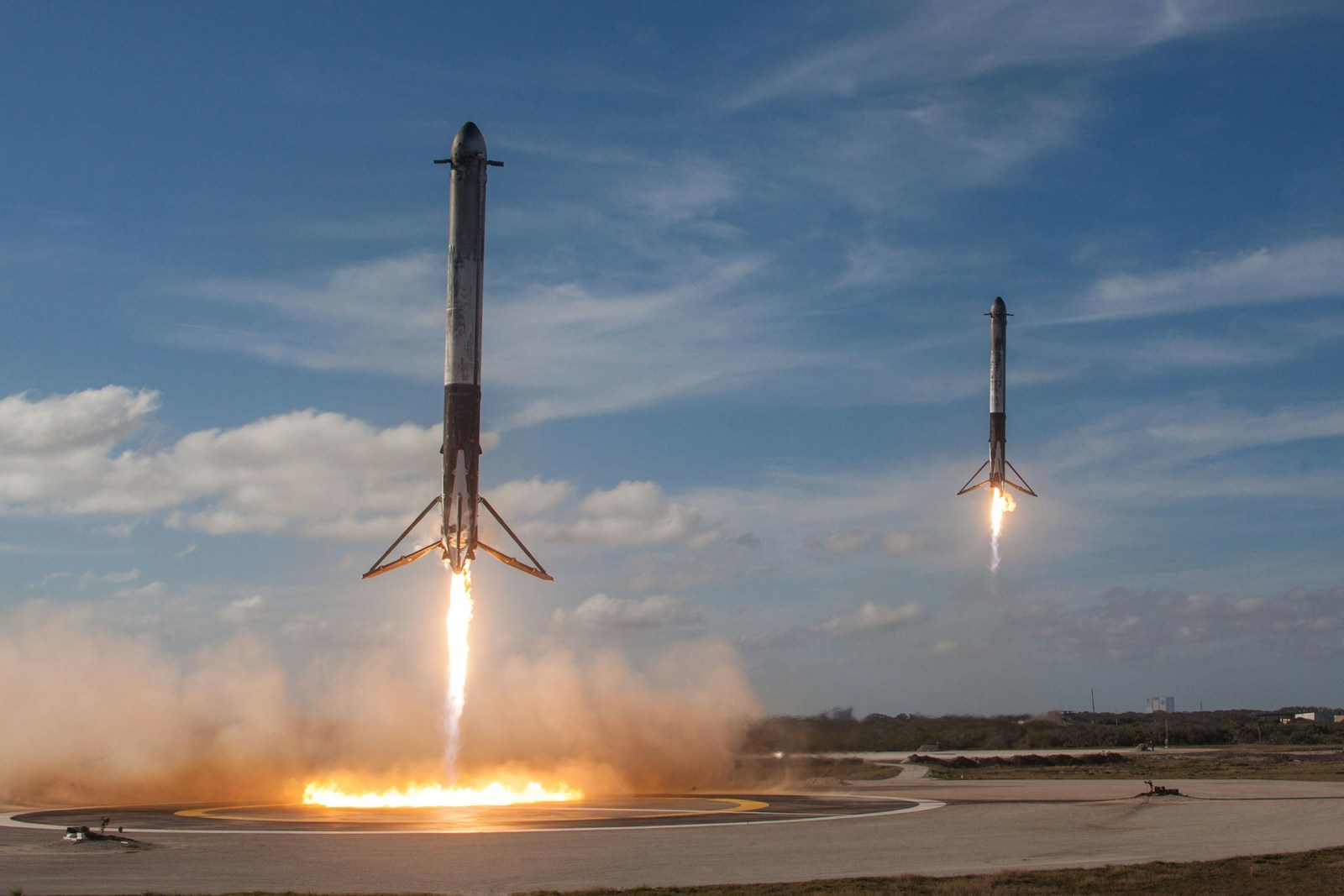
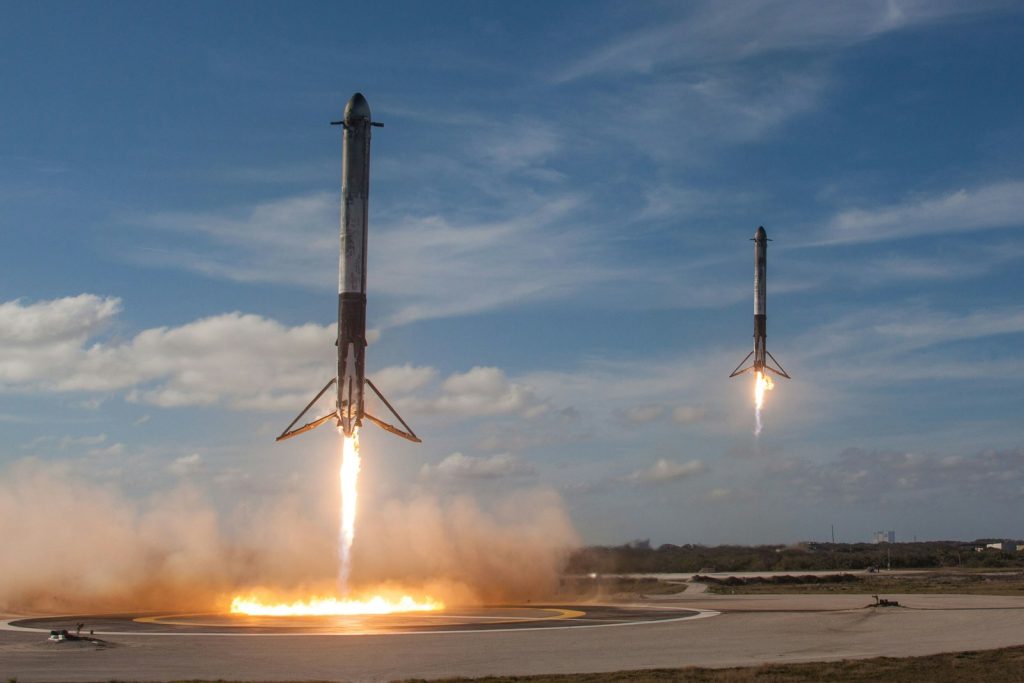
Once the Falcon 9 clears the pad, the first stage will power the stack through the dense lower atmosphere before handing off to the second stage, which will carry the COSMO payload into its targeted low Earth orbit. After stage separation, SpaceX plans to land the booster back at Landing Zone 4 at Vandenberg, a maneuver that has turned the base into a showcase for rapid reusability and precision recovery. That return to Landing Zone 4 is highlighted in prelaunch briefings that explain how, after stage separation, SpaceX plans to land the booster back at Landing Zone 4 at Vandenberg, with the landing profile and local viewing tips outlined in coverage of the Landing Zone 4 return at Vandenberg.
Why this Italian Earth observation satellite matters
The payload at the heart of tonight’s mission is more than a technical demonstration, it is a cornerstone of Italy’s strategy for monitoring its territory, surrounding seas, and global areas of interest. The COSMO-SkyMed Second Generation Mission is described as an Italian Earth observation satellite program, with radar instruments that can capture detailed images regardless of weather or lighting, a capability that is particularly valuable for emergency response and defense. Live launch commentary frames the mission as a Falcon 9 launch of an Italian Earth observation satellite, underscoring how the spacecraft fits into Italy’s broader security and civil planning needs, with that description appearing in coverage of the Falcon 9 launch of an Italian Earth observation satellite.
Beyond Italy’s borders, the COSMO system feeds into European and international data sharing arrangements that support climate science, agriculture, and maritime safety. The radar constellation’s ability to revisit the same area frequently and in all conditions makes it a valuable complement to optical missions that can be blinded by clouds or darkness. Monthly launch roundups describe how SpaceX is opening the year with a mission that carries the Cosmo satellite for Earth observation for Italy, placing the flight in a broader context of European investment in orbital monitoring, with that framing captured in summaries that note live coverage of Cosmo for Earth observation for Italy in early January, as seen in the live Cosmo Earth observation for Italy listing.
How to watch the launch and landing
For viewers who want to follow the action in real time, SpaceX plans to stream the mission online, continuing a practice that has turned its launches into global viewing events. The company typically begins its official webcast shortly before liftoff, and local advisories specify that a live webcast of the launch will begin about 15 minutes before liftoff, giving audiences time to tune in as the countdown enters its final phase. That timing guidance is spelled out in notices that explain how a live webcast of the launch will begin about 15 minutes before liftoff, with the streaming plan detailed in information about the live webcast beginning 15 minutes before liftoff.
In addition to the official stream, the company’s social media channels have become a primary source for last minute updates on weather, range status, and any holds or scrubs. SpaceX routinely posts countdown milestones, launch confirmations, and landing clips on its main account, which has turned into a de facto mission log for fans and analysts. Those updates are centralized on the company’s primary feed at SpaceX on X, where viewers can track everything from fueling calls to booster recovery in near real time.
Vandenberg’s role in the new launch year
Vandenberg Space Force Base has emerged as a crucial node in SpaceX’s network, particularly for missions that require polar or sun synchronous orbits like COSMO-SkyMed. The base’s coastal geography and relatively clear downrange corridors make it ideal for flights that head south over the Pacific, and Space Launch Complex 4 has been steadily upgraded to support a higher tempo of Falcon 9 operations. Mapping tools identify the base under its formal listing, with the facility’s profile and location captured in entries that describe Vandenberg Space Force Base as a key launch and test site on the California coast.
Within Vandenberg, Space Launch Complex 4 and its associated landing zone have become the focal point of SpaceX’s West Coast activity, handling both launches and returns of Falcon 9 first stages. The complex is cataloged in geographic databases that detail its layout and role, highlighting how the pad and landing area share the same coastal plateau. Those references describe the launch infrastructure under the identifier for Space Launch Complex 4, with the complex’s configuration and location outlined in entries for Space Launch Complex 4, reinforcing how central the site has become to polar orbit missions.
The precise timing and launch window
The COSMO-SkyMed Second Generation Mission is built around a tightly constrained launch window that reflects both orbital mechanics and range coordination. SpaceX’s mission listing specifies that the company is targeting Friday, January 2, 2026, at 18:09 PT for liftoff, a level of precision that leaves little room for delay once the countdown reaches the final minutes. That exact timing is spelled out in the mission details that note SpaceX is targeting Friday, January 2, 2026, 18:09 PT for the COSMO-SkyMed Second Generation Mission, with the schedule captured in the COSMO Second Generation Mission timing.
Local range notices emphasize that this is an instantaneous window, meaning the rocket must launch at that exact moment or stand down for at least one orbit, and possibly a full day, depending on how the trajectory aligns with the satellite’s intended ground track. That constraint is echoed in prelaunch coverage that notes liftoff will aim for an instantaneous window of 6:09 p.m. from Space Launch Complex 4 on South Base, tying the local time to the broader orbital plan. The combination of the 18:09 PT target and the instantaneous nature of the window underscores how carefully the mission has been threaded through other range activities and orbital requirements, as reflected in the liftoff window description that accompanies the launch advisory.
How this launch fits into SpaceX’s 2026 ambitions
Opening the year with a complex government mission from Vandenberg signals that SpaceX intends to keep leaning on its Falcon 9 fleet as the backbone of its manifest, even as it pursues larger vehicles. The COSMO-SkyMed Second Generation Mission gives the company an early opportunity to demonstrate reliability for an international customer, while also showcasing its ability to turn around a coastal pad and landing zone quickly. Monthly launch rundowns highlight how the company is using Falcon 9 to carry the Cosmo satellite for Earth observation for Italy at the very start of the year, positioning the mission as the first entry in a busy January slate, a framing that appears in listings that describe live coverage as SpaceX opens 2026 with Cosmo for Earth observation for Italy, as seen in the Falcon 9 live coverage summary.
The mission also reflects how SpaceX has woven itself into regional economies and viewing cultures far from Florida, with communities across California and neighboring states now accustomed to twilight plumes and sonic booms. Local coverage in the Southwest notes that residents in Arizona are watching for the Falcon 9 SpaceX rocket launch, underscoring how the spectacle extends well beyond the immediate coastline. That regional interest is captured in reports that describe how people in Arizona are preparing to see the Falcon 9 SpaceX rocket launch from Vandenberg, with the cross state visibility and public engagement detailed in coverage of the Falcon 9 SpaceX rocket launch as it arcs over the western sky.
What to watch for after liftoff
Once the Falcon 9 leaves Space Launch Complex 4 East, the mission will unfold in a series of milestones that veteran viewers now track almost by instinct. Key events include main engine cutoff, stage separation, second stage ignition, and the boostback and landing burns that will guide the first stage to Landing Zone 4. Live mission trackers outline how the rocket will climb from Space Launch Complex 4 East at 6:09 p.m. PST, 9:09 p.m. EST, and 0209 UTC, then deploy the satellite into low Earth orbit, with the sequence of ascent and deployment steps detailed in the live liftoff and deployment coverage.
Behind the scenes, the mission will also test the coordination between the launch site, the landing zone, and tracking networks that monitor the satellite as it begins operations. Geographic references catalog both Vandenberg Space Force Base and Space Launch Complex 4 as distinct but tightly linked entities, reflecting how the base’s infrastructure supports everything from countdown operations to post launch tracking. Those entries, which describe Vandenberg Space Force Base under one identifier and Space Launch Complex 4 under another, highlight the layered nature of the operation, with the base itself profiled at Vandenberg’s facility listing and the pad and landing area detailed in the separate entry for Space Launch Complex 4’s location, underscoring how many moving parts must align for a single evening launch.
More from Wilder Media Group: