

Tesla spent more than a decade as the shorthand for electric cars, turning battery-powered vehicles from a niche curiosity into a global status symbol. Now the balance of power has shifted, with China’s BYD seizing the top spot in global EV sales and forcing a reset of how the industry thinks about price, scale, and technology. The changing of the guard is not just a rivalry between two companies, it is a story about how industrial policy, consumer demand, and corporate strategy are reshaping the future of transportation.
The new reality is stark: Tesla is no longer the volume leader in the market it helped create, and BYD is no longer the underdog that rivals once dismissed. As investors, policymakers, and drivers absorb that reversal, the question is not whether BYD has overtaken Tesla, but what that means for the next phase of the electric transition.
The moment BYD pulled ahead
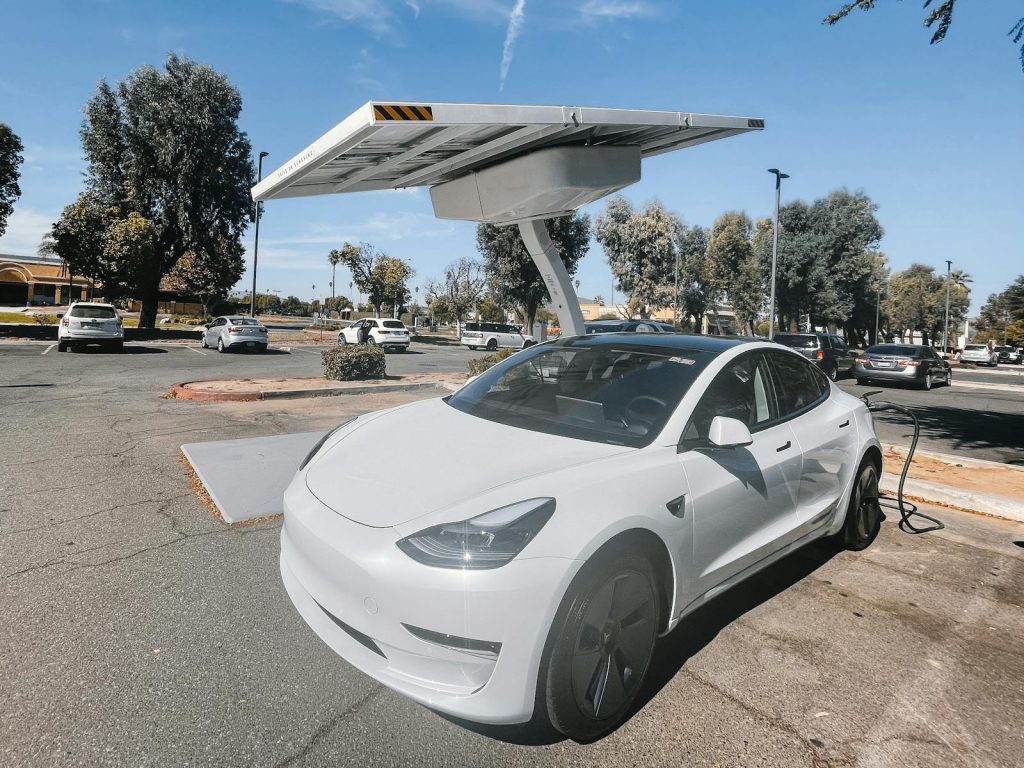
The headline shift is simple enough to describe: BYD now sells more electric vehicles than Tesla. BYD announced that it sold 2.26 m EVs, a figure that underscores how far the Chinese group has come from its origins as a battery maker. Meanwhile, Tesla reported a smaller tally and a modest 1 percent decline in deliveries, a symbolic reversal for a company that for years defined growth in the sector. The raw numbers confirm what the market has sensed for months: the center of gravity in electric vehicles is tilting toward China and away from the American pioneer.
That shift is not confined to annual totals. In the final stretch of the year, Tesla sold around 480,000 of its Model 3 and Model Y in the third quarter and around 400,000 in the fourth quarter, still enormous volumes but no longer enough to guarantee first place. BYD, by contrast, kept expanding its battery electric and plug-in hybrid lineup at home and abroad, turning scale into a weapon in a way Tesla has struggled to match. The result is that the company once seen as a fast follower is now setting the pace.
From punchline to pace-setter
The reversal is particularly striking given how Tesla’s leadership once viewed its new rival. In 2011, Tesla CEO Elon Musk dismissed the Chinese company BYD as a serious competitor, reflecting a broader skepticism in the West about whether Chinese manufacturers could match premium EV technology. But the intervening years have seen BYD methodically build out its own batteries, power electronics, and vehicle platforms, while also learning to compete on design and user experience. The company that was once a punchline in Silicon Valley is now the one setting global benchmarks for cost and volume.
That transformation has culminated in BYD overtaking Tesla as the world’s top EV seller for the first time, a milestone that would have seemed improbable when Elon Musk was still publicly laughing off the threat. The fact that this shift is happening as China cements its role as the dominant producer of batteries and key EV components only reinforces how much the competitive map has changed. Tesla is still an innovation leader in software and fast charging, but it is no longer the only company capable of building compelling electric cars at scale.
China’s EV machine and the policy tailwind
Behind BYD’s rise is a broader story about China’s industrial strategy and domestic market. China is now the world’s largest market for new energy vehicles, a category that includes battery electrics and plug-in hybrids, and that scale has given local players a home-field advantage. As one report on slipping Tesla sales noted, China has become the arena where global EV competition is fiercest, and where BYD has learned to thrive in a brutally competitive environment. That domestic pressure has forced Chinese brands to innovate quickly on cost, range, and features, then carry those advantages into export markets.
Policy has amplified those market forces. Fixed rebates for EV buyers have been replaced with a percentage-based system that requires vehicles to cost at least 166,700 yuan to qualify, a shift that encourages higher value vehicles while still nudging consumers toward electrification. That same analysis highlighted how Fixed incentives have evolved into a more targeted system, reflecting Beijing’s desire to move the market beyond basic subsidies and toward sustainable competitiveness. BYD has been one of the biggest beneficiaries of that environment, but it has also helped shape it by proving that Chinese brands can compete globally.
How BYD’s product strategy beat Tesla on price and breadth
BYD’s ascent is not just about volume, it is about how the company has structured its lineup. While Tesla has focused heavily on a relatively narrow range of models, particularly the Model 3 and Model Y, BYD has flooded the market with a wide spectrum of vehicles that cover everything from budget city cars to premium crossovers and sedans. Some of those models are reported to be up to three times cheaper than comparable Teslas, a gap that has made EVs accessible to buyers who would never have considered them before and that has intensified the price pressure on its American rival. That breadth has allowed BYD to capture both aspirational buyers and cost-conscious families in China and in emerging export markets.
The company’s strength in battery technology has reinforced that strategy. BYD’s BEV passenger car sales in December amounted to 190,712 units, even as that figure represented an 8 percent decline compared with the previous month. The ability to move nearly two hundred thousand battery electric vehicles in a single month, while also selling large numbers of plug-in hybrids, shows how BYD’s integrated battery and vehicle manufacturing model has turned scale into a structural advantage. Tesla still leads in some areas of software and charging, but BYD’s combination of cost control and product diversity has proved more effective at winning over mass-market buyers.
Tesla’s stumble: from growth engine to lagging incumbent
For Tesla, the loss of the global EV crown is as much about its own slowdown as it is about BYD’s surge. Analysts have described 2025 as a bad sales year for the company, with one automotive analysis bluntly noting that Tesla has finally lost the global EV sales crown to BYD after years of dominance. That same commentary emphasized that for years Tesla had been the top-selling EV maker globally, but that the tide has now turned and BYD simply sold more electric vehicles than Tesla, end of sentence. The tone reflects a broader market reassessment of Tesla’s growth story, which now looks less inevitable than it once did.
Operational and regulatory headwinds have compounded that narrative. The company is under several federal safety investigations and other probes, and In California, Tesla is at risk of temporary restrictions that could affect its operations in a key market. Those challenges have arrived just as the company faces intensifying competition on price and features, particularly in China, where local brands are moving faster on in-car tech and design refreshes. The result is that Tesla, once the disruptive outsider, is now grappling with the problems of a maturing incumbent while its most aggressive challenger is still in expansion mode.
What “Tesla Loses EV Crown” really means for the market
The phrase Tesla Loses EV Crown to a Chinese Rival BYD After Years of dominance is more than a headline, it marks a psychological turning point for investors and policymakers who had come to see Tesla as synonymous with electric mobility. For years, Tesla dominated the EV market, shaping expectations about what an electric car should look like, how far it should drive, and how it should be updated over the air. The loss of that symbolic leadership role signals that the market is entering a more pluralistic phase, where no single company sets all the rules and where regional champions can challenge global incumbents.
That shift has practical consequences. As Elon Musk and Tesla adjust to life without the volume crown, they face pressure to rethink pricing, product cadence, and geographic focus. Investors who once valued Tesla primarily as a hyper-growth story must now weigh it against a field of competitors that includes not only BYD but also legacy automakers and newer EV specialists. The fact that a Chinese company has taken the top spot also feeds into broader geopolitical debates about technological leadership, supply chain resilience, and the role of state support in shaping global industries.
BYD’s global ambitions and the 1.6 m export target
Having secured leadership at home and in global volume, BYD is now turning outward with growing confidence. The company is targeting rapid expansion in Europe, Latin America, Southeast Asia, and the Middle East, often entering markets with aggressively priced models and local partnerships. A recent analysis of its plans noted that China‘s BYD aims to sell up to 1.6 m vehicles abroad in 2026, according to Citi. That forecast, based on a report from BEIJING and attributed to Reuters, underscores how central exports have become to BYD’s growth story as the Chinese domestic market matures.
Those ambitions will test how receptive foreign regulators and consumers are to a wave of Chinese EVs. In Europe, policymakers are already scrutinizing potential subsidies and considering tariffs, while in developing markets the focus is more on affordability and charging infrastructure. BYD’s ability to hit its export targets will depend on how it navigates those political and logistical hurdles, but the mere fact that a Chinese automaker is planning to ship well over a million vehicles abroad in a single year shows how much the global auto trade is changing. For Tesla, which once saw itself as the primary exporter of EV technology to the world, that is a profound shift in the competitive landscape.
How other EV players fit into the new hierarchy
The Tesla–BYD rivalry tends to dominate headlines, but the broader EV ecosystem is more complex. Other pure-play EV makers and legacy automakers are carving out their own niches, sometimes thriving in the shadow of the two giants. One analysis of 2025 sales noted that Rivian Did Fine, It Was Fine, with Rivian seeing a decline in fourth-quarter sales that was roughly in line with its own expectations. That kind of performance suggests that not every EV maker is chasing BYD-level volume; some are instead focusing on specific segments such as premium trucks and SUVs, where brand and capability can matter more than absolute scale.
Legacy automakers, from Volkswagen to Hyundai and Kia, are also pushing hard into EVs, often with the advantage of existing dealer networks and manufacturing footprints. Their progress matters because it shapes how quickly charging networks expand and how fast EVs penetrate mainstream segments like compact crossovers and family sedans. The fact that BYD has overtaken Tesla does not mean the race is over; it means the field is more crowded, and that success will depend on how well each player matches its strategy to its strengths rather than trying to copy the leaders outright.
What comes next for Tesla, BYD, and the EV transition
The new hierarchy in electric vehicles raises as many questions as it answers. For Tesla, the immediate challenge is to prove that losing the volume crown does not mean losing relevance in innovation or profitability. The company still has a powerful brand, a vast Supercharger network, and deep experience in software and autonomy, but it must now show that it can refresh its lineup and compete on price without eroding margins. Its performance in key markets like China, where BYD has already taken the lead, will be a critical test of whether it can adapt to a world where it is no longer the default choice.
For BYD, the task is to convert its current momentum into durable global influence. That means managing quality as volumes rise, building recognizable brands outside China, and navigating political scrutiny in markets wary of Chinese industrial power. It also means continuing to invest in core technologies like batteries and power electronics so that it does not simply compete on price. As BYD and Tesla trade places at the top of the sales charts, the broader EV transition continues to accelerate, driven by climate policy, consumer demand, and the relentless economics of battery scale. The era when one company could “rule” the EV world is ending, replaced by a more contested, and ultimately more resilient, global market.
More from Wilder Media Group: