


Tesla has turned a long promised leap in electric trucking into a very public reality, showing its Semi pulling more than a megawatt of power while plugged into a dedicated charger. The company is now broadcasting footage of the big rig sustaining roughly 1.2 megawatts at a Megacharger, a level that reframes how quickly a battery electric truck can be turned around on a long haul route. For freight operators watching charging times as closely as sticker prices, the demonstration signals that megawatt scale refueling is moving from slide decks to asphalt.
The 1.2 Megawatt Moment, Finally On Camera
The most striking detail in Tesla’s new clips is not the sleek white cab or the glowing charge port, it is the power readout climbing into territory that only grid scale hardware used to occupy. In the official footage, the Tesla Semi’s display shows charging power ramping up in seconds before settling at a sustained 1.2 MW, confirming that the truck and its connector can handle a current that would overwhelm conventional passenger car hardware. The company had long talked about megawatt charging, but the new video from the official Tesla Semi account shows engineers holding that level in a controlled test, with Tesla presenting it as a repeatable benchmark rather than a lab curiosity.
Independent clips echo the same story, with one widely shared reel describing the Semi’s “incredible 1.2MW charging speed” and framing it as a milestone for electric transport. In that video, Tesla highlights how the truck can recover a large share of its usable range in roughly 30 minutes, aligning the charging window with long haul drivers’ mandatory rest breaks and turning downtime into refueling time. The Instagram reel that notes Tesla’s latest video makes clear that the company sees this as the answer to skeptics who doubted a battery truck could ever match the duty cycle of diesel.
How Tesla Is Hitting 1.2 MW Without Melting Hardware
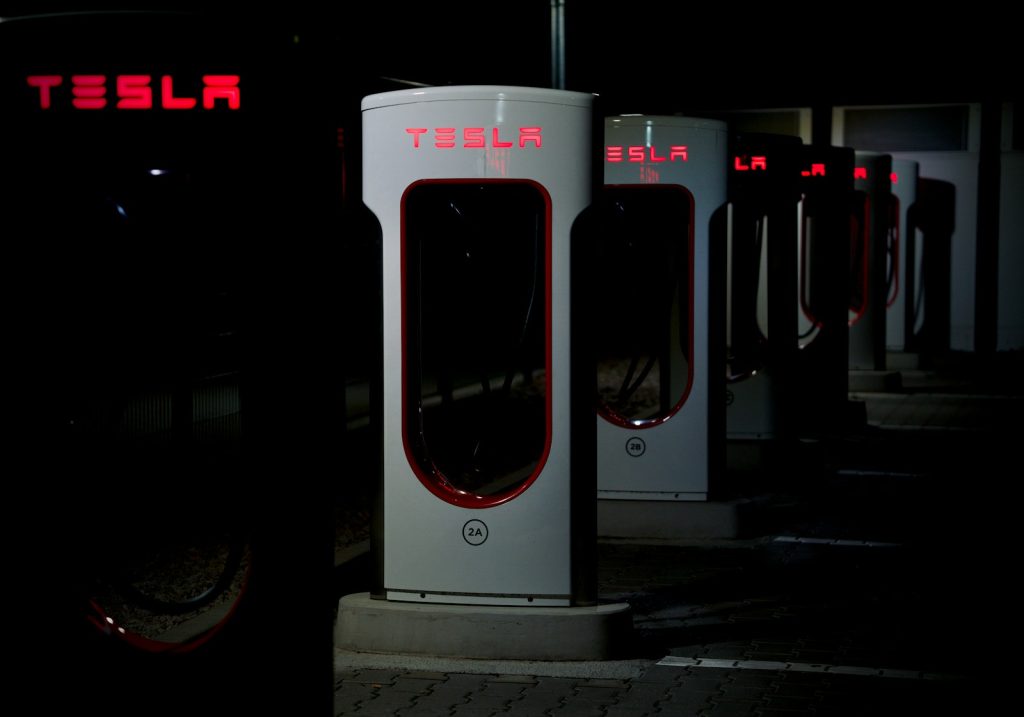
Delivering more than a megawatt into a vehicle sized connector requires more than just thicker cables, it demands a tightly managed system from grid connection to battery pack. Tesla’s engineers appear to be leaning on the same V4 architecture that underpins the company’s newest public chargers, scaled up and adapted for commercial duty. Reporting on the Semi’s charging system notes that Tesla is rolling out a 1.2 m class charging platform that builds on its V4 Supercharger design, pairing higher current capability with enhanced diagnostics and software updates to keep both trucks and cabinets within safe thermal limits. The description of Tesla is also rolling out this system underscores that the megawatt figure is not a one off stunt but part of a broader platform strategy.
On the vehicle side, Tesla has reworked the Semi’s internals to better handle the thermal and electrical stress of such aggressive charging. The latest design incorporates a reengineered battery pack using domestically sourced cells, with the pack layout and cooling channels optimized to cut both cost and energy losses under high load. That redesign, described in detail in coverage of how The latest design incorporates a new pack, is central to Tesla’s claim that fleets will see lower total operating costs even as they push enormous currents into the truck during every fast charge session.
Megacharger, MCS, And The Race To A Common Standard
The Semi’s charging feat is not happening in a vacuum, it is tied to a broader push to standardize megawatt level connectors for heavy trucks. Tesla’s own Megacharger hardware has been at the center of its Semi program from the start, and the new video shows that system finally delivering the 1.2 MW that had been promised. One technical breakdown notes that the Tesla Semi sustains 1.2 MW on the Megacharger while adopting the MCS standard, signaling that the company is aligning its proprietary hardware with the emerging industry wide Megawatt Charging System interface. The report that Tesla Semi sustains 1.2 MW on Megacharger while adopting MCS suggests Tesla wants its trucks to plug into a wider ecosystem rather than remain locked to a closed network.
Real world footage adds color to the raw numbers, with one clip showing the Tesla Semi hitting a sustained 1.2 M on the Megacharger and ramping to peak power in under 35 seconds. That rapid ramp, highlighted in a post that notes Tesla Semi hits a sustained 1.2 M and calls out the 35 second ramp, matters for drivers who want to see the charger reach full speed quickly rather than wasting minutes at partial power. Together, the MCS alignment and the Megacharger performance point to a future where a Semi could roll into any compliant depot, plug in, and see the same megawatt class experience that Tesla is now showcasing in its own videos.
Inside The Revamped Semi: Design Tweaks For A Harder Life
The charging spectacle has overshadowed another important development, a visibly updated version of the Semi that hints at Tesla’s move from pilot runs to full scale freight work. Recent sightings show a revamped truck with subtle but telling changes, including new exterior details and what appears to be reworked internals hidden from view. One detailed walkaround notes that Tesla is gearing up for high volume Semi production in 2026, with the Clas leading the charge at the company’s dedicated facility and the latest prototypes keeping their revised internals out of sight. The report that Tesla is gearing up for this ramp, credited to @HinrichsZane on X, frames the design refresh as part of a broader industrialization push.
Some of the changes are purely practical, aimed at drivers who will climb in and out of the cab all day in all weather. Observers have pointed out the inclusion of diamond plate traction strips on the steps leading into the cab, a small but meaningful tweak that reduces slip risk and signals that Tesla is listening to feedback from early fleet users. One analysis notes that Another practical detail noted in the footage is exactly these traction strips, and ties them to a maturing electric trucking business case where ergonomics and durability matter as much as headline grabbing power figures.
From Teaser To Production: Tesla’s 2026 Semi Timeline
Behind the viral clips sits a more conventional industrial story, one in which Tesla is racing to turn a handful of pilot trucks into a mass produced product. Company guidance now points to Semi production beginning in the first half of 2026, followed by a ramp to full volume in the second half of the year as the dedicated factory and supply chain come online. Coverage of the program notes that Tesla aims to begin production on that schedule, positioning the Semi as a 2026 scale product rather than a niche demonstrator.
To support that ramp, Tesla has finalized plans for a Semi factory that will also anchor an expanded megawatt charging network. The manufacturing blueprint includes not just the reengineered battery pack but also a layout that integrates high power charging hardware into logistics yards and freight corridors, reducing the friction for fleets that want to deploy dozens or hundreds of trucks at once. Reporting on how Tesla’s new V4 cabinet Supercharger delivers 1.2MW fast charging for the Semi underscores that the company is treating vehicle and infrastructure as a single product, with the factory plans and charging rollout tightly coupled.
Megawatt Charging Versus Today’s Fast Chargers
To understand why 1.2 MW matters, it helps to compare it with the fastest chargers most drivers see today. Tesla’s V4 Supercharger cabinets for passenger cars and light commercial vehicles are already aggressive by consumer standards, with new sites rolling out 500 kW capability that can push modern sedans and crossovers close to their thermal and chemical limits. One industry report notes that Tesla has begun deploying
The Semi’s dedicated hardware effectively doubles that already extreme figure, moving from hundreds of kilowatts into the megawatt class that heavy trucks require to keep dwell times competitive with diesel. Tesla’s V4 cabinet for the Semi is described as delivering 1.2MW fast charging, a specification that dwarfs even the most advanced public DC fast chargers currently available to passenger vehicles. The description of Because there’s still no nationwide
Real World Freight Trials: DHL’s Numbers And Driver Feedback
While Tesla hypes the Semi’s charging prowess, early fleet customers are quietly building a data set on how the truck behaves in day to day service. DHL’s pilot program offers one of the clearest windows into that reality, with the logistics giant putting the Semi to work on a 390-mile long haul route at full commercial weight. According to the official announcement, during that 390-mile run the Tesla Semi averaged 1.72 kWh per mile while hauling 75,000 pounds (34 metric tons), a figure that gives operators a concrete basis for comparing energy costs with diesel. The report that According to the official announcement
DHL’s qualitative feedback has been just as important as the raw efficiency metrics. The company has said that its Tesla Semi pilot “Exceeded Expectations,” describing the integration of the trucks into its fleet as a meaningful step toward decarbonization and improved delivery performance. In a statement that framed DHL’s Tesla Semi Pilot ‘Exceeded Expectations,’ the operator linked the trucks’ performance to its broader climate goals and signaled that the pilot is paving the way for expansion. For Tesla, that kind of endorsement from a global freight player may be as valuable as any viral charging video, because it speaks directly to the concerns of other fleet managers weighing their own transition plans.
Shattering Doubts About Electric Trucking Viability
For years, critics of battery powered long haul trucks have argued that charging times and infrastructure constraints would keep diesel dominant for the foreseeable future. Tesla is now using the Semi’s 1.2 MW performance to argue that those doubts are outdated, pointing to both the charging speed and the truck’s efficiency under load as evidence that electric drivetrains can handle full duty operation. One widely shared clip bluntly states that Tesla has officially shattered doubts about electric trucking viability, pairing the megawatt charging footage with shots of the Semi hauling at highway speeds. The reel that declares Tesla has officially shattered doubts leans into that narrative, presenting the truck as a rebuttal to years of skepticism.
Technical observers have backed up that framing by pointing out that the new footage confirms Tesla’s long claimed Megacharger performance, far exceeding typical passenger EV charging speeds and allowing the Semi to recover most of its range in 30 minutes. One analysis notes that The footage confirms Tesla’s long
What 1.2 MW Means For The Wider Logistics Ecosystem
The Semi’s charging breakthrough is already rippling beyond Tesla’s own order book, influencing how shippers, regulators, and competitors think about the future of freight. As major corporations look to decarbonize their logistics operations, they are increasingly evaluating not just individual trucks but entire corridors of charging and maintenance support. One assessment of the revamped Tesla Semi argues that its 1.2 MW charging milestone has implications for the global logistics industry, suggesting that it could catalyze an ecosystem of sustainable transport that includes grid upgrades, depot redesigns, and new business models for energy supply. The analysis that notes Implications for the Global Logistics Industry frames the Semi as a catalyst rather than a standalone product.
At the same time, infrastructure experts caution that megawatt charging will require a different deployment model than today’s car focused networks. Because there is still no nationwide Megawatt charging infrastructure, the Semi’s full potential cannot be realized until utilities, site hosts, and policymakers coordinate on high capacity connections and demand management. One infrastructure focused report bluntly states that Because there’s still no nationwide
Public Reaction And The Role Of Social Proof
Tesla’s decision to spotlight the Semi’s charging performance through social channels reflects how central public perception has become to the company’s product launches. The official video of a Tesla Semi truck charging at an impressive 1.2 MW, shared through the company’s own feeds, quickly drew intense engagement and debate among both fans and skeptics. One report notes that Tesla released this new video and that the story drew 152 Comments, a small but telling indicator of how closely the trucking and EV communities are watching the program. The coverage that highlights Fred Lambert and the 152 Comments underscores that even a technical milestone is being filtered through the lens of online discourse.
Grassroots clips and commentary have amplified that effect, with independent accounts dissecting every frame of the charging UI and every visible design tweak on the truck. One early breakdown of the revamped Semi, credited to Dec and shared with Credit to @HinrichsZane on X, helped kick off a wave of speculation about the truck’s hidden internals and production readiness. The same report that mentions Dec
More from Wilder Media Group: