
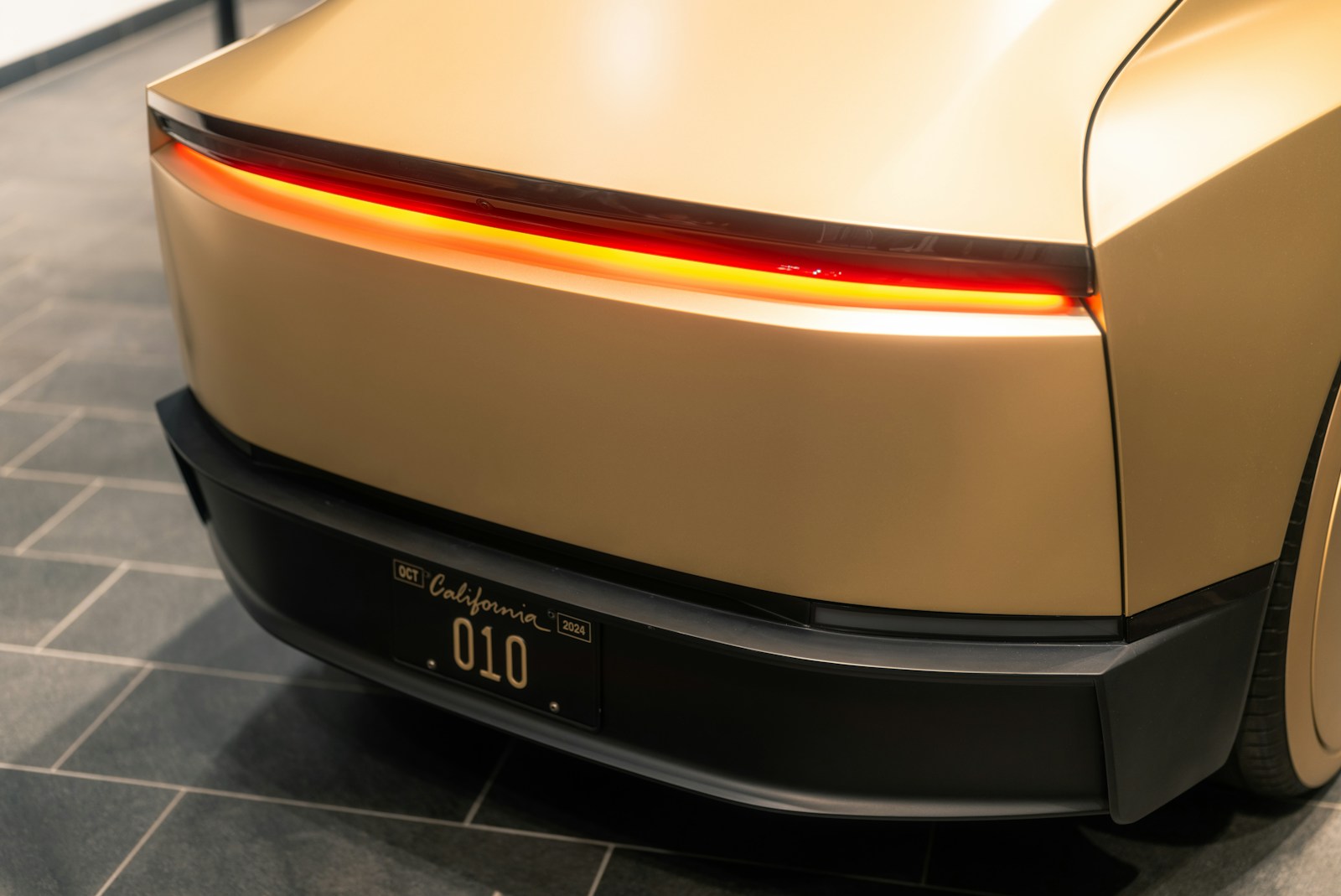

Tesla spent 2025 promising that fleets of self-driving Robotaxis would be roaming American streets by year’s end, transforming both urban transport and the company’s own business model. As 2025 closes, those sweeping claims have collided with a more stubborn reality of limited pilots, human supervision, and regulatory hesitation. The gap between the vision and what actually exists on the road is now central to how investors, regulators, and riders judge the company’s next moves.
From bold Robotaxi vision to end-of-year reality check
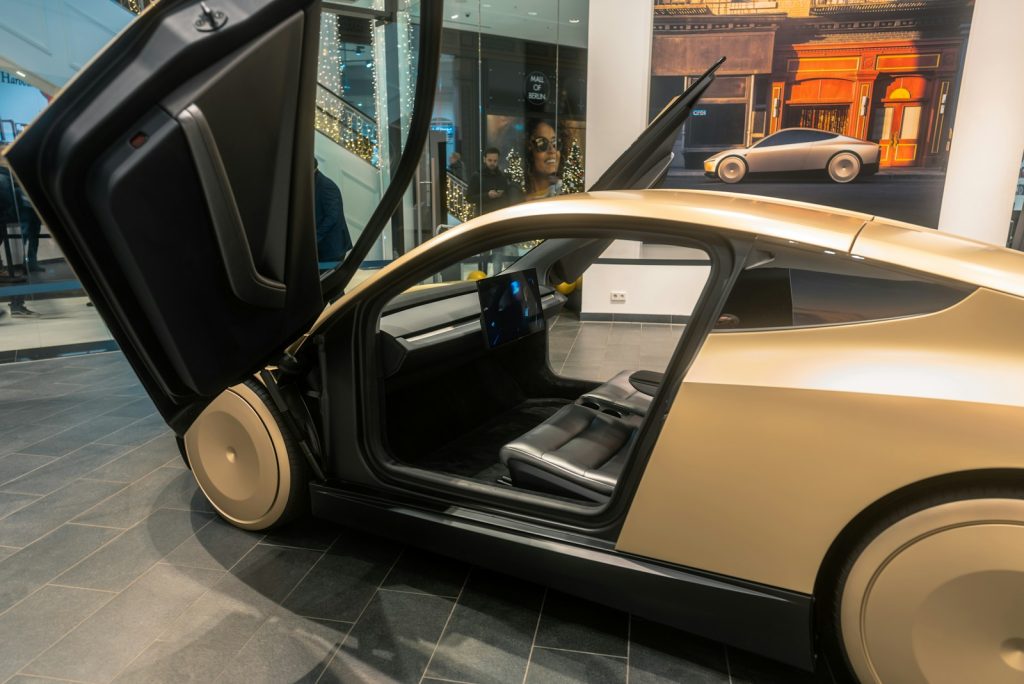
Tesla framed 2025 as the turning point when its autonomous technology would leap from driver-assistance to a true Robotaxi network, generating high-margin software revenue and redefining the value of every Model Y on the road. The pitch was that existing vehicles could be upgraded into revenue-generating Robotaxis, creating a software-like business on top of the company’s hardware base and justifying premium valuations for TSLA stock. By the end of the year, however, the promised transformation had not materialized at scale, and the Robotaxi narrative looked more aspirational than operational.
Reporting on Tesla’s ambitious plans underscores how far the company’s rhetoric ran ahead of its deployment. The idea was that Tesla would quickly roll out Model Y Robotaxis in Austin and then expand throughout the United States, turning a handful of early trials into a nationwide service. Instead, the year ended with limited, tightly controlled operations that still relied on human intervention, a far cry from the sweeping Robotaxi network that had been held up as imminent.
The Austin experiment that never scaled
Nowhere was the gap between promise and reality more visible than in Austin, the city repeatedly highlighted as Tesla’s proving ground for autonomy. The company’s plan was to use Austin as the launchpad for a Robotaxi service that would operate without safety drivers and then replicate that model in other metropolitan areas. The narrative suggested that once Austin was online, a domino effect would follow across the country, turning the city into a showcase for what a Tesla-powered ride-hailing future could look like.
According to detailed accounts of the Austin rollout, the idea was that Tesla would deploy Model Y Robotaxis in Austin and then expand the same approach across the United States, with Model Y Robotaxis in Austin and beyond forming the backbone of the service. Yet by the close of 2025, the Austin fleet still required human supervision and did not match the fully driverless experience that had been implied. The Austin experiment became less a template for rapid national expansion and more a reminder of how complex it is to move from controlled pilots to a robust, unsupervised Robotaxi network.
Musk’s missed milestones and shifting timelines
Throughout 2025, Musk repeatedly set specific expectations for what Tesla’s Robotaxi program would achieve, only to see those milestones slip as technical and regulatory hurdles persisted. He told investors that the company expected to remove safety drivers in Austin and to operate in 8 to 10 metro areas, including the San Francisco Bay Area and Austin, by the end of the year. Those statements helped sustain enthusiasm around Tesla’s autonomy roadmap, but they also created clear benchmarks that could be measured once December arrived.
As the year drew to a close, coverage of what he missed highlighted that there were still safety drivers in Austin and that the envisioned 8 to 10 metro areas had not come online as fully autonomous zones. A separate review of missed milestones noted that while Tesla launched a ride-hailing feature, it did not match the level of autonomy Musk had publicly described. The pattern reinforced a familiar dynamic for Tesla: aggressive timelines that excite markets in the short term but invite scrutiny when the calendar catches up.
What Tesla actually launched in 2025
Behind the lofty Robotaxi branding, Tesla’s concrete product moves in 2025 were more incremental than revolutionary. The company did introduce ride-hailing functionality that allowed owners to share vehicles and participate in early service models, but those offerings still depended on human drivers and did not qualify as fully autonomous Robotaxis. In practice, the service looked closer to a technology-enhanced car-sharing platform than to the driverless fleets that had been described in earlier presentations.
Analysts tracking the rollout noted that users still needed human intervention in the Robotaxi experience, despite Musk’s confident assertions during Tesla’s Q2 earnings call that the service would be operating at a higher level of autonomy by year-end. Reporting on Tesla’s ride-hailing launch emphasized that the system fell short of the fully unsupervised driving Musk had promised, even as some investors remained willing to give Tesla CEO Musk more time to deliver. The result was a hybrid reality: a company that had made visible progress in integrating ride-hailing into its ecosystem, but not the step-change in autonomy that the Robotaxi label implied.
Regulation, safety, and the human-in-the-loop problem
One of the biggest obstacles to Tesla’s Robotaxi ambitions in 2025 was the need to satisfy regulators that its vehicles could operate safely without human oversight. While Tesla has long argued that its software can eventually outperform human drivers, regulators have demanded clear evidence that the technology can handle edge cases, complex urban environments, and system failures. That scrutiny has kept human drivers in the loop, even in cities like Austin that were supposed to showcase fully autonomous operation.
Coverage of Tesla’s year-end status stressed that, despite earlier assurances, the Robotaxi service still required human intervention and did not qualify as truly unsupervised driving. The fact that users still include human intervention in the loop underscores how far Tesla remains from the regulatory and technical thresholds needed for full autonomy. That gap is not just a technical detail, it is the difference between a service that can scale like software and one that remains constrained by the availability and cost of human drivers.
Competitors push ahead with driverless services
While Tesla struggled to align its Robotaxi promises with reality, competitors in the autonomous driving space continued to operate fully driverless services in select markets. Companies like Waymo have been running commercial robotaxi operations with no human driver behind the wheel, giving riders a tangible sense of what a driverless future looks like. These services are still geographically limited, but they demonstrate that unsupervised operation is possible under the right conditions and regulatory frameworks.
The contrast is particularly stark when looking at Waymo’s driverless service, which has been carrying passengers without safety drivers in defined urban zones. While Tesla leaned heavily on its installed base of vehicles and software updates, Waymo focused on purpose-built fleets and tightly mapped service areas. For consumers and regulators, the existence of a functioning driverless service elsewhere raises questions about why Tesla, despite its scale and resources, has not yet delivered a comparable experience in the cities it has highlighted.
Investor faith, TSLA stock, and the 2026 gamble
Even as Tesla’s Robotaxi rollout fell short of its 2025 rhetoric, investor faith in the long-term autonomy story remained a powerful force in the market. Analysts noted that, even with multiple issues buffeting the company, investors were still betting that Tesla CEO Musk could eventually deliver on his ambitions for self-driving Robotaxis. That confidence helped support TSLA’s valuation, but it also raised the stakes for what happens next if the company continues to miss its own timelines.
One assessment of the company’s outlook argued that 2026 would be a defining year for Tesla, with TSLA stock hinging on whether the company could field truly unsupervised vehicles. The analysis warned that the absence of truly unsupervised vehicles well into 2026 could trigger a sharper sell-off, especially after Tesla lost its title as the world’s biggest electric vehicle maker as sales fell for a second year in a row. Another report on how Tesla loses title noted that, even with those setbacks, the stock still posted a gain of approximately 11 percent, a sign that markets continue to price in a significant autonomy payoff.
Why some bulls still see 2026 as Robotaxi’s breakout year
Despite the disappointments of 2025, some of Tesla’s most vocal supporters argue that the real Robotaxi inflection point is still ahead. They contend that the company’s software is improving rapidly and that regulatory clearance, rather than core technology, is the main bottleneck. In this view, the groundwork laid in 2025, even if underwhelming in the short term, sets up a more meaningful expansion of autonomous services in 2026 and beyond.
One of the most prominent Tesla bulls, Cathie Wood of Ark Invest, has framed Tesla’s Robotaxi program as a high-risk, high-reward bet that could dramatically increase the company’s value if it secures regulatory clearance. Another analysis of Tesla’s Robotaxi risk and reward argued that 2026 could be the year when the service gains the approvals needed to operate more broadly, turning years of development into a scalable business. For these investors, the missed 2025 milestones are less a verdict on the technology and more a delay in a thesis that still hinges on autonomy becoming a dominant profit driver.
A pattern of overpromising that now carries higher stakes
The Robotaxi shortfall in 2025 fits into a broader pattern in which Musk has made aggressive public commitments across multiple ventures, from Hyperloop to cryptocurrency initiatives, that later slipped or failed to match expectations. Coverage of how Elon failed to fulfill promises with DOGE, xAI, X, and Tesla Robotaxi noted that the Robotaxi launch did not match his public claims, and that in July during Tesla Q2 2025 earnings call he offered yet another timeline on an earnings call. That history of shifting deadlines has not yet broken investor trust, but it has made each new pledge subject to more skepticism from regulators and the public.
As 2025 ends, the Robotaxi story is no longer just about whether Tesla can solve a technical challenge, it is about whether the company can align its messaging with what it can realistically deliver. Reports that none of the promises made by Musk about Robotaxi had been fully realized by year-end underscore the credibility gap that has opened up. With 2026 now framed as a defining year for both autonomy and TSLA stock, the cost of another round of overpromising could be higher than ever, for Tesla’s reputation, its competitive position, and the broader public’s trust in self-driving technology.
More from Wilder Media Group: