
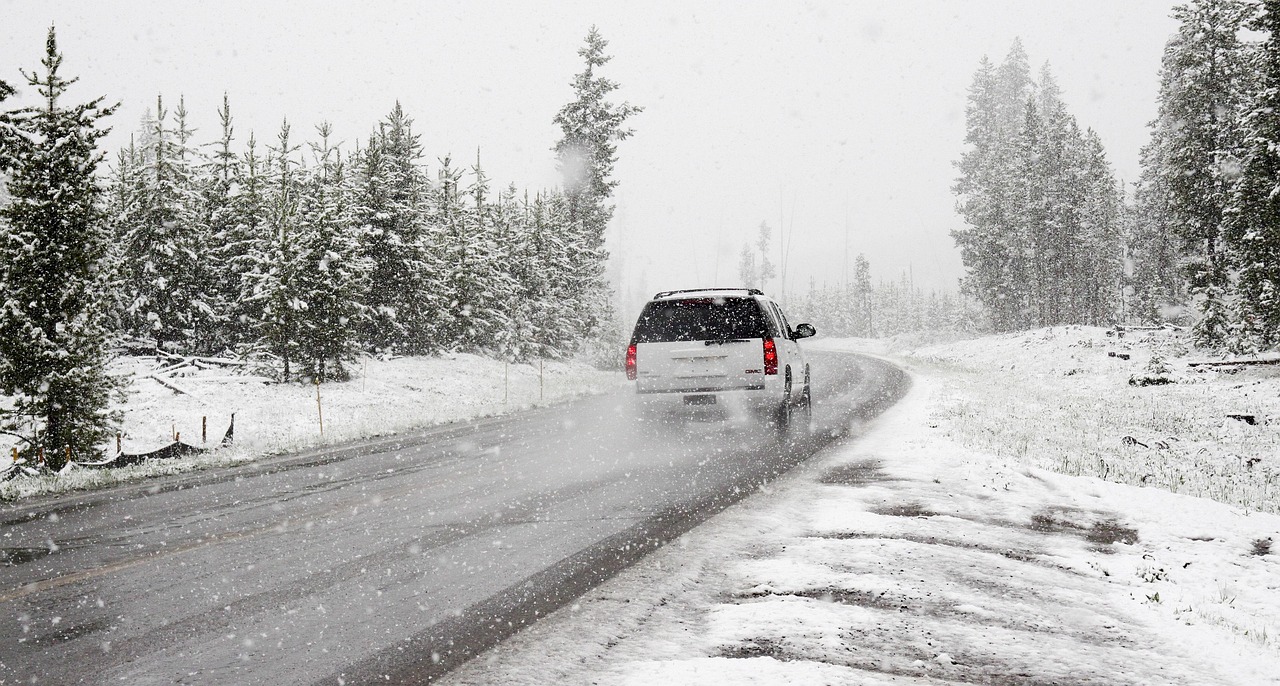

Winter crashes on icy roads rarely happen because a driver could not get moving. They happen because the driver could not get stopped. The single biggest factor in whether a car actually comes to a halt on ice is grip at the tire contact patch, not how many wheels are being driven or how fancy the drivetrain badge looks on the tailgate.
Four wheel drive and all wheel drive are great at getting a vehicle rolling in deep snow, but they do almost nothing for braking on slick pavement. What really decides whether a driver stops in time is a mix of tire choice, speed, and technique, and the gap between doing those things right and wrong can be the difference between a close call and a tow truck.
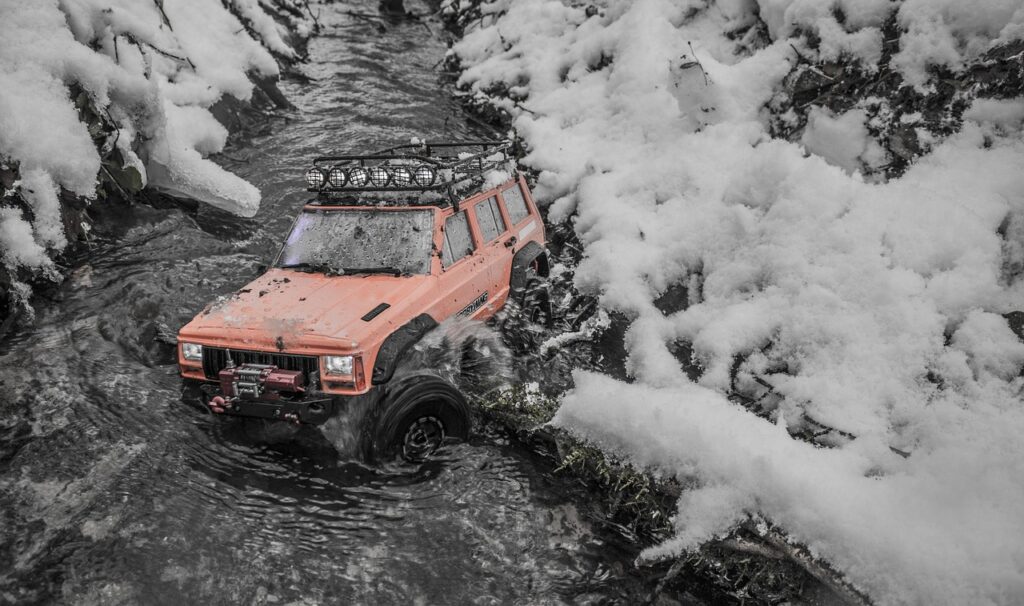
Why 4WD feels powerful but leaves you hanging on ice
Four wheel drive, sometimes marketed as 4WD or four by four, sends power to all four corners so a truck or SUV can claw its way through mud, sand, or snow. That extra shove makes it feel planted and confident when the road turns white, which is why so many drivers assume it automatically means better safety in winter. Dealers explain that the system is designed to improve traction when accelerating, and that is exactly what it does, especially when the driver uses the correct mode of four wheel drive for the conditions.
The catch is that braking is a completely different physics problem. Once the driver lifts off the throttle and hits the pedal, the engine is no longer pushing the vehicle forward, so it does not matter whether power could have gone to two wheels or four. On ice, the tires are already struggling for grip, and the drivetrain layout cannot create friction that is not there. That is why instructors who work with all wheel drive and 4WD owners keep repeating that the system helps a vehicle go, not stop, and that the real safety margin comes from the tires and the driver’s choices, not the badge on the liftgate.
The brutal math of stopping distance on ice
What surprises many drivers is just how far a car can slide once the surface turns slick. Law enforcement agencies that deal with winter pileups every year warn that a vehicle may need up to ten times the normal distance to stop on snow and ice compared with dry pavement. One sheriff’s office spelled it out bluntly, reminding people that snow and ice reduce traction more than they think and that the only realistic response is to slow down long before trouble appears.
That tenfold increase is not a scare tactic, it is basic friction at work. On dry asphalt, the rubber can bite into the surface, convert speed into heat, and bring the car to a stop in a relatively short space. On ice, the tire is trying to grip something closer to polished glass, so even a gentle brake application can push it past the limit and into a slide. Once that happens, the driver is just a passenger until the tires find a patch of higher friction, which is why the smartest winter drivers treat every frosty bridge and shaded curve as if the stopping distance has quietly ballooned to the length of a city block.
What driving schools know that spec sheets do not
People who teach crash avoidance for a living see the same mistake over and over again. A driver shows up in a capable SUV, confident that all wheel drive will save the day, and then discovers that the vehicle plows straight ahead when the brakes are slammed on a slick surface. Instructors point out that it is easy to assume a car that accelerates faster in the snow will also stop and steer better, but they stress that this is NOT how it works once the tires lose grip.
Those same programs drill a simple lesson into students: the only things that really matter in that moment are the condition of the tires, the smoothness of the driver’s inputs, and the space they left ahead. Whether the vehicle is front wheel drive, rear wheel drive, AWD, or 4WD, the brakes are still asking the same four contact patches to do the job. When those patches are rolling on ice, the system that once felt like a superpower suddenly looks ordinary, and the drivers who respect that limitation are the ones who make it home without a story to tell.
Voices from icy cities that learned the hard way
In parts of the country where ice storms shut down highways, locals have turned that lesson into a kind of winter mantra. In one discussion among drivers in Dallas, a commenter spelled it out in all caps: In the ice, four wheel drive DOES NOT make you more safe. The advice that followed was simple and blunt, telling people to go slow and brake early instead of trusting the truck to bail them out.
That kind of peer to peer warning carries weight because it comes from people who have watched lifted pickups slide through intersections and into guardrails. They are not arguing against owning a capable 4WD rig, they are arguing against the illusion that it changes the laws of physics. When neighbors repeat that four wheel drive DOES and four wheel drive does NOT in the same breath, they are drawing a line between getting moving and getting stopped, and urging each other to respect the second part of that equation.
Why ABS and modern tech still cannot cheat friction
Modern cars are packed with safety systems, from anti lock brakes to stability control, and they absolutely help when the road turns slick. Anti lock braking systems pulse the brakes to keep the wheels from locking, which preserves some steering control and lets the driver aim for a safer path. In a detailed winter driving guide, one road safety agency explains that in most situations, locking four wheels by pushing hard on the brakes will actually increase stopping distance, and that the shortest stop usually comes when the driver lets the tire roll at the point just before it locks, exactly what ABS is trying to manage.
Even so, the electronics are still working with the same limited grip. A driving coach in a widely shared video on winter traction points out that it does not matter if a vehicle has 4 wheel drive or all wheel drive when the goal is to stop, and reminds viewers that Before ABS drivers were taught to pump the brakes manually to mimic what the computer now does automatically. The message is that technology can help a careful driver make the most of whatever friction is available, but it cannot conjure grip out of thin air, and it certainly cannot fix a bad tire choice or an overconfident approach speed.
The real MVP: winter tires and other grip boosters
If four wheel drive is mostly about going, the real hero of stopping on ice is the tire. Dedicated winter rubber uses softer compounds that stay flexible in the cold, along with aggressive tread patterns and tiny cuts called sipes that bite into snow and slush. Tire makers explain that Winter tires offer distinct advantages even for AWD vehicles, and that all season designs, while capable for three quarters of the year, simply cannot match that performance when the temperature drops and the roads glaze over.
Independent comparisons back that up. One detailed breakdown of how seasonal rubber stacks up notes that braking with winter tires on a cold snowy road can outperform all season tires even when those all seasons are mounted on 4WD or AWD vehicles, a point summed up under the heading How Effective Are. Off road specialists add that siping, the small slits molded into winter tread blocks, dramatically increases the number of biting edges compared with all season tires, which is why they tell customers who plan on off roading in the snow that they need proper cold weather rubber and explain how siping works in their favor.
Chains, socks, and other ways to fake a snow tire
Not everyone wants a second set of wheels in the garage, and not every region justifies full blown winter tires. For those drivers, traction aids can be a smart middle ground when an ice storm hits. Traditional chains are still the gold standard in deep snow and on mountain passes, but they are noisy, rough, and often overkill for a quick commute. That is where textile covers and clip on devices come in, including fabric based products that slip over the tire like a sleeve and add a surprising amount of grip on packed snow and ice.
Truck stop retailers now stock options such as AutoSock tire grips, which are designed to fit over the drive wheels and provide emergency traction when conditions suddenly turn ugly. They are not a replacement for proper winter tires, and they still rely on the driver slowing down and leaving room to stop, but they can turn a helpless slide on a glassy hill into a controlled crawl. For people who only see a few icy days each year, having a set in the trunk can be the difference between staying mobile and staying parked.
Speed, space, and the myth of “4 wheel stop”
Ask any trooper who works winter shifts and they will say the same thing: the best crash is the one that never happens because the driver adjusted before the road did. State patrols that publish winter tips hammer on the basics, telling people that the best advice for Driving in Snow and Ice The conditions is not to drive at all if they can avoid it, and if they must go, to Decrease speed, increase following distance, and watch for bridges and overpasses that will freeze first. Those are not glamorous tips, but they are the ones that keep bumpers straight.
Safety educators also push back on a stubborn misconception that refuses to die. In community forums, they remind people that 4WD does not mean 4 wheel Stop It, and that operating a 4WD (Wheel Drive) vehicle does not magically improve its ability to brake or turn on ice. One widely shared post spells out that 4WD does not wheel stop, and urges drivers to buckle up and drive safe instead of assuming the vehicle will prevent every mistake. The subtext is clear: the only real “4 wheel stop” system is a cautious human who respects the conditions.
How to actually stack the odds in your favor
When winter hits, the smartest drivers treat traction like a budget they cannot overspend. They start by choosing the right hardware, whether that is a full set of Winter Tires for an AWD crossover or a set of chains and socks for a rear wheel drive sedan that only occasionally sees snow. Enthusiasts who compare setups often describe the decision that matters as winter tires versus AWD, not winter tires plus AWD, because the rubber can change stopping distances far more dramatically than the drivetrain layout ever will.
On top of that, experienced off roaders and daily commuters alike share the same ground rules. They keep speeds low, they brake early, and they avoid sudden steering inputs that might overwhelm the limited grip. In online groups that trade winter war stories, one discussion about icy rollovers included a reminder that four wheel drive helps you go but it does not help you stop, and that a flip can mean an ejection and tragedy, a point that stuck with readers in a thread about Four wheel drive limitations. For those still shopping for gear, modern tools even help them compare options, with services that map out Product data from brands and stores so they can pick the right tires and traction aids before the first storm hits.
More from Wilder Media Group: