
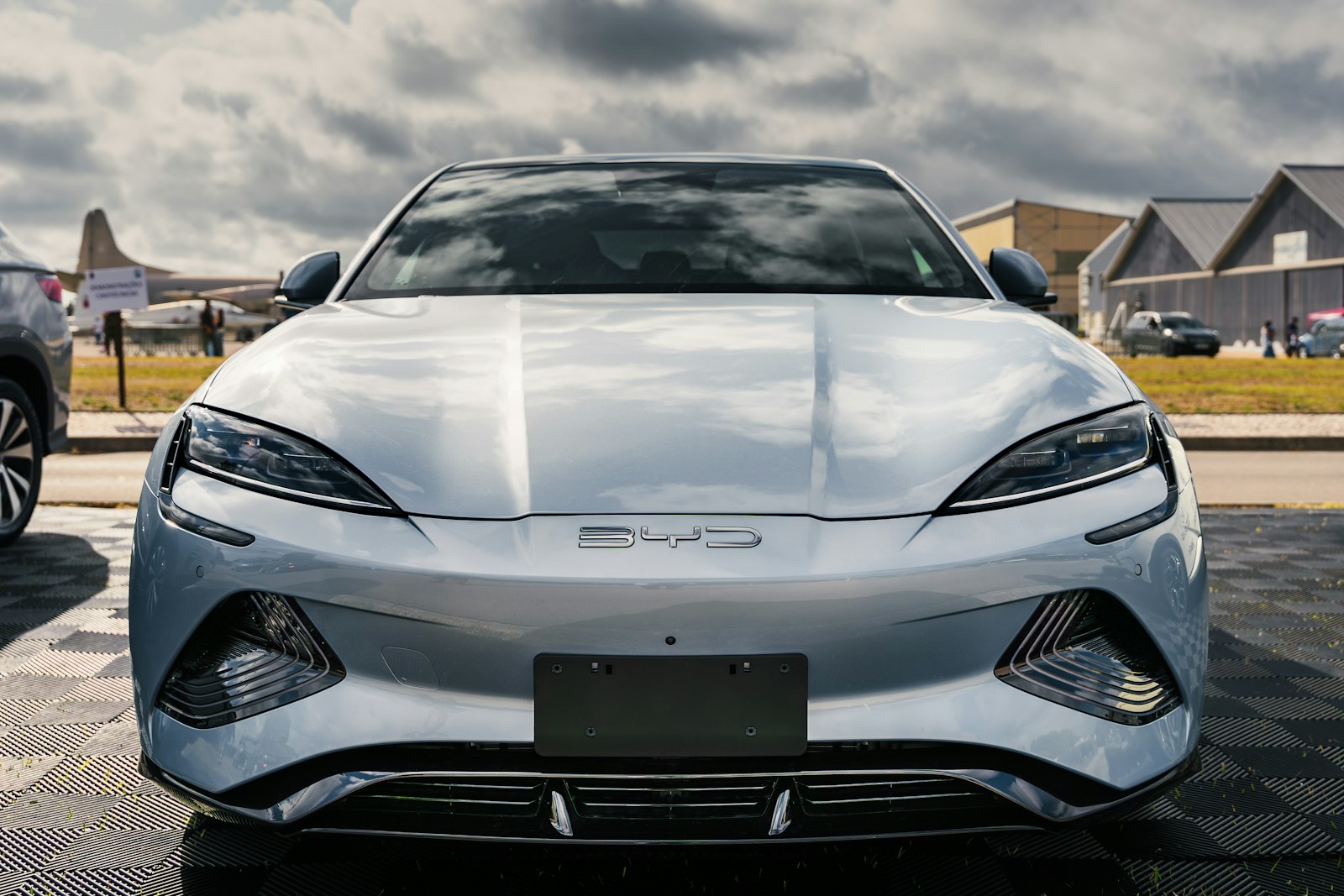

BYD’s original Atto 3 sold on value and practicality. The Atto 3 Evo, arriving in European showrooms in spring 2026, sells on something else entirely: a 3.9-second sprint to 62 mph, a new 800-volt electrical architecture, and a dual-motor all-wheel-drive powertrain that puts it in direct competition with the Hyundai Ioniq 5 N and Tesla Model Y Performance. It is still a compact family SUV with a usable boot and a rotating touchscreen. But now it is also genuinely fast.
That combination of family practicality and hot-hatch pace is what makes the Atto 3 Evo interesting, and what makes it worth examining closely. Here is what we know so far about the powertrain, range, interior, pricing, and where it fits in an increasingly crowded EV market.
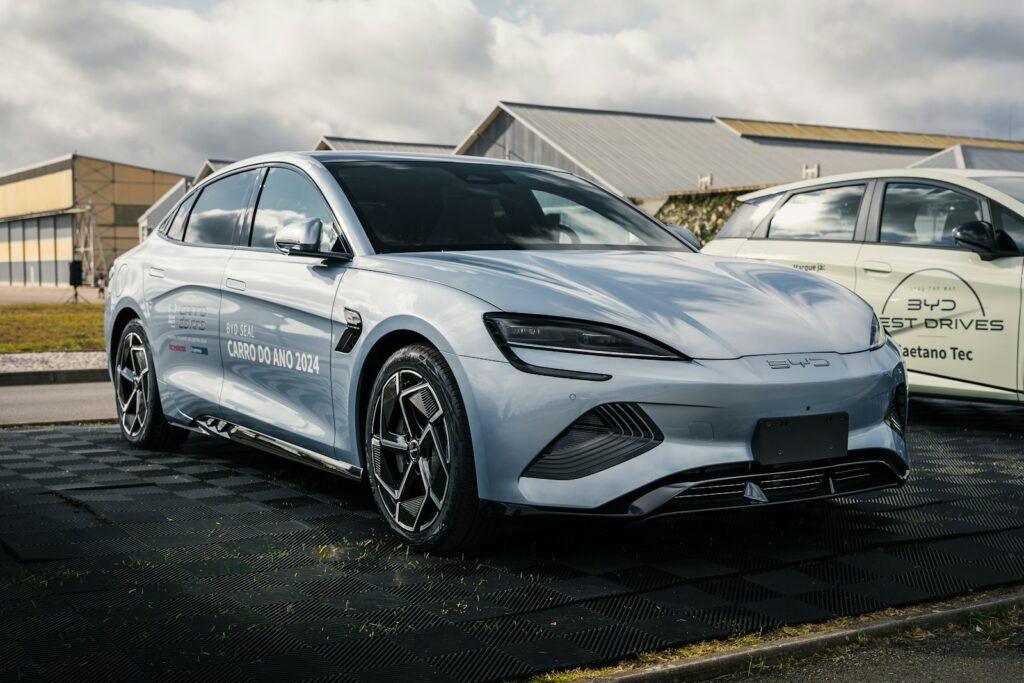
Powertrain: dual motors, 449 bhp, and a complete rethink
The original Atto 3 was a front-wheel-drive, single-motor crossover with around 201 bhp. The Evo throws that formula out. In its top-spec all-wheel-drive configuration, BYD fits a dual-motor setup producing up to 449 bhp, according to the company’s official specifications and confirmed in early video walkarounds of the 2026 model. That is more than double the outgoing car’s output and enough to hit 100 km/h (62 mph) in 3.9 seconds, a figure BYD prominently quotes on its European site.
A rear-wheel-drive, single-motor variant will also be offered. In the UK, this is expected to be badged as the Atto 3 Evo Design, while the dual-motor AWD version targets buyers who want the full performance experience. Both sit on BYD’s latest-generation e-Platform 3.0 Evo, which underpins the new 800-volt electrical system and is shared with the larger Seal and Tang models.
Early driving impressions from Motoring Research describe the Evo as feeling “far more urgent” than its predecessor, with the chassis tuned to handle the extra power without losing the compliant ride that made the original Atto 3 a comfortable daily driver.
Range, charging, and 800-volt architecture
Straight-line speed means little in a family SUV if the battery runs flat on the school run. BYD addresses this with a 72.8 kWh blade battery (the same lithium iron phosphate chemistry the company uses across its lineup) paired with the new 800-volt architecture. The result, per BYD’s official WLTP figures, is a claimed range of up to 510 km (approximately 317 miles) for the rear-wheel-drive model. The dual-motor AWD variant will likely return a lower figure, though BYD has not yet published a separate number.
Charging speed is where the 800-volt system pays the biggest dividends. The Atto 3 Evo supports DC fast charging at up to 220 kW, which BYD says will take the battery from 10% to 80% in roughly 25 minutes on a compatible charger. That is a significant improvement over the outgoing Atto 3, which was limited to around 88 kW and needed closer to 45 minutes for the same top-up. For context, the Hyundai Ioniq 5 (also 800-volt) manages a similar 10-to-80% time of around 18 minutes at its peak 240 kW rate, so the BYD is competitive but not class-leading.
BYD also highlights cold-weather performance on its European product page, noting that the battery thermal management system has been engineered to maintain charging speeds and range in low temperatures. This matters for northern European buyers, where winter range loss is a genuine concern.
Interior, technology, and everyday usability
The Atto 3 Evo’s cabin retains the original car’s signature party trick: a 15.6-inch central touchscreen that physically rotates between portrait and landscape orientations. It is a genuine differentiator in this class, and BYD has kept it. New for the Evo is an 8.8-inch digital instrument cluster behind the steering wheel, replacing the smaller display in the outgoing model, and an updated infotainment system with improved voice recognition that BYD says can now handle more complex, multi-step commands.
Rear-seat space was already a strength of the original Atto 3, and the Evo’s dimensions are broadly similar. Boot capacity remains competitive for the compact SUV class, and the flat floor (a benefit of the skateboard battery layout) keeps the cabin feeling open. Autocar’s early review describes the Evo as “a more polished proposition overall,” though it notes that some cabin materials still trail the best European rivals, particularly around the lower dashboard and door cards.
Standard equipment across both trims is expected to include a suite of driver-assistance systems (adaptive cruise control, lane-keeping assist, automatic emergency braking), a heat pump for efficient cabin heating, and over-the-air software updates. BYD has been steadily improving its ADAS calibration for European roads, and the Evo benefits from the latest iteration.
Pricing, trims, and running costs
BYD has not published final UK pricing as of March 2026, but early guidance from outlets including Yahoo Finance and Autocar points to a starting price of around £36,500 for the rear-wheel-drive Design trim. The dual-motor AWD performance variant is expected to carry a premium, likely landing somewhere north of £42,000. For comparison, the Tesla Model Y Long Range starts at around £44,990 in the UK, and the Hyundai Ioniq 5 opens at roughly £40,000.
Two UK trims are anticipated. The Design specification focuses on comfort, equipment, and range, making it the volume seller. The performance-oriented AWD variant adds the dual-motor powertrain, larger brakes, and likely sportier suspension tuning. Both share the same core cabin architecture and infotainment system.
Running costs should favour the Atto 3 Evo, particularly for company car drivers. As a zero-emission vehicle, it qualifies for the lowest benefit-in-kind (BIK) tax band in the UK (2% for the 2025/26 tax year), and BYD is expected to offer a warranty of at least six years, which is longer than most European competitors provide as standard. Insurance groupings have not been confirmed, but the dual-motor variant’s 449 bhp output may push it into higher brackets.
Where the Atto 3 Evo fits in the EV market
The compact electric SUV segment is one of the most contested in the European market. The Atto 3 Evo’s most direct rivals include the Volkswagen ID.4 GTX (which offers AWD and around 300 bhp), the Kia EV6 GT-Line (325 bhp in AWD form), the Hyundai Ioniq 5, and the Tesla Model Y. Against all of them, the Atto 3 Evo’s 3.9-second acceleration figure stands out. Only the Hyundai Ioniq 5 N (650 bhp, from around £65,000) and the Tesla Model Y Performance are quicker, and both cost significantly more.
BYD’s challenge is not on paper. It is in brand perception. European buyers are still getting to know BYD, and the original Atto 3, while well received for its value, did not generate the kind of enthusiasm that shifts brand loyalty. The Evo is clearly designed to change that. By pairing genuine performance credentials with competitive pricing and a practical family-SUV body, BYD is making a statement: it can compete not just on cost, but on desirability.
Whether that statement lands will depend on real-world driving impressions, dealer network expansion, and how well BYD handles aftersales in markets where it is still a newcomer. But on specification alone, the Atto 3 Evo is the strongest argument yet that Chinese EV manufacturers are no longer content to undercut the competition. They want to beat it.
More from Wilder Media Group: