
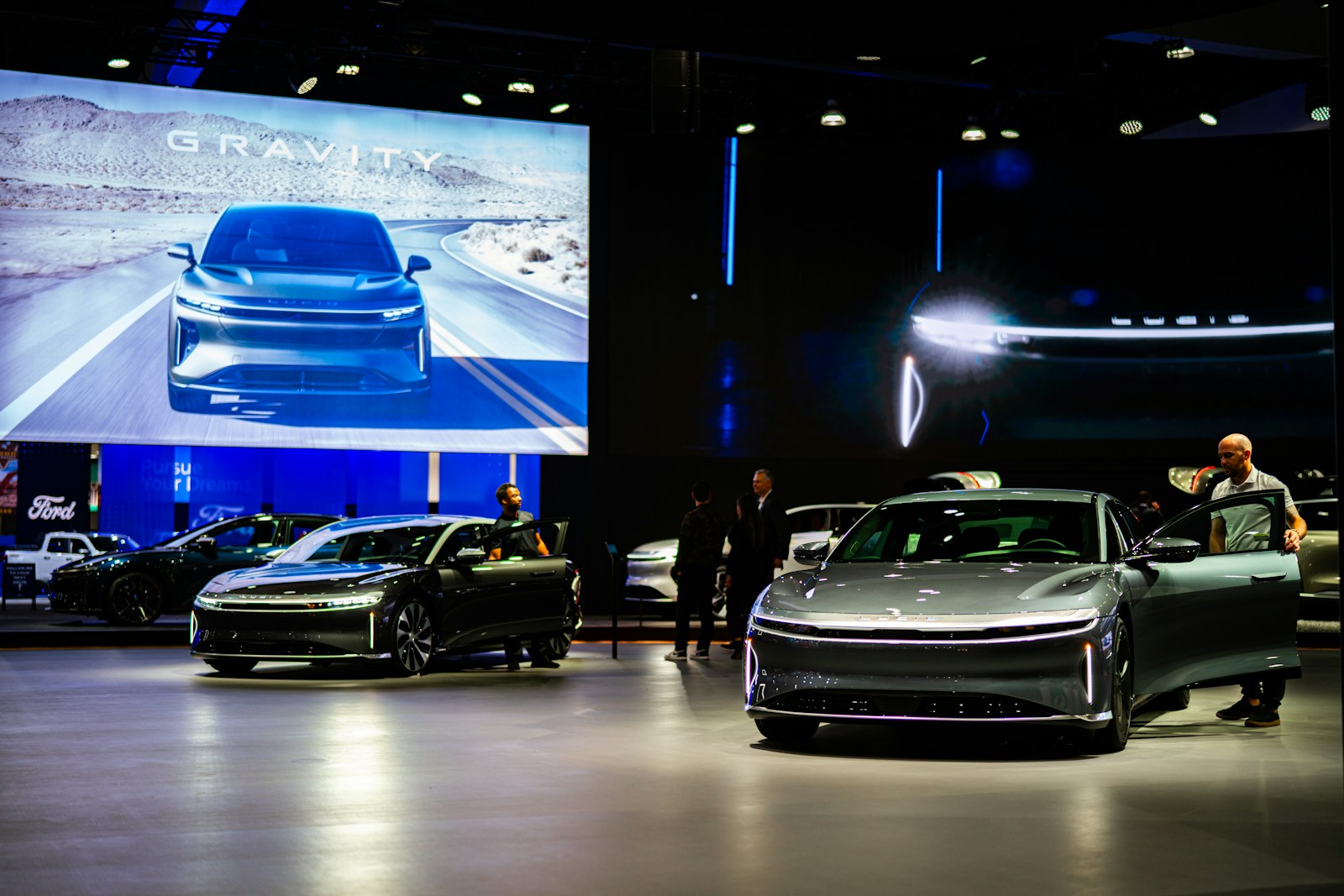

The 2026 Detroit Auto Show opened at Huntington Place in January with 41 vehicle brands on the floor, making it one of the largest North American International Auto Show lineups in years. But behind the tire smoke and choreographed light shows, the event revealed an industry caught between competing pressures: cooling enthusiasm for electric vehicles, record-high transaction prices, an ongoing tariff standoff, and politicians eager to claim credit — or assign blame — for all of it.
The EV slowdown is real, and expensive
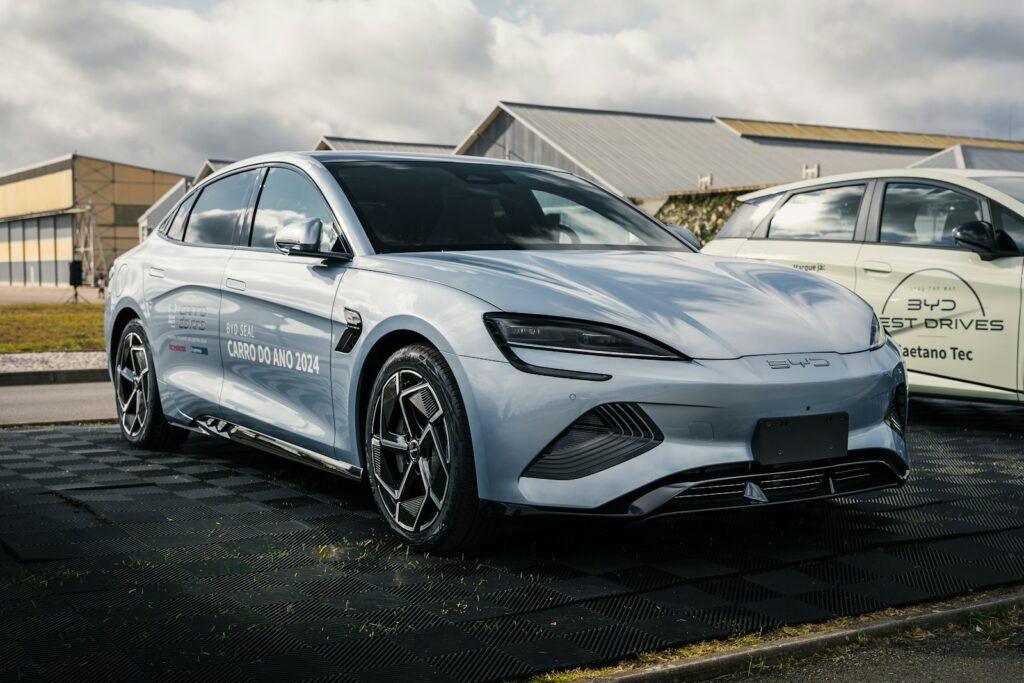
Battery-powered models still have prominent floor space, but the breathless unveil energy of past shows has faded. Visitors lined up for ride-alongs in EVs, yet the loudest cheers came when V8s and turbocharged engines roared around the indoor track. The contrast mirrors what is happening in showrooms: U.S. fully electric vehicle market share sat at roughly 8 percent of new-car sales through late 2025, according to Cox Automotive data, while China’s EV penetration has already passed 40 percent.
The financial hangover from aggressive EV bets is impossible to ignore. Ford Motor Co. has booked cumulative losses exceeding $19.5 billion on its Model e electric division and confirmed it will end production of the all-electric F-150 Lightning. General Motors, meanwhile, has pulled back on its original target of producing one million EVs annually by mid-decade, instead channeling investment toward plug-in hybrids that pair a smaller battery with a gasoline engine. Stellantis has taken a similar hedge, expanding its hybrid lineup across Jeep and Ram.
Executives on stage in Detroit kept returning to the same vocabulary: “choice,” “flexibility,” “multiple pathways.” Translation: the industry misread how quickly mainstream American buyers would abandon the gas pump, and now it is recalibrating without admitting defeat.
Trucks, SUVs, and the risk of falling behind
A walk through the show floor makes clear what still pays the bills. Lifted pickups, three-row family haulers, and off-road-ready SUVs dominated the biggest stages. Trucks and SUVs account for roughly 80 percent of new U.S. vehicle sales, a ratio that has held steady for several years, according to the Bureau of Economic Analysis vehicle-category data.
That dominance is comfortable in the short term but carries long-term risk. Analysts at BloombergNEF and the International Energy Agency have warned that if China and Europe continue to scale battery production, software platforms, and EV supply chains faster than the U.S., American automakers could find themselves followers in the technologies that will define the next generation of transportation. Some industry observers have described the gap as a looming “EV cliff” with consequences that reach well beyond showroom floors, touching jobs, component manufacturing, and export competitiveness.
The show floor energy around big gasoline trucks captures where American buyers are right now. Whether it captures where the global market is heading is a different question.
Adventure vehicles steal the spotlight
Organizers leaned into the truck-and-SUV enthusiasm by turning a section of Huntington Place into a playground. The Michigan Overland Adventure is a multi-brand feature showcasing custom rigs — including a Ram Power Wagon fitted with a Cummins HO diesel — on simulated trails and camping setups. Visitors could watch vehicles crawl over obstacles and talk to builders about suspension lifts and rooftop tents.
“Across the industry, we’re seeing a real shift toward vehicles that are built for more than just getting from point A to point B,” a show organizer said in promotional materials for the attraction. The pitch works because it lets automakers demonstrate practical technology — off-road drive modes, 360-degree camera systems, upgraded traction control — in a setting that feels more visceral than a static display stand.
It also gives companies a powertrain-neutral selling point. Whether a rig runs on gasoline, a hybrid system, or a battery pack, the lifestyle appeal of overlanding and outdoor capability translates. That flexibility is exactly what automakers want right now.
Practical tech over sci-fi concepts
The technology story at the 2026 show skews useful rather than fantastical. Instead of outlandish concept cars, brands focused on features headed to dealer lots within a year: improved driver-assistance systems, redesigned infotainment screens with faster processors, and over-the-air software updates that promise to keep vehicles current long after purchase.
With 41 brands exhibiting, visitors could compare approaches side by side — Toyota’s latest hybrid synergy system next to Hyundai’s 800-volt charging architecture next to Ford’s BlueCruise hands-free highway driving. The sheer density of the floor made it easy to see how competitive the market has become and how much overlap now exists between legacy automakers and newer entrants.
The emphasis on near-term, real-world improvements reflects a broader calculation. With average new-vehicle transaction prices hovering above $48,000 nationally, according to Kelley Blue Book, buyers want proof that a new car justifies its sticker — especially in a high-interest-rate environment where monthly payments can sting.
Affordability and tariffs loom over everything
For all the polished displays, affordability is the undercurrent that connects nearly every conversation at the show. Sticker prices have climbed steadily since the pandemic, and the Trump administration’s tariffs on imported vehicles and parts have added fresh cost pressure. A 25 percent tariff on assembled vehicles imported from outside the U.S., Canada, and Mexico took effect in 2025, and automakers have warned that even domestically assembled models rely on global supply chains for key components, meaning some cost increases will be passed to consumers.
On the show floor, that tension surfaced in visitor interviews. Some attendees said they welcomed regulatory relief if it genuinely lowered what they pay each month. Others worried that relaxing emissions and fuel-economy rules would simply let automakers keep selling expensive, less efficient trucks without addressing the root causes of high prices.
Union workers voiced a parallel concern. UAW members attending the show questioned who the industry is really building for when the average transaction price puts a new vehicle out of reach for many of the hourly employees who assemble them. That disconnect — record revenue for manufacturers alongside strained household budgets — is not new, but it felt especially pointed inside a convention center full of six-figure trucks.
Politicians seize the stage
The political presence at the 2026 show was impossible to miss. Transportation Secretary Sean Duffy and other Trump administration officials used the event to promote recent regulatory moves, including a revised approach to Corporate Average Fuel Economy (CAFE) standards. Duffy praised the decision on CAFE targets as a way to make compliance timelines more realistic and reduce penalties that automakers argued were forcing them to build EVs consumers did not yet want in large numbers.
Not everyone on the floor agreed. When a local television crew asked visitors what they thought of the administration’s efforts to make cars more affordable, responses split sharply. Some believed looser regulations would bring prices down; others countered that weakening fuel-economy standards could raise long-term fuel costs and slow the country’s shift toward cleaner transportation.
Michigan Governor Gretchen Whitmer also spoke at the event, focusing on the need to keep automotive research and development anchored in the state even as federal R&D funding faces proposed cuts. Her message was pointed: Michigan’s identity as the center of American automaking depends on continued investment in next-generation technology, whether that means batteries, software, or advanced manufacturing. Losing that edge, she argued, would hurt the state’s economy for a generation.
Detroit’s identity on the line
Step back from any single display, and the 2026 Detroit Auto Show tells a story about a city and an industry negotiating their future in real time. Detroit built its reputation on internal combustion, and the trucks and SUVs filling Huntington Place prove that legacy still sells. But the global market is shifting, competitors in Asia and Europe are not waiting, and the cost of cars — financial and political — keeps climbing.
The show has always been part product launch, part civic pride, part political theater. This year, all three dimensions feel unusually high-stakes. The decisions automakers, regulators, and consumers make over the next few years will determine whether Detroit leads the next chapter of the auto industry or spends it catching up.
More from Wilder Media Group: