

The first production car to wear a Hemi V8 badge is not a six-figure museum piece or a trailer-queen auction star. It is a mid‑century luxury sedan that still slips under the radar, even as other classic Mopars go stratospheric. That quiet status has turned it into one of the more surprising affordable entries into the world of early Hemi power.
The forgotten first Hemi V8 sedan
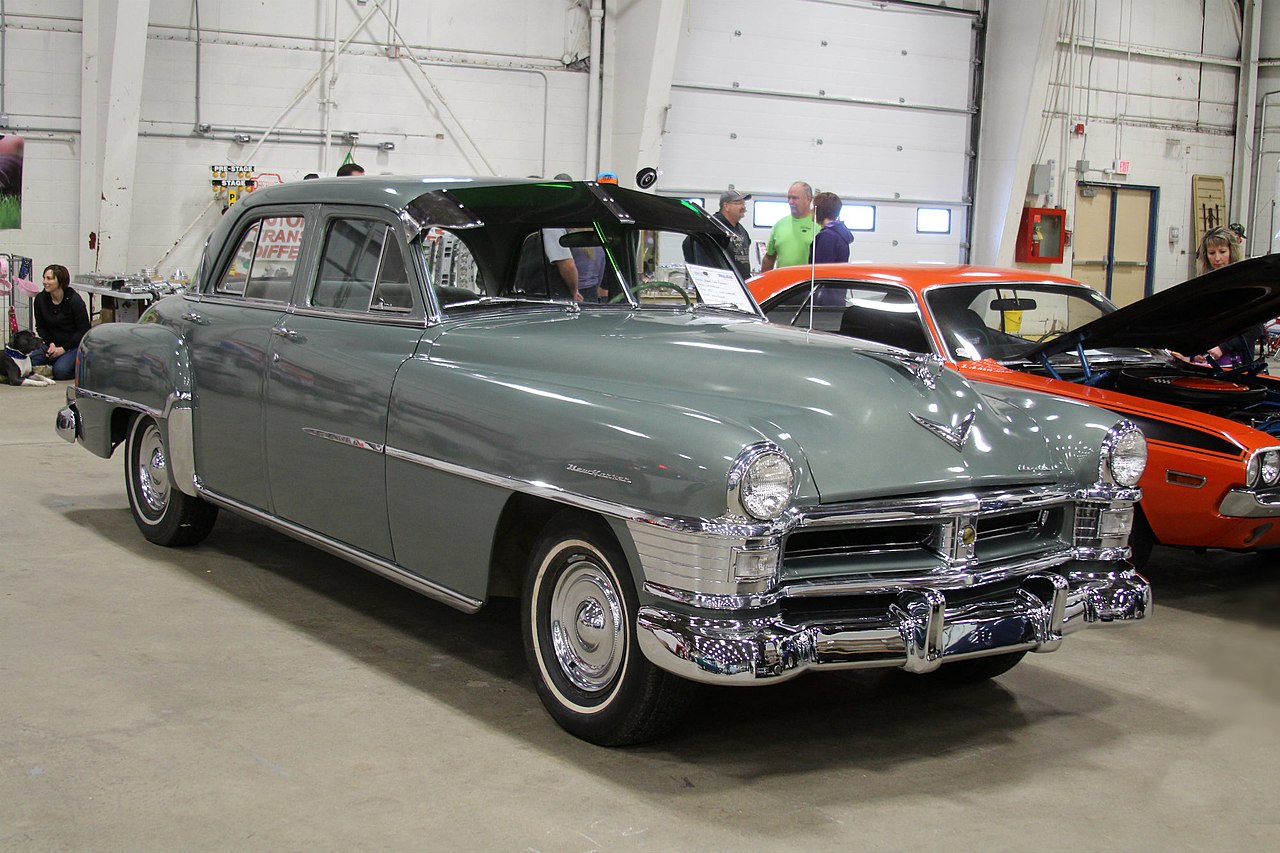
When most people hear “Hemi,” their minds jump straight to late‑1960s muscle cars and cartoonishly loud drag machines, not a stately early‑1950s four‑door. Yet the first production car to carry a Hemi V8 was the 1951 Chrysler New Yorker, which debuted the 331 cubic inch FirePower V8 under a very conservative body. The engine’s hemispherical combustion chambers, opposed valves, and domed heads were engineered for efficiency and power, not marketing hype, and they arrived in a car aimed at executives rather than street racers, as period coverage of the 1951 New Yorker makes clear.
That mismatch between radical hardware and buttoned‑down styling is a big reason the early Hemi New Yorkers stayed in the background while later 426‑powered Chargers and ’Cudas soaked up the spotlight. The original 331 FirePower produced 180 horsepower in its first year, a serious figure for the time, and it quickly proved itself in competition, including high‑speed runs and early NASCAR events, according to period race reports cited in analyses of Chrysler’s early Hemi V8. Yet the car wearing that engine looked more country‑club than pit lane, which kept it from becoming a poster car for later generations of enthusiasts.
Why early Hemi New Yorkers are still relatively cheap
That image gap is exactly what keeps values in check today. While anything with a 426 Hemi tends to trigger auction paddles and speculative bidding, the 1951 to 1953 New Yorker with the original FirePower V8 usually trades for a fraction of the money. Recent price guides tracking postwar American sedans show driver‑quality early‑1950s New Yorkers with the 331 Hemi changing hands in the mid‑five‑figure range, with some usable cars still dipping below that, far less than comparable-condition later Hemi muscle cars documented in the same valuation data.
Condition and body style matter, of course, but the pattern is consistent: four‑door sedans and even clean two‑door hardtops with the first‑generation Hemi tend to lag well behind the headline‑grabbing Mopars of the late 1960s and early 1970s. Auction summaries from the past few years show nicely restored early New Yorkers selling for less than the cost of a high‑end engine build on a 426, a spread that has stayed surprisingly stable even as broader classic‑car prices climbed, according to compiled sale results. For buyers who care more about the mechanical story than the quarter‑mile time, that disconnect looks like an opportunity rather than a warning sign.
Living with the first Hemi V8 as a modern classic
Affordability is only half the equation; the other half is whether someone can actually live with a 1950s Hemi sedan without turning their garage into a full‑time restoration shop. On that front, the early New Yorker is more approachable than its exotic‑sounding engine suggests. The 331 FirePower uses a cast‑iron block, a relatively modest compression ratio in stock trim, and a straightforward pushrod valvetrain, all of which contribute to durability when maintained properly, as detailed in technical breakdowns of Chrysler’s first Hemi engines. Parts availability is not as easy as for small‑block Chevrolets, but core service items and many rebuild components are supported by a mix of reproduction suppliers and specialist machine shops that focus on early Hemis.
On the road, the New Yorker behaves like the premium cruiser it was built to be. Contemporary tests and later owner reports describe a smooth ride, light steering, and relaxed highway manners, helped by the engine’s torque and the optional Fluid‑Torque Drive or PowerFlite automatic transmissions cataloged in period factory brochures. Fuel economy will not impress anyone used to modern downsized turbo engines, but for weekend use and occasional road trips, the combination of comfort and mechanical character is hard to match at the price point. The main compromises are size and safety: this is a large, heavy car with drum brakes and no modern crash protection, realities that owners and buyers weigh carefully in enthusiast ownership discussions.
For collectors who want the bragging rights of owning the first production Hemi V8 without paying muscle‑car money, the early‑1950s Chrysler New Yorker sits in a sweet spot. It carries genuine historical significance, a distinctive driving feel, and a level of craftsmanship that still comes through in the details, yet it remains priced like a niche curiosity rather than a blue‑chip investment. As long as the market keeps chasing later, louder Hemis, the original FirePower sedan will likely stay one of the more approachable ways to park a real Hemi in the garage, a fact quietly reflected in current market analyses.
More from Steel Horse Rides: