


The Ford Taurus SHO’s V8 era remains one of the strangest and most fascinating chapters in modern American sedan history. After building a cult following with a high revving V6, Ford pivoted to an exotic, Yamaha linked V8 that turned a family car into a quietly sophisticated performance experiment. The result was a short lived but technically rich project that still shapes how enthusiasts think about sleepers, engineering partnerships, and the limits of front wheel drive.
That experiment did not rewrite the performance rulebook, yet it proved how far a mainstream platform could be pushed with the right powertrain and chassis tuning. The V8 Taurus SHO blended mass market practicality with a 3.4 liter engine that would have looked more at home in a sports coupe, and its legacy now rests on how cleverly it tried to stretch the definition of a family sedan.
The sleeper roots of the Taurus SHO
Before the V8, the Taurus SHO had already earned a reputation as a stealth performance car that looked like a commuter but behaved like a sports sedan. The original manual only SHO arrived with understated styling and a focus on turning the everyday Taurus into something that could embarrass more expensive European machinery, while still functioning as a five passenger family car. Period descriptions of The SHO emphasized how little it visually differed from the hundreds of ordinary sedans in dealer lots, which only sharpened its appeal to drivers who wanted speed without flash.
That formula worked because the early SHO delivered genuine performance, not just badges and body kits. Enthusiasts still point to the manual transmission, the high revving Yamaha developed V6, and the way the car balanced everyday comfort with surprising pace. When an automatic option finally appeared for the 93 SHO, it signaled Ford’s interest in broadening the car’s audience beyond hardcore drivers, setting the stage for the more radical powertrain shift that would follow in the next generation.
Why Ford chased a V8 for a family sedan
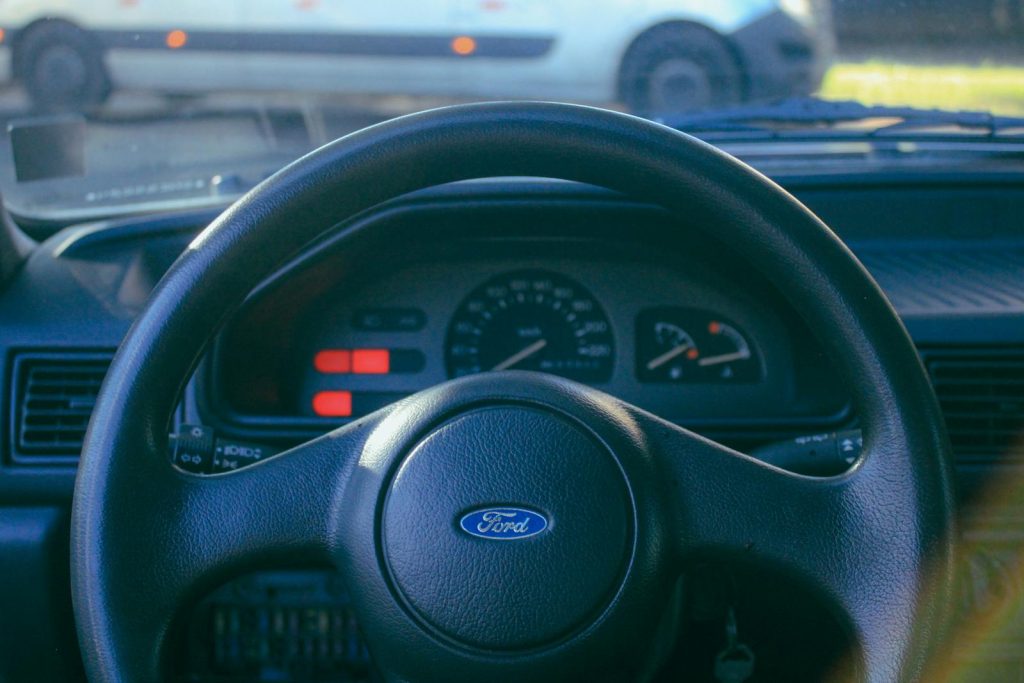
By the mid 1990s, Ford faced a market where power and refinement were becoming as important as raw practicality, even in mainstream sedans. The company wanted the next performance Taurus to feel more upscale and effortless, and a V8 carried a prestige that a V6, no matter how capable, could not match in showroom conversations. That thinking led to a collaboration where The Ford Super High Output V8 was designed and built by Ford Motor Company in conjunction with Yamaha Motor Corporati, extending a partnership that had already proven itself in the earlier engine.
Ford’s engineers were not simply chasing cylinder count, they were trying to deliver smoother torque, quieter operation, and a more luxurious character without abandoning the SHO’s performance mission. The decision to specify an aluminum 3.4 liter V8 with advanced heads from Yamaha and a block produced using a specialized process reflected that ambition. In an era when many buyers equated refinement with more cylinders, the move to a V8 in a front wheel drive sedan was a calculated risk that aimed to keep the Taurus SHO relevant against both domestic rivals and European benchmarks.
The 3.4 liter SHO V8: specs and structure
At the heart of the experiment sat an Engine that looked more like a piece of motorsport hardware than a typical family car powerplant. Ford specified a 235 hp (175 kW) aluminum 3.4 L V8 for the SHO models, combining heads from Yamaha and a block from Cosworth that was produced for the Special Vehicle Operations division of Ford Motor Company. The compact 60 degree layout and intricate intake runners gave the engine a distinctive appearance and allowed it to fit transversely in the Taurus engine bay without the bulk of a traditional American V8.
The V8’s architecture was tailored to front wheel drive packaging and everyday drivability, not just peak numbers. A relatively short stroke and lightweight internals helped it rev freely, while the aluminum construction kept weight in check over the front axle. The collaboration between Yamaha and Cosworth meant the engine blended Japanese precision with European racing experience, and the result was a powerplant that felt unusually sophisticated for a mass market sedan. That technical depth is why the Ford SHO V8 configuration is still dissected by enthusiasts who appreciate how naturally aspirated design and careful tuning can transform a mainstream platform.
From Windsor to Japan to Atlanta: a global engine journey
The production story of the SHO V8 was as unconventional as its design. Blocks for the 3.4 liter engine began life in Windsor, Ontario, where Ford used a patented Cosworth process to cast the aluminum structure before shipping them overseas. In Japan, Yamaha completed the intricate assembly work, adding the heads and finishing the engine to the high standards expected from a company better known for motorcycles and high performance components. Only then were the completed units shipped again, this time to Atlanta, Georgia, for installation into the waiting sedans on the Taurus line.
This multi continent journey turned each V8 powered Ford Taurus SHO into a small case study in global manufacturing. The path from Canada to Japan to the United States underscored how seriously Ford treated the project, even though it was built on a volume family car platform. An enthusiast focused description of a 1999 model highlights how THIS 3.4L Yamaha V8 and And THIS 1999 Ford Taurus SHO combined bubble era Taurus design, the distinctive SHO appearance package, and Yamaha performance, while also noting the Fun fact that the SHO engine’s production started in Windsor before its international trip. That kind of complexity would be unusual even for a low volume sports car, which makes its use in a family sedan all the more remarkable.
Performance that nearly matched European legends
On paper, the V8 Taurus SHO did not chase headline grabbing horsepower figures, but its real world performance was quietly impressive. Testing showed that the car could reach 60 in 6.7 seconds, a figure that put it only 0.4 seconds behind the benchmark E28 BMW M5, a comparison that would have seemed audacious for a front wheel drive American sedan a decade earlier. Through 1991, SHOs were already known for punching above their weight, and the V8 era continued that tradition by delivering acceleration that was competitive with respected European sports sedans while maintaining everyday usability.
The way the car delivered that performance mattered as much as the raw numbers. The 60 degree V8 provided a smooth, linear surge rather than a peaky rush, which suited the Taurus SHO’s role as a long distance cruiser that could still surprise on a back road. Analysis of the 60 degree design notes that Ford and Yamaha decided to make the engine more compact than it needed to be, a choice that helped with packaging and weight distribution. That attention to detail is part of why the V8 SHO still earns respect from drivers who value balance and subtlety over sheer output.
Third generation Taurus design and the SHO’s subtle aggression
The V8 experiment unfolded inside the third generation body that redefined the look of the Ford Taurus SHO. As with the Taurus, a new model of Taurus SHO was launched for 1996, adopting the rounded, so called bubble styling that divided opinion but improved aerodynamics and interior space. Although it contained less aggressive styling than some enthusiasts wanted, the car still wore unique wheels, discreet badging, and a slightly more purposeful stance that signaled its capabilities to those who knew what to look for.
That balance between subtlety and distinction was deliberate. Ford wanted the SHO to remain a sleeper, but it also needed to justify its premium over the standard sedan. The third generation Ford Taurus SHO carried over the core idea of a performance oriented family car while softening some of the visual aggression of earlier versions, a compromise that reflected broader styling trends of the period. Production of this iteration ended after the 1999 model year, which only adds to the sense that the V8 SHO was a brief, distinctive moment in Ford’s design and engineering history.
Front wheel drive limits and the missed manual
For all its technical sophistication, the V8 SHO was constrained by its front wheel drive layout and the absence of a manual gearbox. The torque of the 3.4 liter engine had to be channeled through an automatic transmission and the front tires, which limited how aggressively the car could launch and how playful it felt at the limit compared with rear drive rivals. Enthusiast commentary often notes that this could have been one of the greatest sleepers of all time, with the keyword could have underscoring how close the package came to greatness if only the drivetrain had been more enthusiast focused.
A widely shared video review from Apr captures that sentiment, with the host walking around a V8 powered sedan and explaining why the lack of a manual and the front drive configuration kept it from achieving cult icon status on the level of some European sports sedans. The clip, which presents the car as a perfect example of why enthusiasts cannot always have exactly what they want, has helped cement the Apr era SHO as a kind of what if case study. It shows how a brilliant engine and thoughtful chassis tuning can still be held back by packaging decisions made for broader market appeal rather than pure driving engagement.
Reliability quirks and the end of the V8 SHO
The V8 Taurus SHO’s story is also shaped by the mechanical quirks that emerged over time. The complex camshaft and valvetrain design, while contributing to the engine’s character, introduced potential failure points that worried some owners and mechanics. In a mass market context, even a relatively small rate of serious issues can weigh heavily on a model’s reputation, especially when the powertrain is as specialized as the SHO V8. Those concerns, combined with the cost of the global production chain, made the car a challenging proposition for Ford to sustain.
As the market shifted toward SUVs and crossovers, the business case for a niche performance sedan based on the Taurus platform weakened. The same Ford SHO V8 engine entry that details its Naturally aspirated configuration also notes that production ended when the third generation Taurus SHO ended, underscoring how closely the engine’s fate was tied to that specific body style and market moment. Once the bubble era Taurus left the stage, there was no direct successor for the 3.4 liter V8, and the SHO badge would later return with a very different turbocharged V6 approach.
Why the SHO V8 experiment still matters
Today, the V8 Taurus SHO occupies a unique place in enthusiast culture as both a cautionary tale and a celebration of ambitious engineering. It showed that a company like Ford Motor Company was willing to invest in a highly specialized powertrain, partner with Yamaha Motor Corporati, and route engines across continents just to give a family sedan a more exotic heart. That willingness to experiment helped keep the Taurus nameplate relevant in conversations about performance, even if the sales numbers never matched the engineering effort.
The car’s legacy also lives on in how collectors and drivers talk about sleepers and under the radar performance. A well preserved Ford Taurus SHO with the 3.4 liter V8 is now appreciated not only for its speed but for the story embedded in its block, heads, and assembly path. The combination of a 235 hp output, a 60 degree layout, and a global production chain makes it a rolling reminder that even mainstream sedans can host strange but brilliant ideas when engineers and executives decide to take a risk. Unverified based on available sources are any claims that the V8 SHO directly influenced later engine programs, but its continued presence in enthusiast discussions suggests its impact extends beyond its brief production run.
More from Wilder Media Group: