
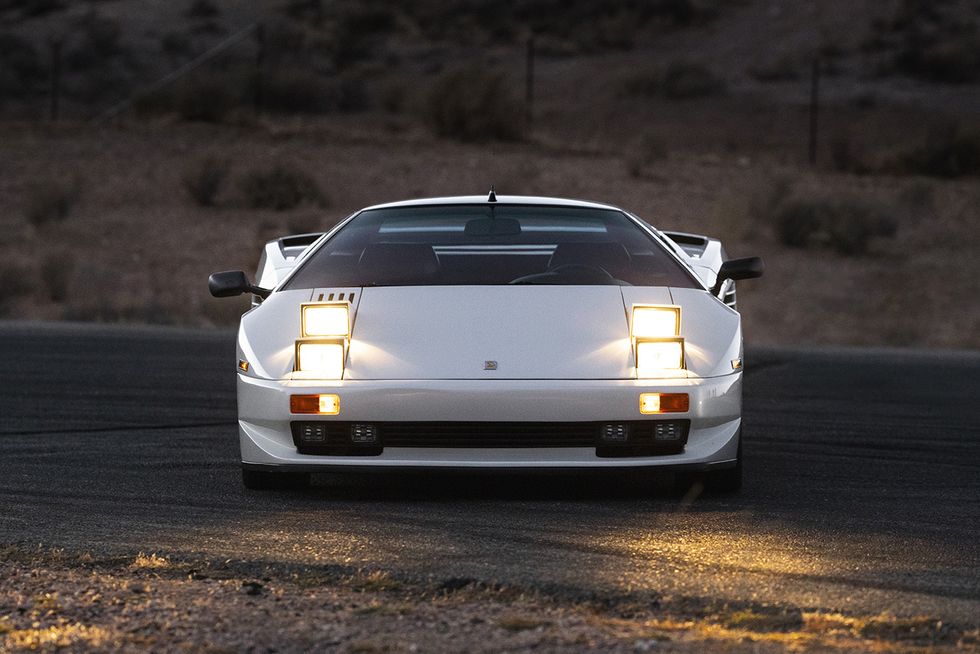

The supercar world loves a good origin story, and few are as wild as the one behind a low‑volume Italian exotic that almost everyone forgot. Built in tiny numbers, styled like a fever dream, and powered by a layout no major brand has dared to copy, it has all the ingredients collectors usually pay absurd money for. Yet the Cizeta‑Moroder V16T still trades in the shadows while lesser legends pull in auction headlines.
On paper, this thing should be a blue‑chip collectible, the kind of car that lives in climate‑controlled bunkers and surfaces only for concours lawns. Instead, it sits in that strange space between cult icon and trivia answer, admired by hardcore enthusiasts but overlooked by the wider market. That disconnect says as much about how car culture remembers its heroes as it does about the car itself.
The wild idea behind The Cizeta
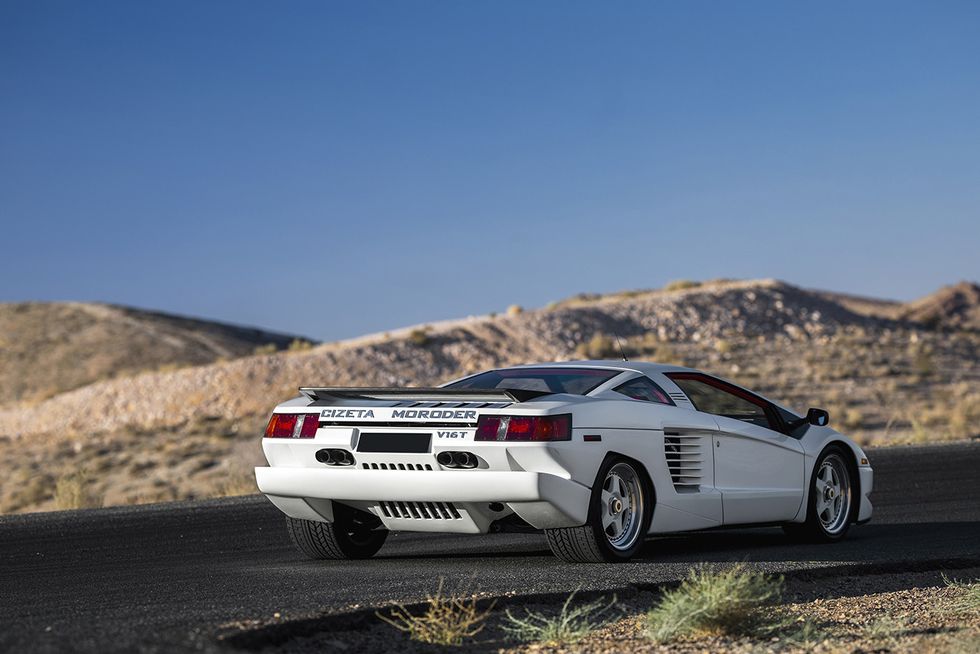
Long before social media turned every limited‑run coupe into an instant status symbol, a small team in Italy decided to build a supercar that was never going to be ordinary. The project became The Cizeta, a car that fused Italian coachbuilt drama with a powertrain layout that bordered on stubborn madness. The centerpiece was the Cizeta‑Moroder V16T, a mid‑engined monster that lined up sixteen cylinders in a transverse block behind the cabin, a configuration that made even period Lamborghinis look conservative once the Cizeta finally appeared.
The car in question, often shortened simply to the Cizeta V16T, was born from a collaboration that brought in producer Giorgio Moroder, whose name ended up attached to the earliest cars as Cizeta‑Moroder. That partnership helped signal that this was not just another boutique wedge, it was an underdog from an era when Italian exotics were already crowded with heavy hitters. Even in that context, the V16T stood apart, its transverse sixteen‑cylinder engine and hand‑built bodywork marking it out as a one‑off idea that somehow made it to the road, a fact underscored in detailed breakdowns of The Cizeta and its origins.
The coolest supercar no one remembers
Ask most people to rattle off the great exotics of the late eighties and early nineties and the answers come fast: Ferrari F40, Lamborghini Diablo, Porsche 959. The Cizeta rarely makes that list, even though its spec sheet reads like a greatest‑hits compilation of that era’s excess. One detailed look at the car flatly calls The Cizeta V16T the coolest supercar no one remembers, a verdict that fits when you line up its outrageous styling, its sixteen‑cylinder heart, and its tiny production run against the more familiar names that dominate posters and auction blocks, a point driven home in coverage that labels The Cizeta exactly that.
Part of the problem is simple visibility. The big brands kept building cars, winning races, and feeding fan bases, while Cizeta faded into near‑myth. When enthusiasts talk about the V16T today, they often have to explain what it is before they can explain why it matters. That gap between its outrageous concept and its low public profile is why some analysts argue that if people really knew the story behind the Cizeta V16T, its values would sit much closer to the seven‑figure price tags attached to more famous halo cars, a view spelled out in commentary that opens with the line, “For the Cizeta V16T, it too is extremely rare,” before arguing it would carry far higher price tags if the wider market paid attention.
Why this underdog should be worth millions
Strip away the obscurity and the Cizeta‑Moroder V16T checks every box that usually sends collectors into a bidding frenzy. It is extremely rare, built in tiny numbers by a small outfit, and wrapped in a body that captures the sharp‑edged aggression of its era better than many of its rivals. Underneath, the transverse sixteen‑cylinder engine is not just a party trick, it is a layout no other road car has really copied, which makes the V16T feel less like a derivative project and more like a singular experiment in how far a supercar could be pushed, a point that enthusiasts return to when they describe Cizeta as an underdog with a uniquely ambitious design.
That mix of rarity, power and drama has not gone completely unnoticed. Museums and curators have started to treat the V16T as a kind of unicorn from the analog supercar age, a car whose blend of raw power, exclusivity and outlandish style makes it one of the rarest performance cars in history. The Petersen Automotive Museum has highlighted Its Cizeta V16T in that light, teasing an exhibit built around the almost mythological 1988 Cizeta‑Moroder V16T and calling out how its blend of outrageous design and scarcity turns it into a true outlier among eighties and nineties exotics, a stance laid out in a social post that frames Its V16T as one of the rarest performance cars ever built.
More from Wilder Media Group: