

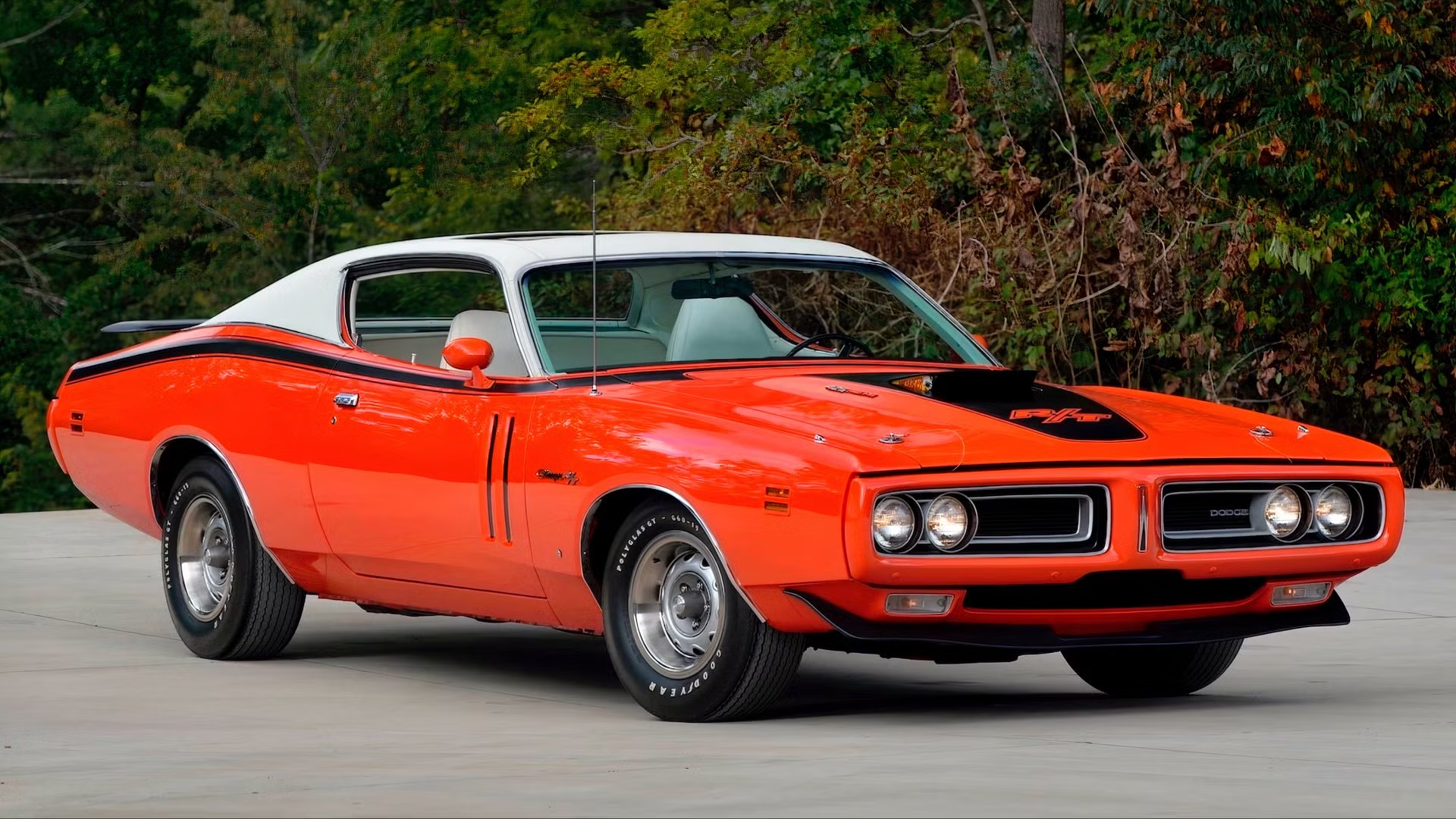
The muscle car world has plenty of legends, but one Mopar sits in a different category, the kind of machine collectors whisper about rather than casually trade. While Chevy fans can still hunt down big-block Chevelles and Camaros with enough patience and cash, the rarest Chrysler-built bruisers exist in single digits and almost never change hands in public. At the top of that food chain is the so-called unicorn, a Hemi-powered convertible that has turned decades of searching into a full-time obsession for some collectors.
To understand why this car inspires that level of fixation, it helps to zoom out and look at the numbers. Dodge and Plymouth simply did not build muscle in the same volumes as their cross-town rivals, and when they did, the wildest combinations were often ordered by only a handful of brave buyers. That mix of low production, racing pedigree, and a reputation for being barely tamed on the street is exactly what turned one particular Hemi convertible into the ultimate Mopar fantasy.
The Mopar numbers game that created a unicorn
Start with basic production math. While Chevy cranked out millions of Chevelles and Camaros during the classic muscle era, Dodge played in a different volume bracket. Across the same broad window, only 343,307 Dodge Chargers left the factory, a reminder that Mopar performance cars started from a much smaller pool. When buyers then layered on the most extreme engines and body styles, the resulting combinations dropped from rare to practically mythical.
That is exactly what happened with 426-equipped Mopar convertibles, which combined the most feared big-block in the catalog with the least practical body style for drag racing or NASCAR. Period buyers tended to choose roofs if they were serious about speed, so open-top Hemis were ordered in vanishingly small numbers. That imbalance is why collectors now talk about these cars in the same breath as art pieces, and why even seasoned Mopar hunters admit some configurations may never surface.
Why the 1971 Hemi ’Cuda convertible sits at the top
Among all those low-volume builds, the 1971 Plymouth Hemi ’Cuda convertible is the one that keeps coming up whenever people talk about the rarest American muscle. Shipping experts describe it as the holy grail of collectibility, noting that the Plymouth Hemi ’Cuda Convertible was built to keep Chrysler competitive in racing. The car was Designed to homologate Chrysler hardware, so it packed serious track intent into a street-legal package. That mission, combined with a short production run, is what pushed it from rare to almost theoretical in the eyes of many enthusiasts.
Production figures back up the legend. Factory records show Only 12 Examples Worldwide of Hemi ’Cuda convertibles for 1971, with Just seven automatics and five four-speeds, a breakdown that makes each transmission choice its own sub-myth. Later coverage of exclusive American cars reinforces that scarcity, pointing out that Its rarity and racing pedigree turn the Plymouth Hemi ’Cud convertible into a true enigma for collectors. When only a dozen exist, and several are locked away in long-term collections, the odds of ever seeing one in the wild are slim.
That scarcity shows up in the money. A few years ago, auction watchers noted that a Rare 1971 Plymouth Hemi ’Cuda Convertible Could Fetch $6.5 at Auction, a jaw-dropping estimate that instantly reset expectations for what Detroit iron could be worth. More recently, social clips from a major sale showed the hammer dropping at $3 million on one of the first Hemi Cuda Convertibles built in 1971, a record-breaking value that still left some observers wondering if the buyer actually got a bargain. For Mopar faithful, those numbers are less about bragging rights and more about confirmation that the unicorn they have been chasing really does sit in a different league.
Other Mopar legends, and why the ’Cuda still wins
Of course, the Hemi ’Cuda convertible is not the only Mopar that sends collectors into bidding frenzies. Winged cars like the 1969 Dodge Daytona, Built for NASCAR homologation, are often described as the holy grail of Mopar muscle. Period-correct coverage notes that the Dodge Daytona was Built for high-speed dominance, and later market analysis shows that Charger Daytonas with Hemis and roofs routinely sell in the millions. Even so, those cars were built in higher numbers than the handful of open-top Hemis, which keeps the ’Cuda convertible in a class of its own.
There are also hardtop oddities that command serious respect. Lists of the most collectable Mopars highlight cars like the Plymouth Duster Rapid Transit Mecum and the Dodge Hemi Dart, along with a 1969 four-speed Hemi B-body that is the only documented example of its kind. Shipping specialists rank the 1971 Plymouth Hemi ’Cuda Convertible alongside other ultra-low-production American exotics, and separate rundowns of exclusive cars note that Its combination of rarity and performance delivered unmatched power for the era. Even broader lists of the rarest American muscle, which include the 1971 Plymout Hemi ’Cuda among the top five, concede that nothing else quite matches the mix of numbers and mystique attached to this car.
More from Wilder Media Group: