
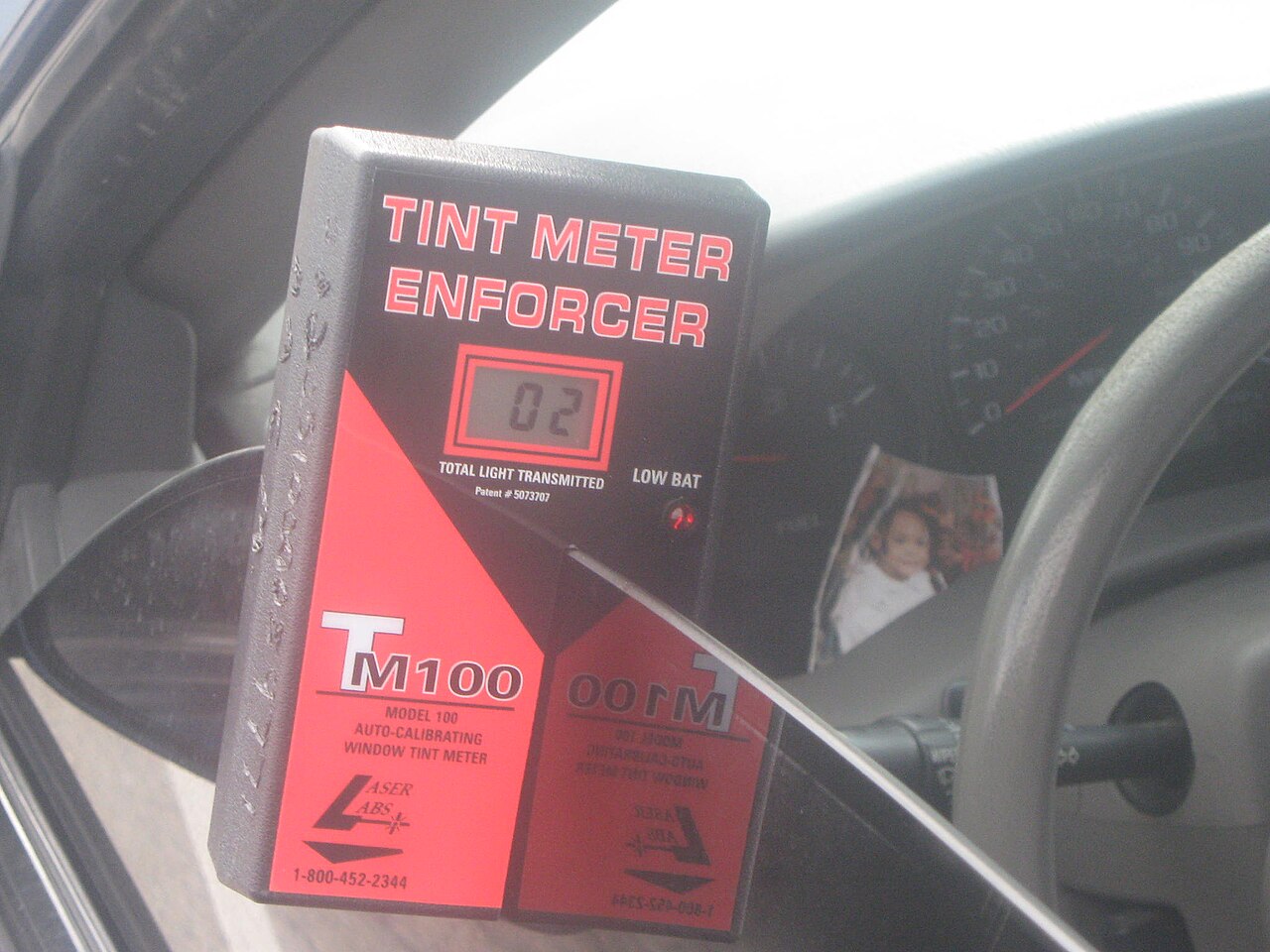

A traffic stop that turned into a tiny science experiment
It started like a pretty standard traffic stop: lights in the rearview, that quiet “what now?” feeling, and an officer walking up with the usual calm-but-serious posture. He glanced at my car, pointed at the side windows, and said my tint looked too dark. Fair enough—tint laws exist, and plenty of people push the limit.
Then he pulled out a tint meter and clipped it onto the window like a little clamp. The device beeped, he looked at the number, and I watched his face do that quick mental math people do when they’re checking a rule. Except the next time he tested it, the meter flashed a different number. And the time after that? Different again.
How tint meters are supposed to work (in normal circumstances)
Most states regulate window tint using something called Visible Light Transmission, or VLT. It’s basically the percentage of light that makes it through the glass—so a “35% tint” means only 35% of visible light passes through. Many tint meters clamp to the window and shine a light from one side, measuring what comes through on the other.
In theory, it’s straightforward: clamp, read the percentage, compare it to the legal minimum, and you’re done. In practice, there are a bunch of small variables that can make a meter act a little… moody. But “different number every time” is where things stop feeling routine and start feeling like a pop quiz you didn’t study for.
The numbers kept changing—and that’s where the trouble starts
The first reading was low enough that the officer clearly thought he had a solid violation. Then he retested—maybe because the number surprised him, maybe because he wanted to confirm it—and the reading jumped. Not by a tiny fraction either, but enough to make “definitely illegal” turn into “well… maybe.”
I tried to keep my tone respectful, but I couldn’t help asking what the correct number was supposed to be. He said the meter was giving him the reading, as if the meter were some kind of impartial oracle. But when an oracle contradicts itself three times in a row, you start wondering whether it’s the oracle or the ritual.
Why a tint meter might give inconsistent readings
Here’s the thing: tint meters aren’t magic, and they’re not immune to user error or environmental quirks. If the clamp isn’t seated cleanly, if it’s angled slightly, or if it’s placed over a section of glass with a defect, you can get different results. Even minor misalignment can change how much light the sensor thinks it’s receiving.
Temperature and battery level can matter, too, depending on the model. And if the window is dirty—think haze, residue, or even a bit of moisture—you’re adding another layer that messes with light transmission. Some cars also have factory glass tint (a light dye) plus aftermarket film, and meters don’t care why the light is blocked; they just report what they see.
Calibration: the unsexy detail that suddenly matters a lot
The biggest question with any measuring device is whether it’s been calibrated properly and recently. A well-maintained meter should have documented calibration checks, and many departments have policies about when and how that’s done. When a meter’s readings bounce around, calibration is one of the first things people bring up in court, because it goes straight to reliability.
If you ever end up fighting a tint ticket, you’ll often hear about “foundation” for the measurement—basically proof that the device was working, that the officer was trained to use it, and that the procedure followed department guidelines. That’s not legal nitpicking for fun; it’s how we make sure citations aren’t built on shaky numbers.
What you can (politely) ask during a tint stop
In the moment, the goal is to keep things calm and simple. You can ask where the legal limit is in your state and what the meter is reading, and it’s reasonable to ask for a retest if the first reading seems off. If the officer is open to it, you can also ask whether the meter was recently calibrated and whether there’s a serial number or model listed on the citation.
What you don’t want to do is argue like you’re cross-examining them on the roadside. Save the debate for later, because the side of the road isn’t a courtroom and it’s not designed for long conversations. A good approach is curious and neutral: “Can you show me the reading?” and “Is it normal for it to vary like that?”
Documentation is your best friend later
If you’re stopped for tint, write down what happened as soon as you safely can: where the test was performed on the window, how many times it was tested, and what numbers were shown. If the officer says the readings are inconsistent or repositions the meter multiple times, note that. Tiny details feel forgettable until you’re trying to remember them three weeks later in a courtroom hallway.
Also, look closely at the ticket. Some citations include the measured VLT, the legal threshold, and the equipment used; others are vague. If the paperwork doesn’t match what was said at the stop—or if no actual number is recorded—that can become important context if you choose to contest it.
What happens if you want to challenge the ticket
Most people have a few options: pay it, fix the tint and show proof (if your jurisdiction allows a “fix-it” style dismissal), or contest it. If you contest, you’re essentially saying the evidence isn’t strong enough—or the process wasn’t reliable enough—to prove a violation. In a tint case, that often revolves around the meter’s accuracy, the officer’s training, and whether the measurement was consistent and properly documented.
Some drivers also get an independent tint test from a reputable installer or shop. It’s not always a silver bullet—courts typically give weight to the officer’s device—but an independent reading can support your argument, especially if your tint is close to the limit and the officer’s meter seemed erratic.
The bigger takeaway: measurements should feel boring
Here’s what stuck with me: if you’re going to enforce a rule with a number, the number should be stable. A meter that reads 28%, then 34%, then 31% isn’t just confusing—it changes the entire story of whether the tint is actually illegal. And when enforcement depends on a device, that device has to inspire confidence, not suspicion.
Tint laws are fine. Safety concerns are real. But the process has to be clean enough that drivers don’t feel like they’re losing a coin toss based on where a clamp landed.
Where I landed after the stop
In the end, the officer still treated the tint as a violation, despite the meter’s wandering numbers. I left feeling less angry than puzzled—like I’d just watched a “trust the data” moment fall apart in real time. It’s hard to respect a measurement that can’t decide what it’s measuring.
If you’re driving with tint, the practical advice is simple: know your state’s VLT limits, keep your windows clean, and don’t assume the shop’s “it’s legal” line will protect you if you’re right on the edge. And if a meter starts acting like it’s playing bingo, stay polite, take mental notes, and remember: the best place to question inconsistent numbers is later, when someone has to explain them.
More from Steel Horse Rides: