

The latest Mercedes-Benz 300SL headed to the block in France is not just another blue-chip Gullwing changing hands. It is an unrestored survivor with a story that threads through decades of careful ownership, the rise of preservation judging, and a market that now prizes originality as much as shine. Collectors expect it to command serious money, and recent sales suggest the bidding could climb into territory that would have seemed fanciful when these cars were simply old sports cars.
What sets this 300SL apart is how little has been disturbed since it left the factory, right down to the patina that concours judges now reward instead of penalize. In an era when replicas and restomods crowd social feeds, the chance to buy a genuine, time-warp Gullwing with a documented backstory is exactly the kind of opportunity that sends serious buyers to Europe with bank wires ready.
The untouched Gullwing heading to France
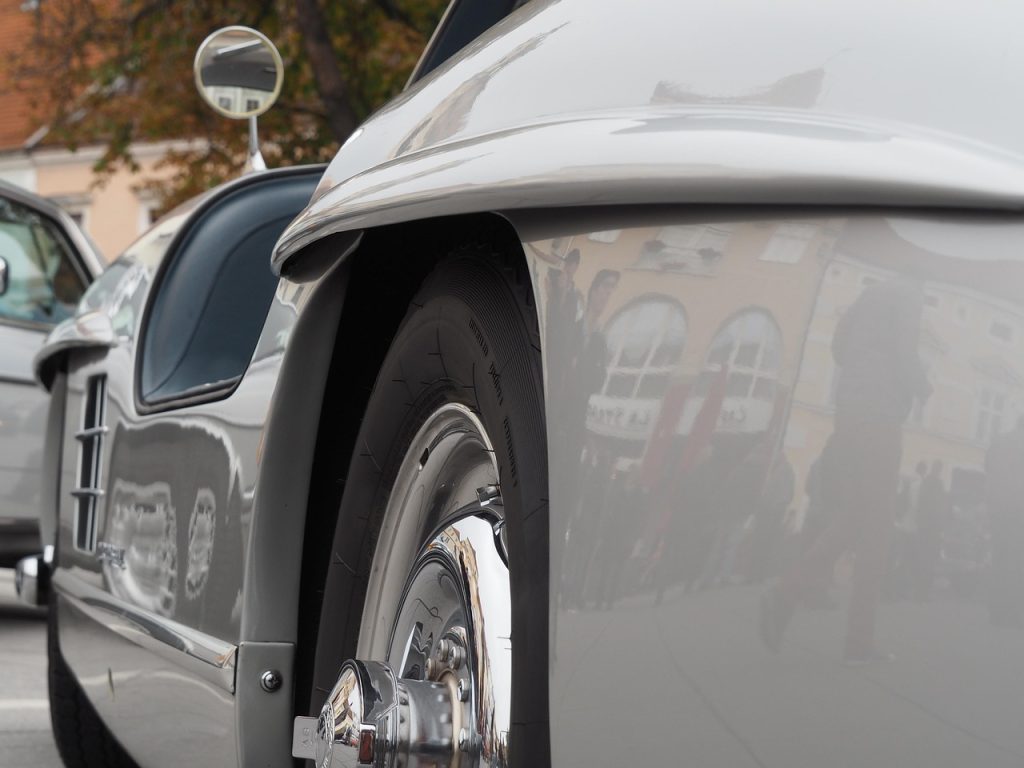
The car now drawing attention is a Mercedes-Benz 300SL Gullwing that is Heading to an auction block in France in remarkably original condition. Reporting on the sale notes that the coupe is totally unrestored, the sort of car that can raise the bar at any event with a Preservati class, because every scuff and faded surface tells part of its history rather than a restorer’s taste. That level of authenticity is rare even among 300SLs, which were often restored early and hard as their values began to climb.
According to coverage of the sale, the current owner, now auctioning it, did not touch a thing after acquiring the car, preserving details that would have been lost in even a sympathetic refurbishment. Further, rather incredibly, that owner just so happens to be a seasoned participant at Pebble Beach, someone who understands how judges scrutinize originality and how a Preservation entry can sometimes outshine a freshly painted trailer queen. That context helps explain why this Gullwing is expected to fetch big money when the gavel falls.
Why originality now commands a premium
Market data around the 300SL shows how far values have moved as collectors have learned to separate merely shiny cars from truly authentic ones. A 1956 Mercedes 300 SL Alloy Gullwing, billed as the star of The Junkyard auction, sold for a staggering $9,355,000 US, a figure that underlines how rare specifications and documented history can transform a familiar silhouette into a once-in-a-generation prize. Another report on a Barn Find Condition Mercedes 300 SL Alloy Gullwing Sells for Over Million highlighted how even a dusty, long-hidden example can ignite bidding when it retains its factory-correct components and finishes.
Specialists who trade these cars daily stress that condition and history sit at the top of the hierarchy. One guide to buying a 300SL Roadster notes that values are Ranging from excellent, as close to original as possible or extremely well restored, to a car of poor condition, which is generally worth far less, and that originality of major components is one of the key components in making a car a collectible. A detailed case study of Col. John Burnside’s 1959 Mercedes Benz 300SL Roadster describes how an automobile is only in its original condition once and refers to the handful of these Preservation 300SL Merc examples as especially coveted because they are ready for events or exhibition without erasing their past.
A halo model in a market chasing authenticity
The Gullwing’s status as a cultural object helps explain why this particular car’s story matters so much. Enthusiast communities describe how the 300SL was a symbol of luxury and performance during its 300SL time, and how Collectibility has only intensified as Today the 300SL is seen as a benchmark for midcentury design and engineering. That halo effect extends beyond Stuttgart: when Mercedes-Benz sold what it called the world’s most expensive car for $142 million, it reinforced the idea that the right combination of rarity, provenance, and brand cachet can push values into the stratosphere.
Other blue-chip classics show the same pattern. A Ferrari 250 GT SWB California Spider, for instance, emerged from a barn in France as a dusty and weathered example, chassis #2935, with a thick layer of dust covering its elegant curves, yet its authenticity and competition pedigree made it one of the most talked-about discoveries of its kind. Even outside the top tier, originality is the dividing line: one feature on a 1955 Mercedes 300 SL Gullwing argued that Originality is what makes this Mercedes Benz special and more valuable, contrasting it with a similar car that was fully restored but not as original.
The real thing in an age of replicas
The frenzy around this unrestored 300SL also reflects a broader anxiety in the collector world about telling genuine icons from clever copies. A recent look at an SLK-based build asked, Could You Tell This SLK Gullwing Replica From The Real Thing, noting how an incredibly convincing Mercedes 300 SL Gullwing recreation can make even seasoned observers pause. When replicas become that persuasive, the premium for documented, untouched cars with continuous history only grows.
That is why the French-bound Gullwing’s combination of preservation, provenance, and concours-savvy ownership is so potent. In a market where barn discoveries like the Alloy Gullwing and the Ferrari California Spider can leap from obscurity to headline-grabbing sales, and where digital culture celebrates both perfect restorations and artful patina, a genuine, unrestored Mercedes-Benz 300SL with a Cool Backstory and Will Fetch Big Bucks narrative is perfectly timed. For the bidders who have been waiting for exactly this mix of story and sheetmetal, the only real question is how high they are willing to go when Jan brings the car across the block.
More from Wilder Media Group: