

What begins as a simple fight over space in traffic is increasingly ending with detectives, hospital visits and court dockets. A growing list of road rage cases shows how a single merge can trigger violence that spirals from shouted insults into gunfire and police reports. The pattern is clear: when drivers treat a lane change as a personal attack, everyone on the road is suddenly at risk.
Across the country, investigators are documenting incidents where a perceived slight at a bottleneck or freeway split escalates into ramming, roadside brawls and shootings. From crowded interstates to fast-food parking lots, the same script repeats, with small decisions in the heat of the moment carrying life changing consequences for victims, families and the drivers who lose control.
The split-second merge that lit the fuse
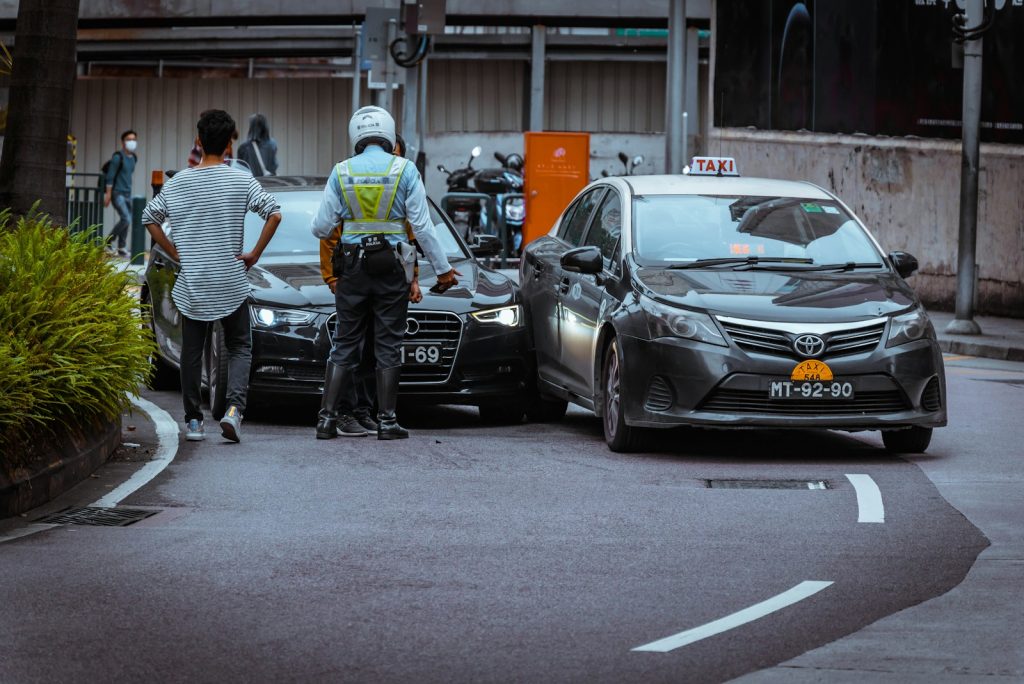
In the most volatile road rage cases, the turning point is often a merge that lasts only a few seconds but leaves one driver feeling disrespected or blocked. At the busy I-440 and I-65 split, a 40-year-old man is accused of reacting to a merge by turning his vehicle into a weapon, a reminder that the geometry of highway design can collide with human ego in dangerous ways. Investigators say the conflict did not start with a long chase or a prior dispute, it started with one driver trying to move into a lane and another refusing to yield.
Police in that I-440 case describe how the confrontation intensified after the initial lane change, with the suspect allegedly throwing an object and then crashing into the other car, behavior captured in a Dec report that underscores how quickly a merge can become a criminal investigation. The same dynamic appears in other incidents where drivers interpret a late lane change as cutting in line, then accelerate, brake check or swerve to block the move instead of simply adjusting speed. Once both vehicles are locked into a contest for position, the odds of a calm resolution drop sharply.
From honks to handcuffs on I-440
The roadside fight that followed the I-440 merge dispute shows how a traffic slight can spill out of the car and onto the shoulder. According to police, after the initial clash over merging, the man reportedly threw a can at the victim’s car, then deliberately rammed the vehicle, turning a routine commute into a crash scene that required officers and paramedics. What might have ended with a frustrated horn blast instead produced injuries and a criminal case.
Officers later detailed how the altercation left the victim with a laceration on his head and the suspect facing charges, a sequence laid out in a Dec account that traces the escalation from lane change to physical harm. The case illustrates a broader pattern: once drivers exit their vehicles to confront each other, the risk of serious injury rises, and what began as a dispute over right of way becomes a matter for prosecutors and insurance investigators.
When a merge turns into gunfire on I‑5
On the West Coast, troopers along Interstate 5 are confronting a similar trajectory, with merge disputes evolving into shootings that leave drivers and passengers wounded. In Tukwila, investigators say a confrontation on northbound I-5 left a 43-year-old man injured after shots were fired from another vehicle, a stark example of how a freeway disagreement can end with bullet holes instead of dented bumpers. Witnesses described an orange Subaru leaving the area, and detectives are now piecing together how a conflict in traffic escalated to the point where someone pulled a trigger.
Authorities have appealed for tips from anyone who saw the incident between SEATTLE and Tukwila, noting that the wounded 43-year-old driver survived but required hospital care after the attack. The call for witnesses, detailed in a KOMO report, highlights how difficult it can be to reconstruct a fast moving confrontation on a crowded interstate. A companion account of the same I-5 shooting notes that troopers are tracking leads tied to the northbound lanes near Tukwila and have urged anyone who saw the orange Subaru or the gunfire to contact Jan investigators, underscoring how a brief clash over space can ripple into a major criminal probe.
A Tacoma child caught in the crossfire
Further south along I-5, a dispute over merging near Tacoma shows how children often pay the price when adults treat traffic as a battleground. Court documents describe how the driver of a black Chevrolet Cruze, identified as defendant Jadan Davis-Gunn, allegedly reacted to a merge conflict by opening fire, injuring an 11-year-old boy who was riding in another vehicle. The child’s family reportedly rushed him to a nearby fire station for help, a desperate detour that turned a family trip into an emergency response.
Troopers said they initially relied on a description of the Chevrolet Cruze and its driver to track down the suspect, later learning that Jadan Davis-Gunn had prior felony convictions and securing bail set at $750,000, according to a detailed Nov account. The Tacoma case underscores how a driver’s decision to escalate a merge dispute with a firearm can leave a child with lasting injuries and a community grappling with the reality that a simple lane change can end with a trip to the trauma room.
Deadly consequences when drivers feel “cut off”
Some of the most harrowing road rage cases begin with a driver who believes another motorist has skipped the line by merging several cars ahead. In Nevada, prosecutors say a Man accused of a deadly shooting reacted after another vehicle merged several cars ahead, killing an 11-year-old and setting off a high profile criminal case. Relatives of the victim have watched as the legal system weighs how to punish a moment of rage that ended a child’s life.
Recent court filings confirm that the Man will not face the death penalty in that road rage killing of an 11-year-old, even as the underlying allegation centers on a merge that one driver perceived as an unforgivable slight. The decision on capital punishment, described in a Close report, has been echoed in a separate Jan account that also emphasizes how the conflict began when one driver merged several cars ahead. Together, the filings and reports show how a split second decision in traffic can reverberate through sentencing hearings and victim impact statements for years.
Gunfire over a missed lane on I‑94
In Michigan, troopers say a driver’s failure to change lanes in time on Interstate 94 sparked yet another road rage shooting, this time along a busy stretch of freeway used by commuters and freight haulers. According to investigators, the confrontation began when one vehicle could not move over quickly enough, prompting another driver to respond with aggression that escalated into gunfire. The incident fits a broader pattern in which minor lane change frustrations on high speed corridors turn into life threatening encounters.
State police have described how the argument on I-94 escalated from gestures and aggressive driving into shots fired, leaving yet another motorist injured and a suspect facing serious charges. Details of the case, including the role of the 94 corridor and the sequence that led to the shooting, are laid out in a report by Paula Wethington, who is identified as a Web Producer alongside Paul in coverage that underscores how a simple failure to change lanes in time can ignite a chain of events ending with shell casings on the pavement.
Family dynamics and learned aggression behind the wheel
Not every road rage tragedy starts with strangers; some begin with patterns learned in the family car. In a civil lawsuit, a grieving father alleges that a Mom’s aggressive driving taught their young son to treat traffic as a place to settle scores, behavior he says contributed to the son’s involvement in a road rage murder. The complaint argues that years of modeling tailgating, cutting off other drivers and reacting angrily to merges normalized the idea that perceived slights on the road demanded retaliation.
The lawsuit, detailed in coverage by reporter Zain Khan, describes how the father believes the Mom’s behavior behind the wheel helped shape their son’s fatal choices, a claim that has drawn attention because it links parenting, driving habits and violent outcomes. The filing, which was Published Jan, suggests that road rage is not only a momentary lapse but can be a learned response reinforced over years of shared commutes and school runs. It raises difficult questions about how children absorb adult reactions to merges, slowdowns and perceived disrespect on the highway.
Last‑minute mergers and the urge to “teach a lesson”
One recurring flashpoint in these cases is the last minute merge, when a driver races up a closing lane and tries to squeeze in at the front of a backup. In Missouri, an Odessa man is accused of responding to that scenario with gunfire after another driver tried to prevent a last minute and forcibly merging maneuver. Investigators say the confrontation began when one motorist attempted to block the late merge, a decision that turned a common annoyance into a potentially deadly encounter.
Court records indicate that the Man now faces felony charges for allegedly shooting at the driver who tried to prevent the last minute merge, a sequence outlined in a Close account that identifies him as An Odessa resident. The case captures a familiar impulse among frustrated drivers who say they want to “teach a lesson” to late mergers, but it also shows how that impulse, when paired with a firearm, can transform a traffic jam into a crime scene.
From fast‑food parking lot to ballistic evidence
Road rage is not confined to interstates, and one recent case in a fast-food parking lot shows how quickly a minor dispute can turn into a shooting even off the highway. Police say an argument at a Chick-fil-A escalated until one person opened fire, striking another driver in the foot. In a twist that underscores the randomness of survival in these incidents, officers later credited the victim’s footwear with preventing a more serious injury.
Investigators reported that a Steel-toed boot absorbed much of the impact from the bullet, limiting the damage and likely preventing a catastrophic wound to the victim’s foot. The detail, highlighted in a Chick account, underscores how even a brief confrontation in a drive-thru lane can end with ballistic evidence on the ground and detectives reconstructing who said what before the first shot. It also reinforces a central theme running through these cases: once anger behind the wheel crosses the line into violence, the outcome often depends on luck, protective gear and how quickly police can respond.
More from Wilder Media Group: