
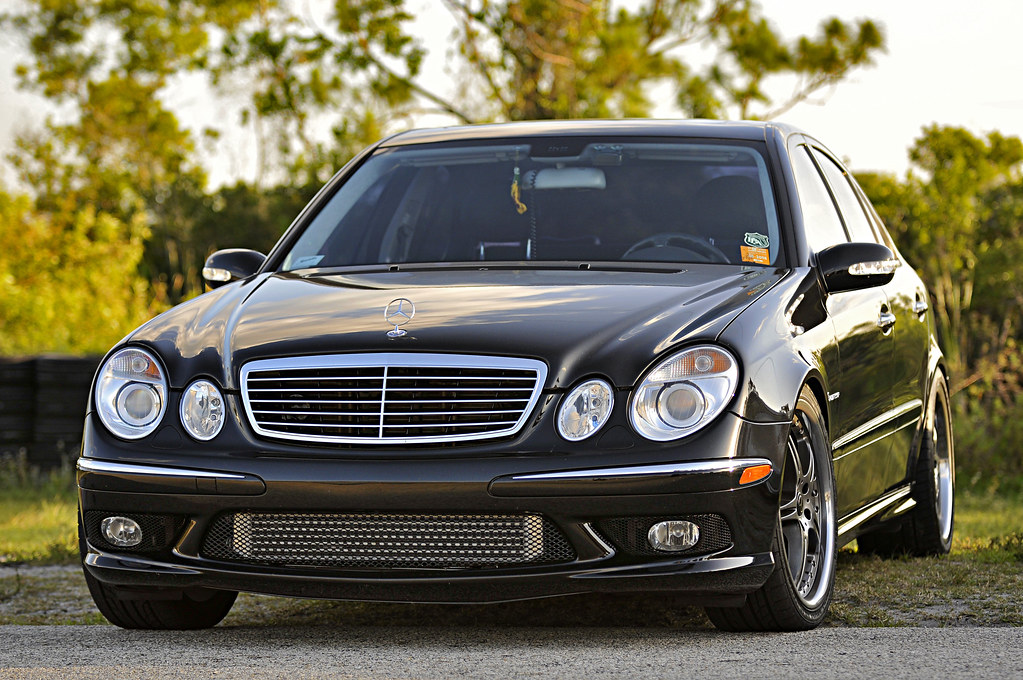

Once upon a time, a big German four-door could outrun a Ferrari on the autobahn and still show up to a board meeting looking perfectly respectable. That same supercharged V8 luxury sedan now trades hands for used-Camry money, turning a forgotten early‑2000s rocket into one of the wildest performance bargains on the road. The hook is simple: the kind of speed that used to embarrass Italian exotics is now sitting on classifieds for around fifteen grand, waiting for someone brave enough to daily-drive it.
To understand how that happened, it helps to rewind to the era when Mercedes and AMG were quietly building monsters in business suits. Back then, the idea that a plush sedan could run with a Ferrari 456M sounded like bar‑stool fantasy. Yet the numbers, the hardware, and the way these cars have depreciated into the $10,000 to $15,000 range tell a very different story.
The early‑2000s arms race that birthed a monster
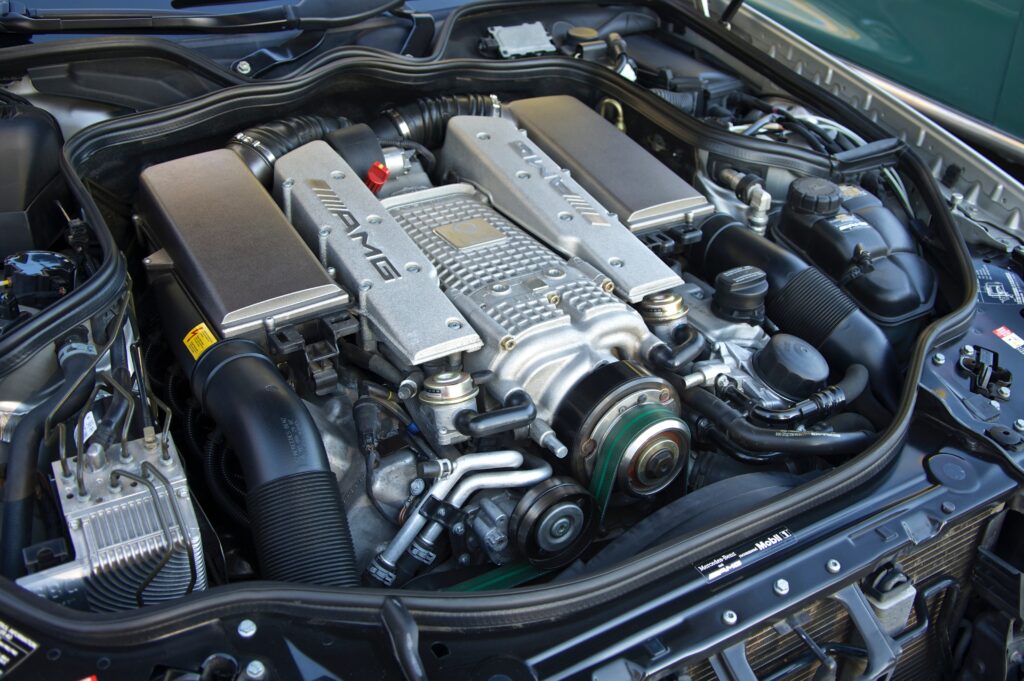
In the early 2000s, German manufacturers were locked in a quiet war to build the fastest four‑door on the planet, and AMG came out swinging. The 2003 Mercedes‑Benz E55 AMG arrived with a hand‑built 5.4-liter supercharged V8 that turned a sensible executive sedan into a highway missile, and it did it without the flamboyance of a traditional sports car. At a time when a Ferrari 456M represented the classic front‑engine V12 dream, this understated Mercedes could match or beat its acceleration while carrying three friends and a trunk full of luggage, a fact that stunned anyone who lined up next to one on an empty stretch of road and later checked the performance figures.
What made the E55 AMG so disruptive was not just raw speed, but the way it blended that pace with everyday usability. The car kept the familiar W211 E‑Class silhouette and a cabin full of leather and wood, yet underneath sat hardware that belonged on a supercar. AMG engineers used that 5.4-liter V8, force‑fed by a belt‑driven blower, to create a four‑door that could surge from a quiet cruise to triple‑digit speeds with a single prod of the throttle, a combination that helped it earn a reputation as a sedan that was faster than a Ferrari while still looking like something a conservative accountant might drive.
How AMG turned a family sedan into the fastest four‑door
The secret sauce was the powertrain, and AMG did not hold back. The 5.4-liter supercharged V8 sat low and snug in the engine bay, delivering towering torque almost off idle and a relentless pull through the midrange. This supercharged V8 configuration allowed the E55 AMG to claim bragging rights as the model that, in period, was widely regarded as the fastest sedan in the early 2000s, a status that came from the way it combined brutal straight‑line pace with the composure of a long‑legged luxury car, as period tests and later retrospectives on the AMG package have emphasized.
Yet the rest of the car mattered just as much as the engine. The E55 AMG used upgraded brakes, firmer suspension tuning, and subtle aero tweaks to keep that power in check, turning the car into what many enthusiasts now describe as a four‑door sports sedan hiding in plain sight. It was still a Mercedes‑Benz at heart, with a quiet cabin and long‑distance comfort, but the drivetrain and chassis calibration meant it could humiliate supposedly purer performance cars on a back road or highway on‑ramp, a dual personality that helped cement its legend among those who knew what they were looking at.
The sleeper sedan that DESTROYS fast cars
That split personality is exactly why the E55 AMG has become a cult favorite in enthusiast circles. On the outside, it looks like a slightly angrier E‑Class, yet owners and fans know it as the kind of Sleeper Sedan That DESTROYS Fast Cars when the road opens up. Video reviews of The Mercedes E55 AMG, especially those that highlight the $10K Sleeper Sedan That DESTROYS Fast Cars angle, lean hard into the shock value of a 5.4L supercharged V8 pushing serious horsepower and torque figures, and they show how this car can still run with modern performance machines despite its age, a point that is hammered home in footage of The Mercedes charging down open roads.
What keeps the E55 AMG firmly in sleeper territory is how little it shouts about its capabilities. There are no wild wings or neon‑lit badges, just slightly larger wheels, quad exhaust tips, and a discreet AMG script on the trunk. Inside, it is all business: supportive seats, a traditional Mercedes dashboard, and enough space for a family road trip. That contrast between appearance and performance is exactly what appeals to buyers who want to fly under the radar, and it is why clips of the AMG walking away from supposedly quicker cars continue to circulate among enthusiasts who appreciate a car that can destroy fast machinery without ever raising its voice.
From six‑figure status symbol to $10K–$15K temptation
Time, depreciation, and changing tastes have done what rival manufacturers could not: they have tamed the E55 AMG, at least on the used market. What started life as a premium executive express is now regularly found in the low‑five‑figure range, with many examples hovering around the $10,000 mark depending on mileage and condition. That pricing puts it in the same conversation as other aging performance sedans and even some economy cars, which is why enthusiasts increasingly talk about it as a budget super sedan, a perception reinforced by coverage that frames the AMG as a $10K sleeper that still punches far above its weight.
The E55 AMG is not alone in this bargain‑bin transformation. The broader world of supercharged V8 luxury and performance cars has seen similar drops, with models like the Cadillac STS‑V now joining the conversation as shockingly affordable ways to get serious power. In that context, the E55 AMG’s current values look less like an anomaly and more like part of a pattern, where complex, once‑expensive hardware slides into reach for buyers willing to accept the running costs that come with it, turning yesterday’s status symbols into today’s high‑risk, high‑reward daily drivers.
The $15K supercharged V8 club
Zooming out from Germany, the American side of the story shows just how far supercharged V8 performance has fallen in price. The Cadillac STS‑V, a car that once aimed to bring serious pace and luxury to the Cadillac STS lineup, now shows up in used listings for around $15,000. That figure is not a rumor or a one‑off auction fluke; it is reflected in reporting that flat‑out states that the $15,000 Cadillac STS‑V Is The Cheapest Supercharged V8 Muscle Car, a description that captures how this big sedan has drifted into the realm of budget performance while still offering the kind of power that would have been headline‑grabbing when it was new, as highlighted in analysis of the Cadillac STS and its place in the market.
Put the E55 AMG and the Cadillac STS‑V side by side and a clear pattern emerges. Both are large, comfortable sedans with supercharged V8 engines, both were pitched as serious performance flagships in their day, and both now sit in a price band that overlaps with new compact crossovers and lightly used economy cars. Enthusiasts who understand what they are looking at see these cars as part of a small club of supercharged V8 machines that deliver outrageous speed for surprisingly little money, a club where a sedan that once ran with a Ferrari now shares financial territory with everyday transportation, and where the main barrier to entry is not the sticker price but the willingness to maintain a very fast, very complex piece of early‑2000s engineering.
More from Wilder Media Group: