

You are used to cars that have one front, one steering wheel, and one clear idea of which way they are going. Bak2Bak, a Chrysler minivan stitched together from two front halves, throws all of that out the window and dares you to rethink what a vehicle can be. It should not exist in any rational sense, yet it does, and once you understand how and why, it starts to feel oddly inevitable.
Instead of chasing speed records or show-car polish, this two-steering curiosity leans into absurdity as a kind of rolling social experiment. You are not just looking at a fabrication stunt, you are looking at a very deliberate piece of “good stupid,” built to make strangers laugh, wave, and briefly forget everything else.
Meet Bak2Bak, the double-front minivan that stops traffic
At first glance, Bak2Bak looks like a Photoshop joke that escaped into real life, a Chrysler minivan with a full nose, windshield, and steering wheel at both ends. The creator, manufacturing engineer Zach Sutton, literally cut two 1990s vans in half and welded the front sections together, turning a familiar family hauler into something that looks confused about which way is forward. You see headlights facing each other across a short cabin, twin dashboards, and the kind of driveway presence that makes neighbors walk over before you even fire it up.
Despite the visual chaos, the concept is simple enough that you can explain it in a parking lot. Each end still looks like a normal Chrysler front clip, but only one side actually powers the vehicle, while the other is along for the ride. The whole thing is rooted in a single platform, a fact highlighted in coverage of Two Minivans, One Platform, which makes the surgery just plausible enough for a determined fabricator with a sense of humor and a welder.
How two steering wheels actually work on the road
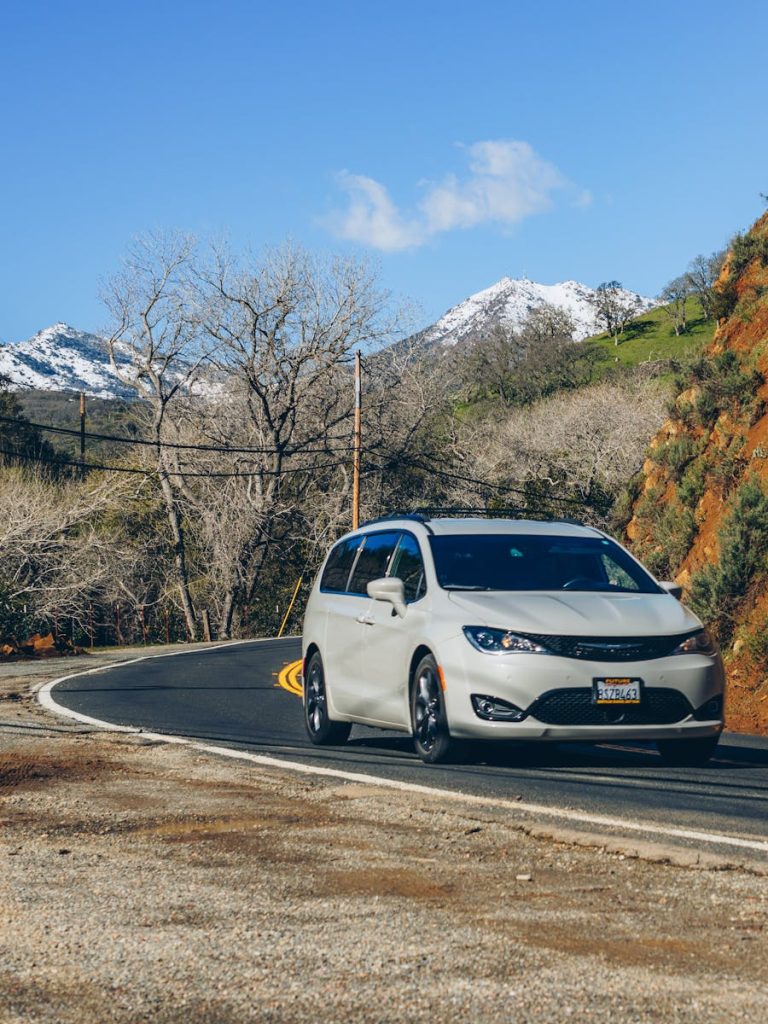
Once you get past the shock of seeing two grilles, your next question is how you would ever drive this thing without instantly spinning into a ditch. Sutton’s solution is to treat one end as the “real” driver’s seat and the other as a kind of prank cockpit. Only one side has a working powertrain, and only that end’s pedals control the van, while the opposite steering wheel can turn the front wheels but does not have gas or brake hardware, a layout confirmed in the reporting on Despite how wild it looks. You, or your bravest friend, can sit at the “fake” helm and saw at the wheel, but the person with the pedals is still the one truly in charge.
That does not mean the second wheel is just a prop. When both ends are occupied by drivers who trust each other, the van can pivot in ways that would make a three-point turn feel old-fashioned. Coverage of the project notes that There is potentially a massive upside to the turning radius and general maneuverability, as long as the two people at the wheels stay in sync. You can imagine threading into a tight parking spot or spinning around in a narrow alley with a kind of ballet that normal minivans simply cannot match.
From backyard idea to 80 m on the highway
Bak2Bak did not roll out of a corporate skunkworks, it came from a Detroit garage and a builder who wanted to see how far he could push a joke without losing drivability. Sutton, who lives and works in Detroit, leaned on his manufacturing background to keep the structure straight and the welds honest, even as he embraced the absurdity of the concept. You can feel that mix of discipline and mischief in the way the van sits on the road, looking like a prank but tracking straight enough to share a lane with ordinary traffic.
That practicality shows up most clearly when you hear how it behaves at speed. Sutton has said he can push Bak2Bak up to 80 m on the highway, which is not supercar territory but is more than enough to prove the chassis is not just a parade float. You might expect a hacked-together double-front van to feel terrifying at those speeds, yet the reporting describes a relatively composed cruise, the kind of behavior that lets you forget, at least for a moment, that you are piloting a one-off experiment built in a home shop.
Good stupid, loud cabin
If you ever ride in Bak2Bak, you will not mistake it for a factory-fresh Pacifica. The cabin is noisier than a standard minivan, with wind and tire roar bleeding through the shell, and the floor is not perfectly sealed, which lets extra sound and a bit of the outside world creep in. One account notes that the road noise is notably louder than in a regular car, likely because there are a few holes in the floor and the structure is, by design, unconventional. You trade some refinement for the privilege of watching oncoming drivers do double takes as they realize they are staring at a van that appears to be driving backward.
For Sutton, that trade is the whole point. He has described Bak2Bak as a kind of rolling antidote to the darker parts of daily life, saying, There is a lot of bad stupid in the world right now, and I think we need more good stupid. You can feel that philosophy in the way people react, from kids pointing out the windows to adults pulling out phones at stoplights, and in the way you, as a passenger, start laughing before you even leave the driveway.
Built for laughs, not lap times
Most custom builds chase performance numbers or show trophies, but Bak2Bak is unapologetically about joy. Coverage of the project frames it under the idea of Built for Laughs, and that phrase captures what you feel when you imagine pulling up to a cars and coffee meet in this thing. You are not there to flex horsepower or paint depth, you are there to hand out stories, selfies, and a reminder that car culture can still be silly in the best possible way.
That spirit fits neatly into the city that birthed it. Detroit has always mixed serious engineering with a streak of playful experimentation, and Bak2Bak slots right into that tradition as a Chrysler-based oddball that could only have come from a place where people live and breathe cars. When you see There on the street, you are not just looking at a one-off minivan, you are looking at a rolling conversation starter that invites you to imagine what other bits of “good stupid” might be worth building next.
More from Wilder Media Group: