

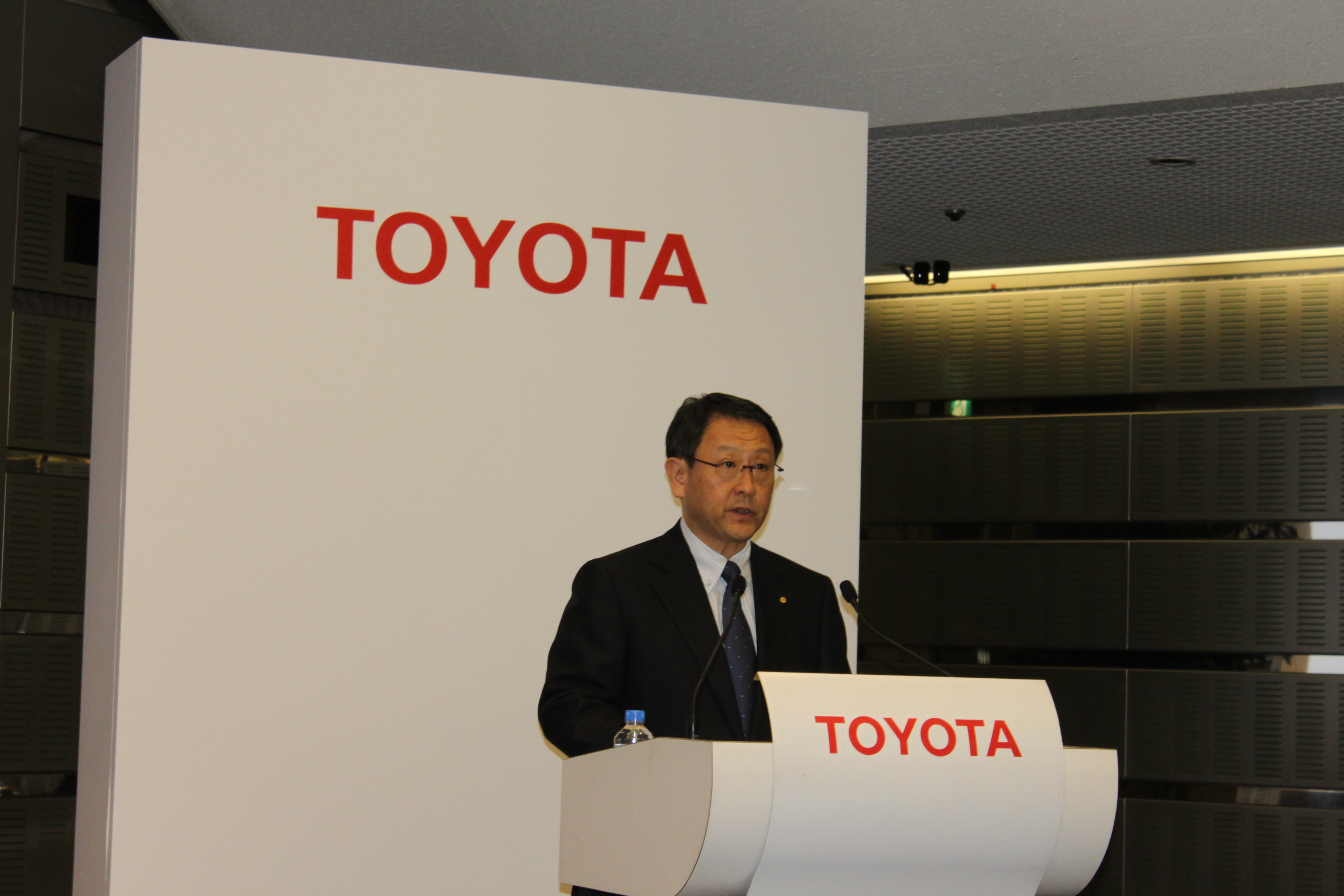
Akio Toyoda wanted to prove that Toyota could build cars that thrilled drivers, not just satisfied spreadsheets. When the company refused to let him race under its own name, he found a loophole and entered as a website instead. That act of quiet rebellion at the Nurburgring would eventually reshape Toyota’s performance strategy and give birth to Gazoo Racing.
From sidelined executive to “Morizo” at the Nurburgring
In the mid 2000s, Akio Toyoda was a senior executive who believed the company had grown too distant from the limits its cars faced on real circuits. He pushed to compete at the 24 Hours of the Nurburgring, a brutal test that exposes every weakness in a chassis, engine, and driver. Internal resistance was strong enough that he was not allowed to use the Toyota name on the entry list, a snub that later reports describe as a “humiliating” moment for a member of the founding family trying to reconnect the brand with motorsport at the Nordschleife. Instead of backing down, Akio Toyoda entered the race under the banner of a website, turning the online project “Gazoo” into the public face of his privateer-style effort at the Nurburgring.
That workaround was more than a clever branding trick. According to Toyota’s own retrospective, the team was unable to sport the Toyota name, so it adopted “GAZOO” from a project Akio was leading at the time, and ran with fewer members than most privateer teams. The experience exposed him to the frustrations of competing with limited resources and no factory status, and those lessons hardened his conviction that Toyota needed to “make ever-better cars” through direct involvement in racing. To keep his track exploits separate from his corporate role, he also adopted the driving pseudonym “Morizo,” a persona that let him test cars and race without constantly being treated as the president-in-waiting. Toyota later described this alter ego as an “Invisibility Cloak” that shielded him from the expectations attached to the “president” of Toyota.
How a website name became Toyota’s racing identity
The Gazoo label that began as a workaround at the Nurburgring gradually evolved into the core of Toyota’s performance strategy. What started as Akio Toyoda’s small, scrappy team became TOYOTA GAZOO Racing, the umbrella for the company’s factory efforts in endurance racing, rallying, and customer motorsport programs. Corporate statements now explicitly trace this lineage back to the moment when, at the time, competing under the Toyota name was blocked and the team instead raced as GAZOO, an experience Akio vividly recalls. The philosophy that emerged from that period was simple but demanding: use motorsport to expose flaws, fix them quickly, and feed the improvements back into road cars.
That mindset helped shape halo projects like The Lexus LFA and Toyota GR models, which insiders link to Akio Toyoda’s dissatisfaction with building only sensible, conservative vehicles. Back in the early 2000s, he was not satisfied with a lineup that lacked emotional, high performance flagships, and the Gazoo Racing program became the laboratory for changing that. The same spirit carried into global competition, where TOYOTA GAZOO Racing turned endurance and rally campaigns into rolling test beds. Company accounts describe how Akio, then a vice president, even went undercover with mechanics and flew to Germany so that Gazoo Racing began when VP Akio Toyoda joined the 24 hours effort as just another member of the crew, reinforcing the idea that the program existed to learn, not just to market.
From Gazoo Racing to a split identity
Nearly two decades after Akio Toyoda first slipped into the Nurburgring paddock under a website’s name, Toyota is reshaping how that legacy is presented to the world. The company has announced that the familiar Toyota Gazoo Racing moniker will be divided into two distinct entities, Toyota Racing and Gazoo Racing, a move explained by rally analyst David Evans. In the World Rally Championship, that means the works team identity will evolve again from 2027, reflecting both Toyota’s corporate brand and the more experimental Gazoo heritage that grew out of that tricky 24 hour race. The split suggests a desire to clarify what is factory Toyota and what remains the more freewheeling Gazoo spirit that Akio cultivated under the radar.
Official communications frame the change as TOYOTA GAZOO Racing reverting to “GAZOO Racing”
to better pass on and evolve the making of ever-better cars, while Toyota Racing carries the broader manufacturer identity into series like the WRC. The irony is hard to miss: what began as a workaround because Akio Toyoda could not put “Toyota” on the side of his Nurburgring car has grown so influential that it now needs its own dedicated brand space alongside the parent company. The website name that once hid a rebellious executive has become a pillar of Toyota’s global motorsport and performance strategy, and the latest restructuring is less a break from that past than an attempt to preserve it as the company’s racing ambitions continue to grow.
More from Wilder Media Group: