
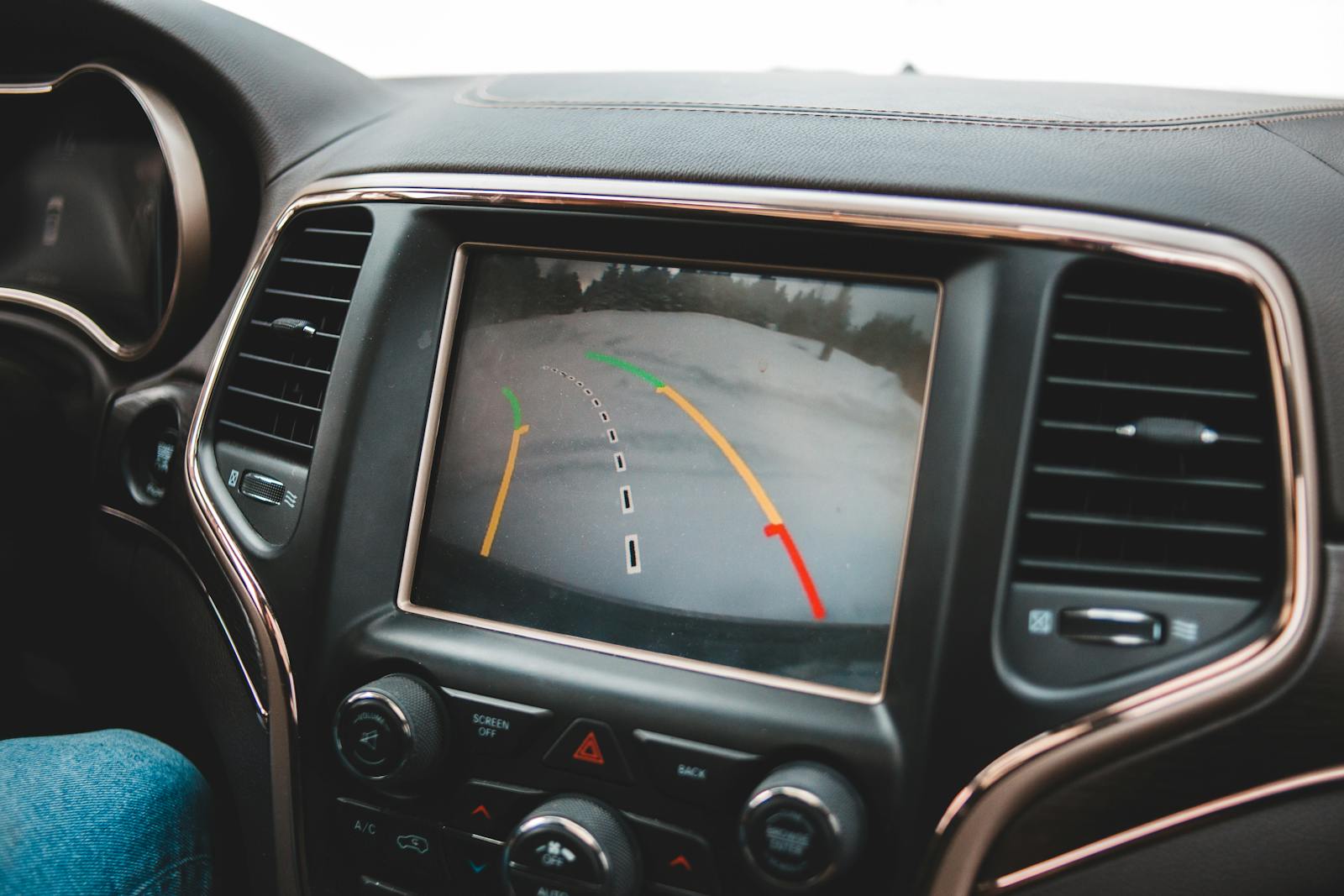

The fix targets a bug that can leave backup camera screens blank or frozen, raising the risk of backover crashes in some of Toyota’s largest vehicles.
Toyota is recalling approximately 398,000 Tundra pickup trucks and Sequoia SUVs in the United States after discovering a software defect that can disable the rearview camera display. The recall, filed with the National Highway Traffic Safety Administration (NHTSA), covers 2022 through 2025 model-year vehicles, including both gasoline and hybrid variants built at Toyota’s manufacturing plant in San Antonio, Texas.
The problem is straightforward but serious: when a driver shifts into reverse, the center screen may show a blank image or remain frozen on a frame captured seconds earlier. In either case, the driver loses the real-time rear view that federal safety standards require, and may back into a person, child, or obstacle that mirrors alone would not reveal.
No crashes or injuries tied to the defect have been confirmed in NHTSA’s public filings as of early April 2026, but Toyota is urging affected owners to schedule a dealer visit for a free software update.
What Is Going Wrong With the Camera System
According to Toyota’s defect filing, the bug sits in the software that manages the feed between the rear-mounted camera and the vehicle’s central touchscreen. Under certain conditions the system fails to render a live image when reverse gear is selected. Drivers may see nothing at all or, worse, a still frame from several seconds prior that gives the false impression the area behind the vehicle is clear.
Because the root cause is a coding error rather than a faulty camera or wiring harness, Toyota says the remedy is a software update that dealers can install during a single service appointment. The company has not announced an over-the-air update option for these models.
Rearview cameras became mandatory on all new U.S. passenger vehicles starting in May 2018 under Federal Motor Vehicle Safety Standard No. 111, a rule designed to reduce the roughly 200 fatalities and 12,000 injuries caused by backover crashes each year, according to NHTSA estimates at the time the rule was finalized. A camera that fails to display a live image puts the vehicle out of compliance with that standard.
Which Vehicles Are Covered
The recall applies to the following models, all produced at Toyota Motor Manufacturing, Texas (TMMTX) in San Antonio:
- 2022–2025 Toyota Tundra (gasoline and i-FORCE MAX hybrid)
- 2023–2025 Toyota Sequoia (gasoline and i-FORCE MAX hybrid)
Together, these vehicles represent Toyota’s current-generation full-size truck and SUV platform, which launched with the redesigned Tundra for the 2022 model year and the Sequoia for 2023. The San Antonio plant is the sole U.S. assembly site for both nameplates, meaning the recall’s geographic footprint spans every state where these trucks and SUVs were sold.
Owners can verify whether their specific vehicle is included by entering their 17-digit Vehicle Identification Number (VIN) on Toyota’s recall lookup page or on NHTSA’s recall search tool.
Why a Frozen Camera Image Is More Dangerous Than No Image at All
A completely blank screen is alarming enough that most drivers will stop and look over their shoulder. A frozen image is subtler and potentially more hazardous: it shows a scene that looks normal but is no longer current. A child could walk behind the vehicle in the seconds between the last captured frame and the moment the driver begins to reverse, and the screen would give no indication anything has changed.
Safety researchers have long warned that drivers who grow accustomed to camera-assisted reversing tend to check mirrors and turn around less often. A 2019 study published by the AAA Foundation for Traffic Safety found that drivers using backup cameras were significantly less likely to perform a full head check before reversing. When the camera feed is unreliable, that learned behavior becomes a liability.
This recall is not Toyota’s first involving rearview camera systems. In recent years, Toyota, Lexus, and Subaru (which shares certain Toyota-developed components) have collectively recalled more than one million vehicles in the U.S. for camera-related defects, according to NHTSA filings. The pattern reflects an industry-wide challenge: as vehicles add more screens and software-dependent safety features, the potential failure modes multiply.
What Owners Should Do Right Now
Toyota has begun mailing notification letters to registered owners of affected vehicles. Once parts and software are available at local dealerships, owners can schedule an appointment to have the update installed at no charge. The repair is expected to take a single visit.
In the meantime, Toyota and safety experts recommend that drivers of affected Tundras and Sequoias:
- Do not rely solely on the backup camera. Check both side mirrors, the rearview mirror, and physically turn to look behind the vehicle before reversing.
- Walk around the vehicle before getting in, especially in driveways and parking lots where children or pets may be present.
- Check for open recalls by entering your VIN at toyota.com/recall or nhtsa.gov/recalls.
- Contact Toyota customer service at 1-800-331-4331 with questions about the recall or repair timeline.
A Broader Reckoning With Software-Driven Safety Features
The Tundra and Sequoia recall is one piece of a much larger shift in how vehicle defects are discovered and fixed. Software bugs now rival mechanical failures as a leading cause of safety recalls. NHTSA data shows that software-related recalls have increased sharply over the past decade as automakers have added advanced driver-assistance systems, digital instrument clusters, and connected-vehicle features that depend on millions of lines of code.
For Toyota, which built its reputation on mechanical reliability, repeated software recalls present a reputational challenge. The company has invested heavily in its new TNGA-F platform (the architecture underpinning the current Tundra and Sequoia), and camera system bugs undermine confidence in the digital half of that engineering.
For consumers, the takeaway is practical: backup cameras, lane-departure warnings, and other electronic safety aids are valuable tools, but they are not infallible. Treating them as supplements to attentive driving, rather than replacements for it, remains the safest approach, especially when a recall notice is sitting in your mailbox.
More from Wilder Media Group: