
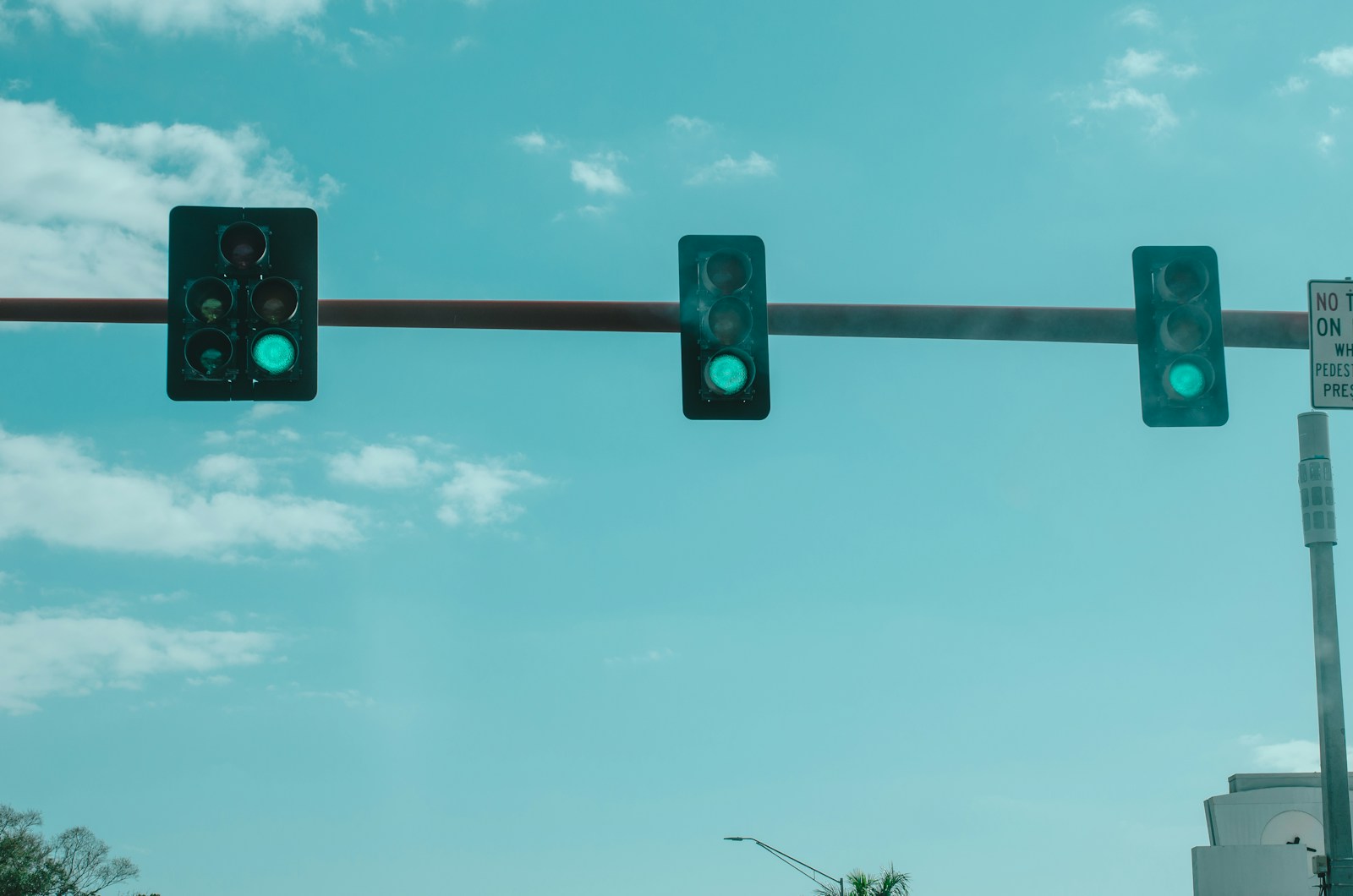

Every few seconds at intersections across the United States, a driver sitting in a left-turn lane sees a solid green light and pulls forward, expecting oncoming traffic to stop. It doesn’t. According to the Insurance Institute for Highway Safety, roughly 40 percent of all fatal crashes in the U.S. occur at or near intersections, and a significant share involve turning vehicles that misjudged who had the right of way. The problem is not that drivers ignore green lights. It is that they misunderstand what a green light actually permits.
As of March 2026, transportation departments in several states are accelerating the replacement of solid green turn signals with flashing yellow arrows, a change designed to make the yield requirement impossible to miss. But millions of intersections still use the old setup, and the confusion persists. Police, driving instructors, and traffic engineers keep circling back to the same pattern: a driver enters a busy junction on green, assumes the light has cleared a path, and discovers too late that someone else had priority.
When Green Does Not Mean Go
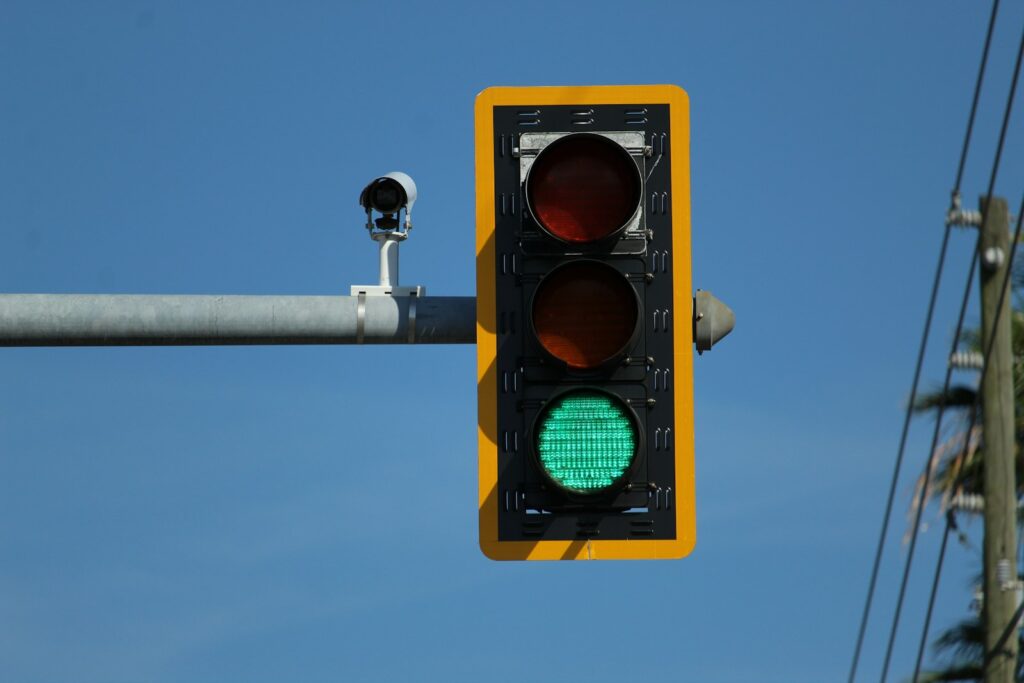
A solid green circle over a left-turn lane is one of the most misread signals on American roads. Unlike a green arrow, which grants a protected turn with oncoming traffic held by a red light, a solid green ball means the turn is permissive: the driver may turn left only after yielding to all oncoming vehicles and pedestrians. The distinction is spelled out in every state’s driver handbook, yet it catches people off guard in practice, especially at wide, multi-lane intersections where judging gaps in opposing traffic is genuinely difficult.
A Reader’s Digest overview of confusing road signs puts it bluntly: “Green does not always mean go.” That summary matches what driving instructors teach but what many licensed drivers have long forgotten. A driver facing a solid green in a turn lane is not in a protected phase. They are in a yield zone, and the oncoming car traveling straight through the same green light has the right of way. One misread of that hierarchy can put a turning sedan directly into the path of a through-moving vehicle that has no obligation to slow down.
What the Law Actually Says About Green
State traffic codes are not vague on this point, even if drivers are. Ohio Revised Code §4511.13, for example, specifies that a steady green signal means vehicles “may proceed straight through or turn right or left,” but only when doing so is safe and lawful. The same statute notes that pedestrians facing a green may cross unless a pedestrian-specific signal tells them otherwise, reinforcing that no single user of the intersection can treat the green light as the only instruction that matters.
Indiana’s official driver manual draws the line even more clearly. When a green arrow appears alongside a red or green light, the driver with the arrow has the right of way. When the arrow is absent and only a solid green is showing, the driver must yield before turning. Pennsylvania’s handbook uses similar language: a “steady green light” means you may drive through the intersection “if the road is clear,” and any turn requires checking for vehicles and pedestrians first. The word “clear” is doing significant legal work in that sentence, and courts have held drivers accountable for ignoring it.
Why the Confusion Keeps Causing Crashes
The National Highway Traffic Safety Administration has consistently identified left turns at intersections as one of the highest-risk maneuvers in everyday driving. NHTSA data shows that “failure to yield” is among the top contributing factors in intersection fatalities nationwide. The pattern is straightforward: a driver sees green, interprets it as a command rather than a conditional permission, and commits to a turn before the path is actually open.
That misread also creates problems short of a collision. Drivers who enter an intersection on green but cannot complete their turn before the light changes end up stranded in the middle of the box, blocking cross traffic and pedestrians when the next phase begins. In many jurisdictions, blocking an intersection is a citable offense regardless of what color the light was when the driver entered. The legal standard is not “the light was green.” It is “the intersection was clear.”
Traffic engineers have been pushing for years to reduce this ambiguity by converting permissive left-turn signals to flashing yellow arrows, which research from the Federal Highway Administration has shown drivers interpret more accurately than a solid green. The rollout is ongoing but uneven. Until every intersection catches up, the responsibility falls on individual drivers to remember a rule that sounds simple but trips up millions: a green light is permission to proceed with caution, not a guarantee that the way is clear.
More from Wilder Media Group: