

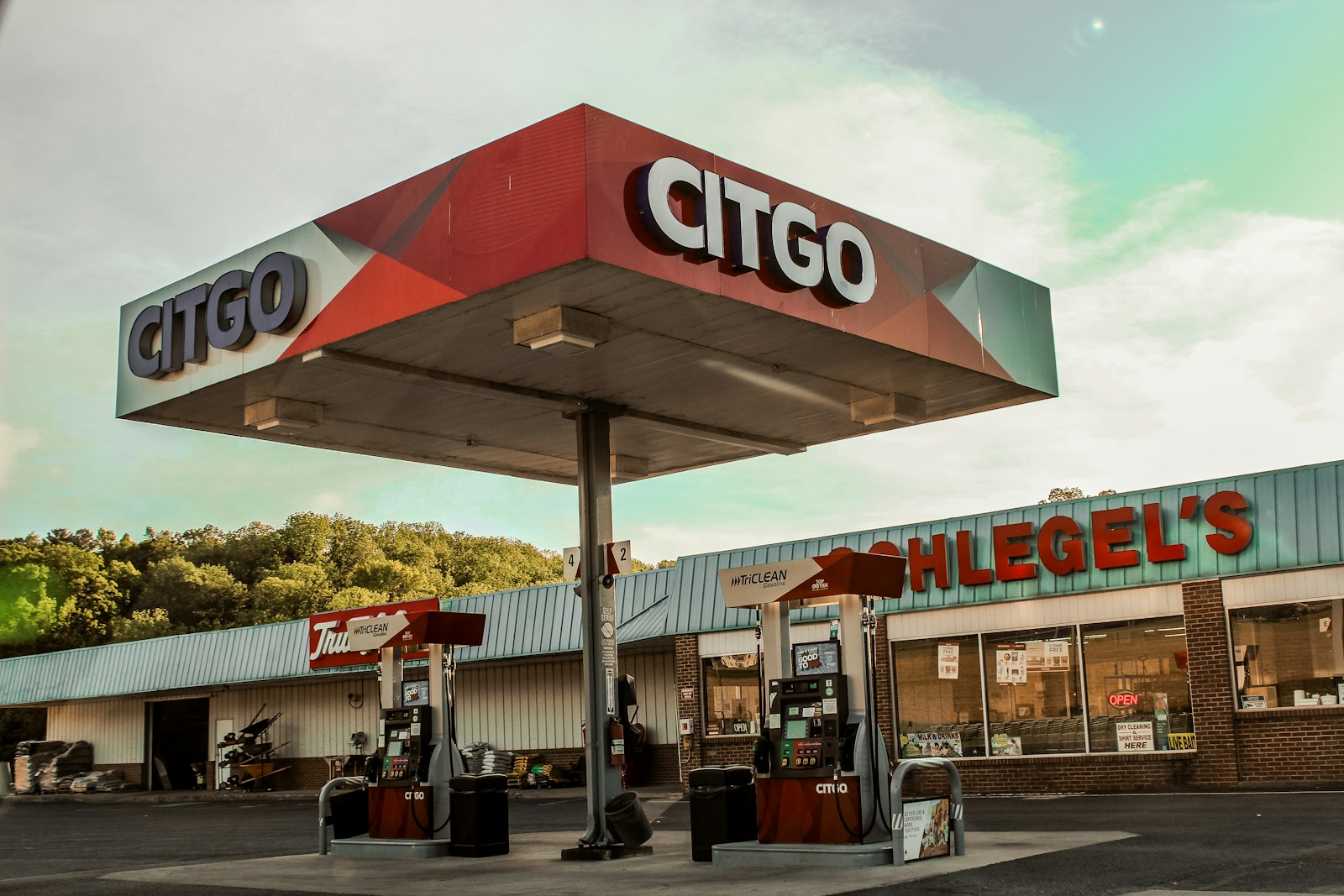
Most drivers who pull into a Citgo station for a quick fill-up have little idea they are tapping into one of the most politically fraught energy assets in the Western Hemisphere. The familiar red triangle logo masks a corporate history that runs straight through Caracas, Wall Street and the federal courts. At the center is a U.S. gas station chain that has long been tied to Venezuela’s national oil wealth, and is now being reshaped by American judges and financiers.
That quiet connection between corner pumps and Venezuelan politics is no longer just a geopolitical curiosity. It is determining who controls billions of dollars in refining assets, how creditors of a fallen regime get paid, and whether Venezuelans themselves will ever see value from a company that was once held out as belonging to the entire nation.
The U.S. gas brand with a Venezuelan shareholder
Citgo Petroleum Corporation, or Citgo, is a Houston-based refiner that supplies fuel to a vast branded network across the country. Yet the chain that sells fuel through more than 13,500 branded stations across the United States has, for decades, sat inside a corporate structure designed to serve Venezuela’s national oil policy. Over time, Citgo was folded into a layered ownership chain that linked its refineries and marketing arm to PDV Holding and ultimately to the Venezuelan state oil company, embedding a foreign government deep inside the American fuel supply.
Citgo’s own leadership has acknowledged that political reality. In a formal Message from the Board of Directors, the company notes that it takes seriously its responsibility to CITGO’s ultimate shareholder, the Venezuelan nation, and stresses that all legal standards are met as it operates under U.S. law. A separate section on Our Corporate Structure explains that CITGO Petroleum Corporation is the indirect subsidiary of U.S.-based PDV Holding, and that although CITGO entities are directly owned by that holding company, the economic benefits are intended to belong to all Venezuelans. That framing underscores why a routine gas stop has become entangled with questions of sovereignty and debt.
From Venezuelan asset to contested prize in U.S. courts
The political stakes around this Gas Station Chain Is Owned By Venezuela sharpened as the country’s economy collapsed and creditors looked to Citgo as one of the few valuable assets left. Analysts asking “Do You Know Which U.S. Gas Station Chain Is Owned By Venezuela?” have pointed to how the company’s U.S. footprint became leverage in disputes involving Nicolás Maduro’s government, rival Venezuelan political factions and international oil majors such as Chevron and Exxon. The U.S. military’s capture and extradition of Vene-linked figures in separate cases only added to the sense that Venezuela’s oil network, including Citgo, was being unwound under intense geopolitical pressure.
That pressure culminated in a court-ordered auction of Citgo’s parent shares. One detailed account of the Citgo auction describes the forced sale of shares in PDV Holding, Citgo Petroleum’s Venezuelan parent company, to resolve a thicket of claims. The US company’s parent, PDV Holding, has inhabited a legal netherworld, historically owned by PDVSA while the US government recognized a different Venezuelan leadership in a vote widely viewed as fraudulent. That split recognition helped open the door for U.S. courts to treat Citgo as an attachable asset, even as rival Venezuelan factions claimed to speak for its “ultimate shareholder.”
Amber Energy, Elliott and Trump’s Venezuela calculus
As the legal dust settled, Citgo itself became a prize for global investors. A federal Judge in Houston approved the sale of Citgo to Amber Energy, an affiliate of a Canadian mining company, signaling that control of the Houston refiner would move away from direct Venezuelan hands. Later reporting clarified that But in November a federal judge approved the $5.9 billion sale of the company to Amber Energy, an affiliate of Elliott, potentially delivering a windfall to the activist fund while keeping the assets under domestic control. The $5.9 billion price tag underscored how valuable the refiner and its branded network remain, even after years of sanctions and political turmoil.
Those financial maneuvers intersect directly with President Donald Trump’s approach to Venezuela. One account of Trump’s strategy notes that In November 2025, Singer acquired Citgo, the US-based subsidiary of Venezuela’s state-run oil company, positioning his Elliott Management hedge fund to benefit if sanctions ease and demand for lower grade Venezuelan “sour” crude rebounds. For the White House, steering Citgo into friendly U.S. investor hands aligns with a broader effort to squeeze the Maduro regime while rewarding domestic allies. For drivers, the result is that the same Citgo sign lighting up a Boston street or a Midwestern highway now marks a company whose ownership has shifted from a Venezuelan state champion to a contested asset in Trump’s Venezuela gambit, even as the pumps keep humming.
More from Wilder Media Group: