

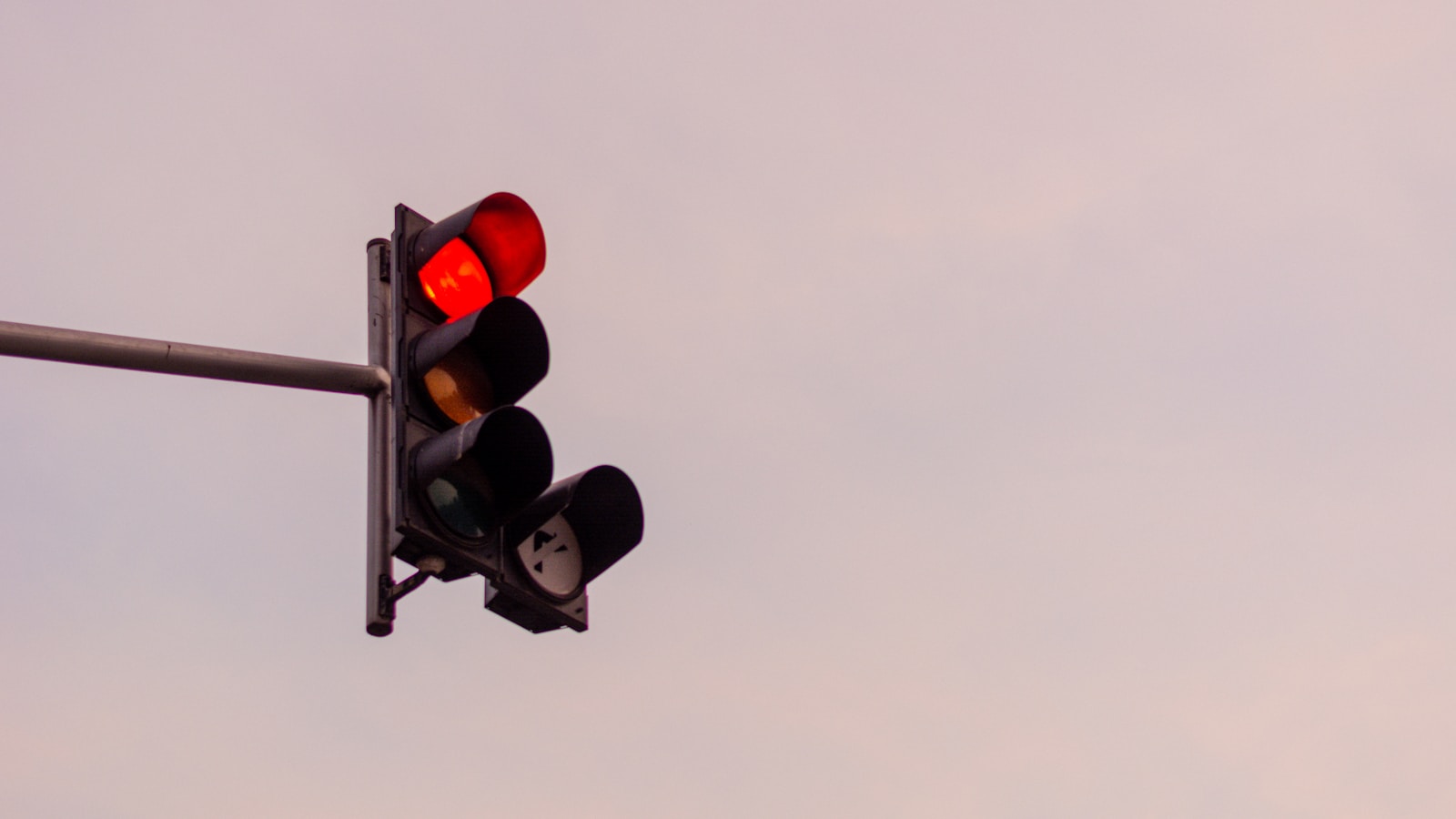
You notice changes to traffic lights can affect everyone on the road — especially when visibility becomes unreliable in winter weather or when new signal colors try to share space with long-standing red, yellow, and green cues. The latest design tweaks have already produced reports of lights blending into snowy backgrounds and moments when colors become harder to distinguish, raising immediate safety concerns that deserve attention.
If a new traffic-light design makes signals less visible or confusable for some drivers, it can increase reaction times and raise crash risk — that’s the urgent issue this article tackles.
They will explore why the changes matter now, how a proposed fourth color aims to coordinate autonomous vehicles with human drivers, and what practical problems (like winter glare or color confusion) could follow if implementation outpaces testing.
Urgent Challenges With the New Traffic Light Design
The redesign reduces thermal output and changes bezel geometry, which affects visibility in snow, glare, and low-light angles. These issues can alter how drivers — both human and automated systems — detect and interpret signal colors at intersections.
Why Signal Colors May Become Harder to Distinguish
LED modules produce much less heat than incandescent bulbs, so snow and ice can accumulate on lenses and hoods. When snow covers a lens, the emitted red, yellow, or green light scatters and appears dimmer or washed out, making hue and intensity harder to read from typical stopping distances.
Design changes to the housing — for example, shallower visors or recessed lenses — can increase viewing-angle limitations. Drivers approaching from oblique angles may see mixed or attenuated colors. Bright daylight or low sun can also cause glare or bloom on LED clusters, further reducing color contrast.
Mitigations used by some cities include larger hoods, hydrophobic coatings, and supplemental heating elements. Reno’s experience with snow-blocked LEDs illustrates how design details determine whether signals remain legible in winter conditions (see reporting on the Reno issue).
Impacts on Human Drivers and Road Safety
When a driver cannot reliably identify a signal color, decision times increase and so does the risk of intersection errors. Hesitation at green, delayed starts, or misjudged stops at red lights raise rear-end and intersection-collision probabilities.
Pedestrians also rely on visible walk signals; obscured crosswalk indicators raise their exposure during crossings. Emergency response and enforcement become harder when light status is unclear, complicating right-of-way judgments.
Driverless cars and advanced driver-assistance systems depend on camera and sensor inputs calibrated for expected color and intensity ranges. Reduced signal contrast can trigger false readings or force greater reliance on vehicle-to-infrastructure communication, which is not universally deployed. Cities planning LED upgrades should weigh hood geometry, anti-icing measures, and V2I readiness to keep both human drivers and autonomous systems safe.
The Fourth Traffic Light: Concept and Real-World Impacts
Researchers propose adding a new signal indication to reduce intersection delays and let connected vehicles coordinate movement. The idea centers on a special phase that hands partial control to autonomous vehicles (AVs) while human drivers follow the car in front.
Origin of the White Light Concept
NC State University researchers led by Ali Hajbabaie developed the “white phase” to integrate AVs with traditional traffic signals. They published the core idea in a paper in IEEE Transactions on Intelligent Transportation Systems, describing a phase that signals AVs to lead platoons through intersections while human drivers simply follow the vehicle ahead.
The term “white” is primarily a label; the authors note the actual visual indication could differ. The concept grew from simulations and earlier centralized-control work, moving toward a distributed approach to reduce computation and communication bottlenecks.
How the White Phase Changes Traffic Flow
During the white phase, AVs coordinate trajectories and cross intersections in organized groups, effectively acting as mobile controllers. Human drivers receive a single clear instruction: follow the car in front and do not overtake, which simplifies decisions at the curbside.
Simulations show the white phase can lower travel delay and fuel consumption as AV market share rises. The system aims to use portions of normal signal cycles for AV-led movement, reverting to green/amber/red when AV penetration or spacing becomes insufficient.
Role of Autonomous Vehicles in Signal Control
AVs communicate with each other and with infrastructure to negotiate safe gaps and pacing. This distributed coordination leverages vehicle computing power so the intersection controller no longer needs to compute every trajectory centrally.
When enough AVs are present, they form platoons that shape traffic flow. The model treats AVs as active participants in traffic management rather than passive followers, a shift the NC State team calls the mobile control paradigm.
Testing, Implementation, and Key Research Teams
NC State’s team, including Ali Hajbabaie and collaborators, ran extensive PTV Vissim simulations and small-scale testbed experiments to validate the concept. They reported reduced delays at various AV penetration rates and examined impacts on fuel use and pedestrian interactions.
Ongoing work includes driving-simulator tests and staged real-world trials to assess human-driver response to the new indication. The project has drawn attention from transportation researchers and funders; related efforts have cited involvement from figures like Henry Liu and interest from agencies including the U.S. Department of Transportation. Practical adoption will require communication standards, driver education, and careful field testing before any widespread rollout.