
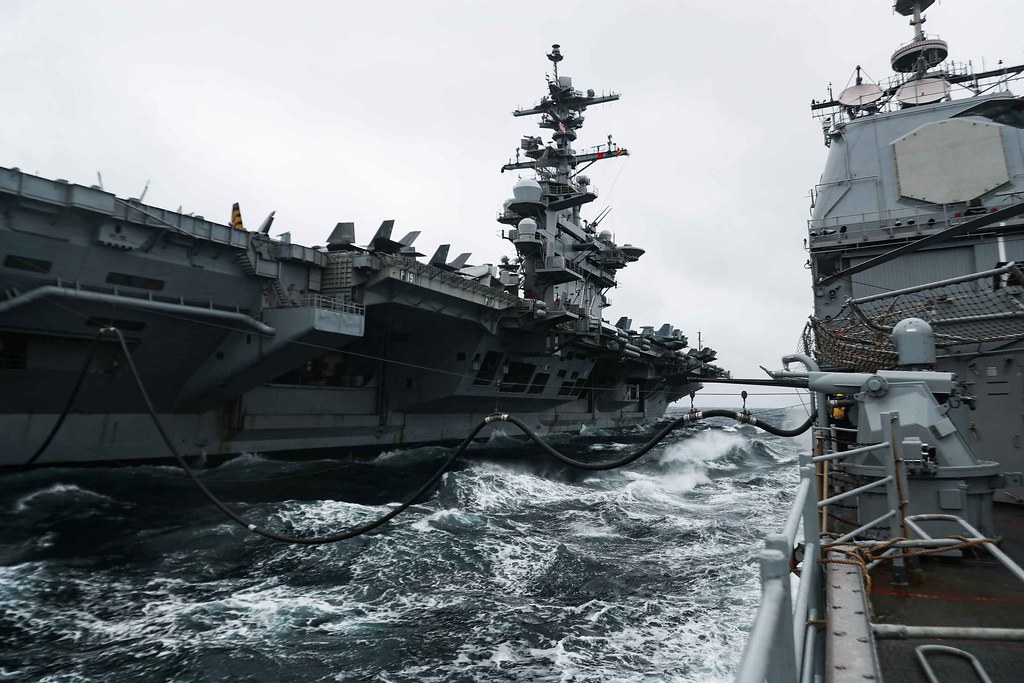

The USS Abraham Lincoln and its carrier strike group are steaming toward the Middle East as tensions with Iran spike again, and Washington leans hard on visible military power to send a message. The deployment folds into a broader buildup of U.S. and allied forces around Iran, even as officials insist they are trying to deter a wider war, not start one. With the death toll from Iran’s protest crackdown climbing and rhetoric sharpening on all sides, the Lincoln’s movement is fast becoming the most visible symbol of a very crowded chessboard.
President Donald Trump has framed the deployment as a way to keep Tehran “honest,” while Iranian leaders warn that any strike over the protests would be met with retaliation. The result is a familiar but still volatile mix: U.S. carriers, regional air bases, and allied jets on one side, and an Iranian leadership under pressure at home and abroad on the other, each trying to signal strength without tipping into open conflict.
The decision to send the Lincoln
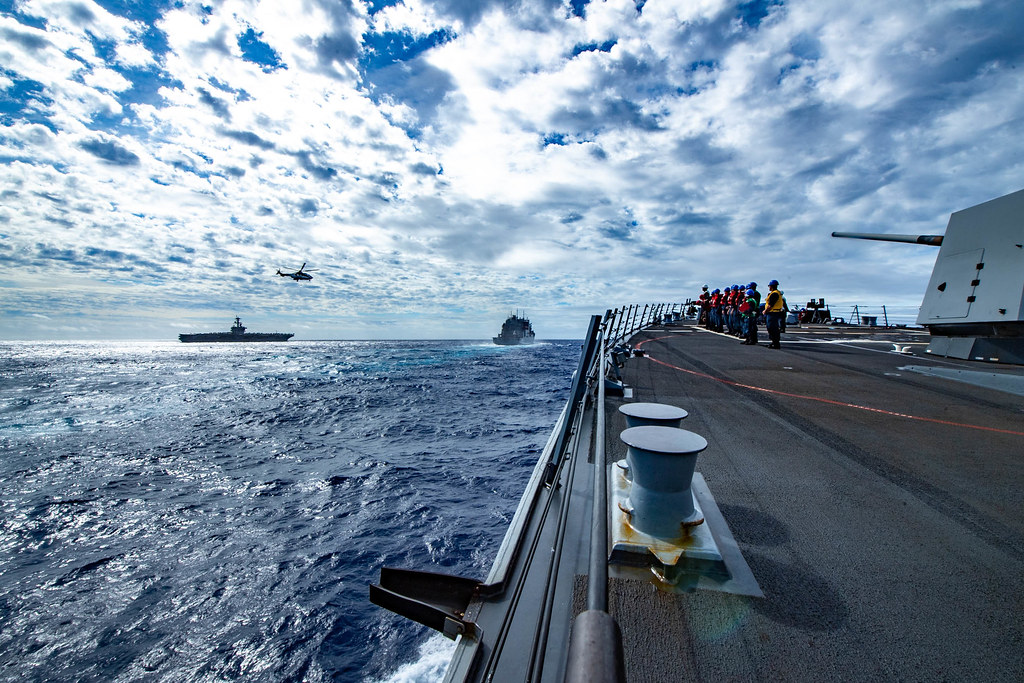
When Trump publicly confirmed that a Navy carrier strike group was heading toward the Mideast, he was not just narrating ship movements, he was putting presidential weight behind a show of force aimed squarely at Iran. He described the formation as part of an “armada” moving toward the region, language that underscored how the White House wants Tehran to read the deployment, even as officials in Washington say they are focused on deterrence rather than a preplanned attack. Reporting on the decision notes that the group is centered on the USS Abraham Lincoln and includes advanced aircraft like F-35C fighter jets and MH-60S Seahawks, a mix that gives the president options ranging from surveillance to precision strikes if he chooses to escalate, according to coverage by Courtney McBride, Roxana Tiron and Hadriana Lowe that highlighted Trump’s comments about the Navy.
The Pentagon had already signaled that a carrier strike group was on the move earlier this month, with defense officials telling reporters that the deployment was meant to respond to rising tensions with Iran and to reassure partners in the region. One account quoted a Pentagon briefing that described the move as a “strong signal” of potential U.S. intervention if the situation around Iran’s protests and regional activities deteriorates further, a point underscored in reporting by Ellen Mitchell. Taken together, Trump’s public framing and the Pentagon’s more measured language show a familiar split screen: a president leaning into tough talk, and defense officials trying to keep the focus on deterrence and flexibility.
From the Pacific to the Strait of Malacca
The Lincoln’s journey toward the Middle East did not start in the Gulf, it started in the Pacific, where the carrier had been operating in the South China Sea before being ordered west. Naval tracking reports describe how the ship left those contested waters and headed toward the long, narrow stretch of the Malacca Strait, a key chokepoint between the Indian and Pacific Oceans. One detailed account of the transit noted that “Carrier Lincoln Leaves South China Sea, USS Tripoli Back Underway,” placing the ship in a busy shipping lane that links the Western Pacific to the Indian Ocean and highlighting how the move pulled a major asset away from operations focused on China.
Other reports fill in the route in more granular fashion, noting that the Aircraft carrier USS Abraham Lincoln transited westbound through the strait of Malacca after passing near Sri Lanka, a path that effectively swings the ship from the Indo-Pacific theater into the approaches of the Arabian Sea. One account of Trump’s “armada” language points out that the Lincoln was already moving along this track by mid month, with the ship’s position near Sri Lanka and the Malacca Strait cited as evidence that the carrier was being repositioned toward the Gulf and the waters off Saudi Arabia, details that match descriptions of the Abraham Lincoln closing in on the Middle East.
What the “big flotilla” actually looks like
Trump has leaned into dramatic language, calling the naval buildup a “big flotilla” and an “armada,” but behind the rhetoric is a fairly standard, if sizable, carrier strike group. The USS Abraham Li is the centerpiece, a Nimitz class nuclear powered carrier that can host a mix of strike fighters, electronic warfare jets, and helicopters, backed up by guided missile destroyers and cruisers that bring Tomahawk cruise missiles and layered air defenses. Analysts who track naval deployments say the group is part of a broader pattern of U.S. moves that include bombers, drones, and additional naval assets heading to the region, a trend captured in detailed reporting on how the United States is continuing to build up its military presence in the Middle East.
Within that larger picture, the Lincoln’s air wing matters. Coverage of the deployment notes that the carrier’s complement includes F-35C stealth fighters, F/A-18 strike jets, and MH-60S Seahawks, giving the group the ability to conduct long range strikes, maritime patrols, and search and rescue missions from the same floating airfield. Trump’s allies have highlighted those capabilities as proof that the United States can hit Iranian targets or defend regional partners on short notice if needed, while critics warn that packing so much firepower into a tight space near Iran raises the risk of miscalculation. The phrase “Military Buildup In The Middle East Continues, Including What Trump Describes As A Big Flotilla Updated” has been used in coverage to capture both the scale of the deployment and the president’s own branding of the Big Flotilla.
Trump’s message to Tehran
Trump has not been shy about framing the deployment in personal, confrontational terms. In public comments, he has warned Iran that the United States is sending an “armada” toward its shores “just in case,” language that leaves room for both deterrence and escalation. One detailed report quotes him as saying that the warships are headed toward Iran after the regime killed anti government protesters, a reference to the bloody crackdown that has drawn international condemnation and sharpened the White House’s tone, as described in coverage by Eleanor Watson, a CBS News Reporter.
In another account, Trump is quoted warning Iran as the USS Abraham Lincoln and several guided missile escorts head toward the Middle East, with U.S. officials speaking on condition of anonymity to describe the composition of the group and its potential missions. Video coverage of those remarks shows the president tying the deployment directly to Iran’s internal repression and regional behavior, presenting the carrier’s movement as a direct response to Tehran’s actions rather than a routine rotation, a framing captured in a widely shared clip that highlighted the USS Abraham Lincoln Trump’s warning.
Iran’s protests and a rising death toll
The military moves are unfolding against a grim backdrop inside Iran, where a nationwide protest movement has been met with lethal force. Rights groups and activists tracking the crackdown say the death toll has climbed to at least 5,002, a figure that underscores just how violent the state response has been. One detailed account notes that, Meanwhile, the overall death toll from a bloody crackdown on nationwide demonstrations rose to at least 5,002, activists said, while also warning that the real number could be higher, a point echoed by other reports that cite Act and other monitoring groups.
Rights advocates argue that the scale of the bloodshed has helped drive the U.S. and its partners toward more visible pressure, including the naval buildup and new sanctions, even as they warn that military escalation could make life even worse for ordinary Iranians. One regional report notes that Rights groups say the real number of deaths could be much higher than official or activist tallies, and that the fear of further violence is hanging over cities and towns across the country, a context that helps explain why Trump’s talk of an armada and the Lincoln’s movement toward the Gulf are being watched so closely by Rights advocates and regional governments alike.
Allied airpower joins the picture
The Lincoln is not the only piece of hardware moving closer to Iran. European allies are also shifting assets, adding another layer to the deterrence picture. UK Eurofighter Typhoons and US F-15Es have deployed to Qatar amid the heightened tensions, with officials stressing that the move is about deterrence over confrontation. Reporting on the deployment notes that RAF Eurofighter Typhoons have taken up positions alongside U.S. jets, and that UK and US combat aircraft are now operating from Qatari bases without confirming any imminent military action, a setup described in detail in coverage of the Eurofighter Typhoons and deployment.
At sea, the Lincoln may soon have company. Analysts tracking carrier movements say The United States Navy now has two Nimitz class nuclear powered supercarriers en route to Europe and the Middle East, a sign that Washington wants redundancy and surge capacity in case the crisis widens. One report notes that the San Dieg based carrier community has been watching closely as ships leave port for extended deployments, and that American air bases in Jordan and other regional states are also being reinforced, a pattern laid out in coverage that highlights how United States Navy is stacking assets around Iran.
“Keeping Iran honest” and domestic politics
Trump’s supporters have framed the Lincoln’s deployment as a necessary step to “keep Iran honest,” arguing that visible military power is the only language Tehran respects. One widely cited account of the decision describes how Trump sends USS Abe Lincoln carrier group to Middle East to keep Iran honest, quoting aides who say the president believes that only a robust show of force can deter attacks on U.S. personnel and partners. That same report notes that the carrier’s air wing includes F-35C jets and MH-60S Seahawk helicopters, and that Trump’s comments were published at 1:41 in the afternoon, a detail that has been repeated in political coverage that treats the 41 timestamp as a marker of how quickly the White House moved to publicize the deployment.
Critics, including some in Congress, worry that the tough talk and rapid buildup could box the administration into a corner, making it harder to de escalate if Iran offers concessions or if back channel diplomacy gains traction. They point to earlier episodes in which U.S. carrier deployments near Iran led to tense standoffs, and argue that the current situation is even more combustible because of the protest crackdown and the high casualty figures. Domestic debate has also focused on the risk to U.S. sailors and aircrew, with some lawmakers asking whether the administration has a clear endgame beyond “keeping Iran honest” and whether the Lincoln’s crew is being used as a political backdrop as much as a strategic tool in the Mideast.
Signals, misreads, and the risk of escalation
For all the talk of armadas and big flotillas, the core of the strategy is signaling. U.S. officials have quietly emphasized that the deployments are meant to deter Iran from lashing out at American forces or regional partners, especially if new sanctions or diplomatic pressure deepen the regime’s sense of isolation. One detailed report on the carrier movement notes that defense officials see the strike group as a way to “signal potential U.S. intervention” without committing to any specific course of action, a nuance that was highlighted in coverage that quoted NOW PLAYING audio briefings and Pentagon background conversations.
The problem, as always, is that signals can be misread. Iranian leaders may interpret the Lincoln’s presence and Trump’s rhetoric as preparation for a strike, prompting them to move missiles, mobilize proxies, or stage their own shows of force in the Gulf. Regional analysts warn that even a minor incident, such as a drone shootdown or a close encounter between patrol boats and U.S. destroyers, could spiral quickly in such a charged environment. One report on the broader tensions notes that U.S. officials have confirmed assets are on the way to the Middle East but have kept any intention to strike a secret, a deliberate ambiguity that is meant to keep Tehran guessing but also raises the risk of miscalculation, as described in coverage of US officials weighing their options.
What happens next
More from Wilder Media Group: