


For drivers cross-shopping a Tesla and an Audi Q5, the real question is not just sticker price, it is what the car quietly drains from the bank account every month. Powering a battery pack with electricity and feeding a turbocharged gas engine are very different habits, and the gap shows up clearly in recurring costs. Put simply, when the math is done carefully, charging a Tesla typically lands well below the fuel bill for an Audi Q5, even before factoring in maintenance and other ownership quirks.
That does not mean electricity is always cheap or that gas is always a wallet-buster. Where someone lives, how often they fast charge, and how many miles they rack up can all tilt the numbers. Still, using consistent benchmarks, the pattern is hard to miss: a Tesla tends to be significantly cheaper to power month to month than a comparable gas Audi, with the Audi Q5 serving as a useful real-world yardstick.
How to compare gas and electricity on the same playing field
The cleanest way to compare a Tesla and an Audi Q5 is to strip away the badges and look at cost per mile. For a gas SUV like the Audi, the basic formula is straightforward: dollars per gallon divided by miles per gallon gives the fuel cost per mile. One widely shared example uses $3.00 per gallon and a 30 mpg figure, which works out to $0.10 per mile, a simple rule of thumb that lets drivers plug in their own local prices and mileage using the same math that underpins that $3.00 per gallon and $0.10 per mile example. Once that per mile number is set, multiplying by monthly miles gives a realistic fuel budget for the Audi Q5.
Electricity works the same way conceptually, just with different units. Instead of gallons, a Tesla burns through kilowatt-hours, and instead of miles per gallon, it delivers miles per kilowatt-hour. Using a consistent benchmark for energy use and local power rates, analysts can estimate how many kilowatt-hours a Tesla will consume in a typical month and what that translates to on the utility bill. Those benchmark calculations are what sit behind detailed comparisons that line up a Tesla’s monthly charging costs against an Audi Q5’s fuel bill, letting drivers see how their own commute would play out in dollars rather than guesses.
What a typical month looks like for a Tesla vs an Audi Q5
Once the formulas are in place, the monthly picture comes into focus. Using a standard commute and average energy prices, researchers have found that a Tesla’s monthly electricity tab usually undercuts the Audi Q5’s gas bill by a comfortable margin. One analysis that walks through those benchmarks concludes that, when everyday expenses are tallied, a Tesla remains significantly cheaper to power month to month than a gas Audi Q5, a gap that shows up clearly in the Bottom Line of that comparison. The takeaway is that, for the same driving pattern, the Tesla’s energy costs are consistently lower, even before any incentives or special rates are added.
The Audi side of the ledger is shaped by the Q5’s specific hardware and the volatility of gasoline. The 2025 Audi Q5, for example, pairs a turbocharged engine with all-wheel drive and a premium interior, and its real-world fuel economy and tank size determine how often drivers stop at the pump and how much they pay. Analysts who benchmark that model against a Tesla point out that the Q5’s fuel costs are tied directly to global events that move oil prices, while the Tesla’s electricity costs are more closely linked to local utility rates and home charging habits, a contrast that is highlighted in detailed breakdowns of the Audi’s 2025 Q5 and its gas usage.
Home charging, Superchargers, and what they do to the bill
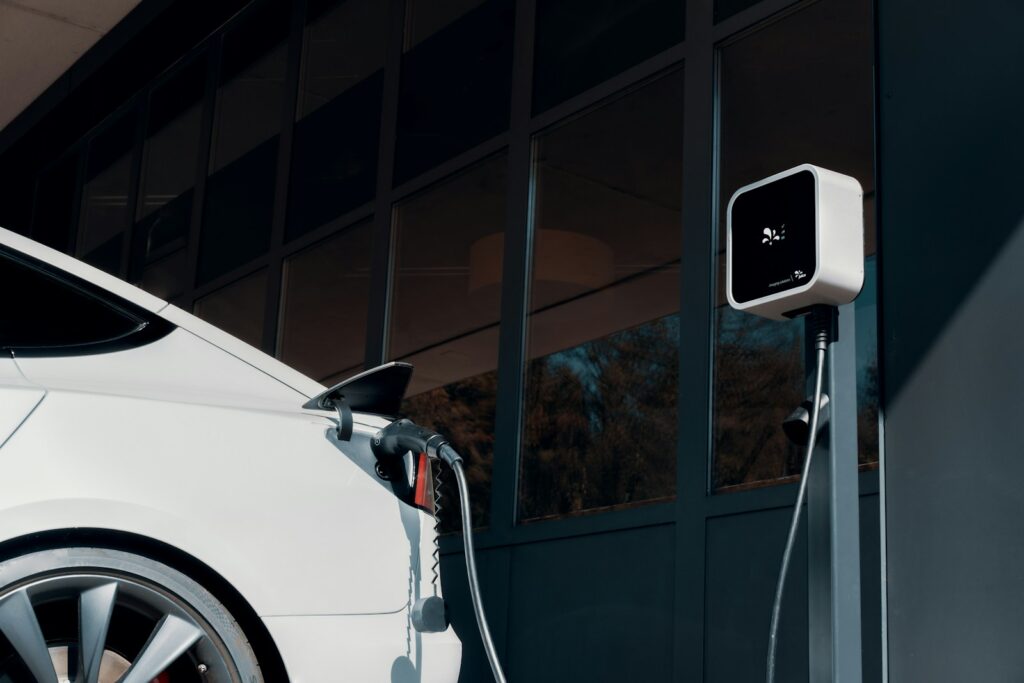
For most Tesla owners, the cheapest way to live with the car is to plug in at home. Detailed energy cost analyses show that charging a Tesla at home typically costs between 4 and 13 cents per kilowatt-hour, a range that keeps the per mile cost very competitive with gas prices even when electricity is not at rock-bottom levels. That home charging window, laid out in guides that compare Tesla charging costs with gas, is the backbone of the claim that charging a Tesla at home remains competitive with gas prices even as both markets move around. When a driver is mostly topping up overnight in a garage, the monthly bill tends to stay predictable and low.
The story changes when fast charging becomes the default. Public fast chargers are convenient, but they are priced like a premium service. In the Tesla ecosystem, the company’s own fast charging network is built around Tesla Superchargers, and the average rate on that network is about 50 cents per kilowatt-hour. Analysts who model a Tesla owner relying heavily on that network find that the monthly charging bill can climb toward $120 for drivers who exclusively fast charge, a scenario spelled out in comparisons that note how costs rise frequently use Tesla. That is still competitive with a thirsty gas SUV in many markets, but it narrows the advantage and makes charging habits a key part of the ownership equation.
How the Audi Q5’s gas costs stack up in real life
On the Audi Q5 side, the monthly fuel bill is shaped by a mix of engineering and economics. The Q5’s turbocharged engine and all-wheel-drive system deliver the kind of performance and comfort buyers expect from a premium SUV, but they also lock in a certain appetite for fuel. When analysts plug the Q5’s fuel economy into the same cost per mile formula used for other gas vehicles, they find that the SUV’s monthly gas bill can easily outpace a Tesla’s electricity costs, especially when gas prices are elevated. That comparison is sharpened by benchmark studies that put the Q5’s fuel usage side by side with a Tesla’s energy draw, using consistent assumptions about mileage and driving style to keep the matchup fair.
Even when the Audi Q5 is driven gently, the cost gap does not disappear entirely. One detailed benchmark exercise notes that while the Q5 delivers a refined driving experience, its fuel costs can still run around $105 in a typical month, a figure that narrows but does not erase the Tesla’s savings edge. That $105 estimate, drawn from a scenario where gas prices are moderate rather than extreme, shows up in analyses that spell out how the Q5’s monthly fuel bill compares with a Tesla’s charging costs and explicitly note that this level of spending narrowing Tesla’s savings still leaves the electric car ahead. For drivers who log heavy highway miles or live in regions with higher pump prices, the Audi’s monthly fuel tab can climb further, widening that gap again.
Beyond fuel: maintenance, insurance, and charging access
Monthly energy costs are only part of the story, and the rest of the ownership math tends to favor the Tesla as well. On the maintenance front, electric vehicles have fewer moving parts, no oil changes, and less wear on components like brakes thanks to regenerative braking. One comprehensive ownership guide pegs Maintenance for EVs as 31% cheaper than for comparable gas cars, a figure that directly benefits Tesla owners who can skip many of the routine services that an Audi Q5 still requires. That same analysis notes that Insurance for EVs can run about 15% higher, which eats into some of the savings, but the net effect still tilts toward lower total ownership costs for electric models, especially brands like Tesla that tend to hold value better over time, as laid out in the Maintenance and Insurance breakdown.
More from Wilder Media Group: