

Handing control to a self-driving car is less like flipping a sci-fi switch and more like stepping into a very opinionated chauffeur. The vehicle follows rules with machine precision, narrates its moves in a calm synthetic voice, and sometimes makes choices that feel both reassuring and strangely rigid. For riders, the experience lands somewhere between public transit and private car, mixing quiet awe with flashes of frustration when the robot does not quite behave like a human driver.
Across early services, from app-hailed robotaxis to advanced driver assistance in personal cars, the reality is not a single futuristic leap but a patchwork of polished software, cautious behavior, and unresolved edge cases. The ride can feel smooth and almost boring until a weird drop-off point or an overcautious stop reminds passengers that this is still a work in progress on public roads.
The robotaxi ride: precise, polite, and a little weird
The clearest picture of what it feels like to surrender the wheel comes from fully driverless services such as the Waymo Driver. Riders summon a car through an app, watch it pull up with no one in the front seats, and are greeted by a robotic voice that explains how to buckle up and start the trip. In San Francisco, passengers describe booking a Waymo ride as almost identical to ordering an Uber, with the same map-based interface and estimated arrival times, but the moment the empty vehicle rolls to the curb, the atmosphere shifts from routine to surreal. One account from San Francisco notes that the Waymo app handles crowded streets calmly, with the car threading through traffic without feeling too aggressive or too cautious, and that initial jolt of seeing no human driver quickly gives way to watching the system handle left turns and lane changes on its own.
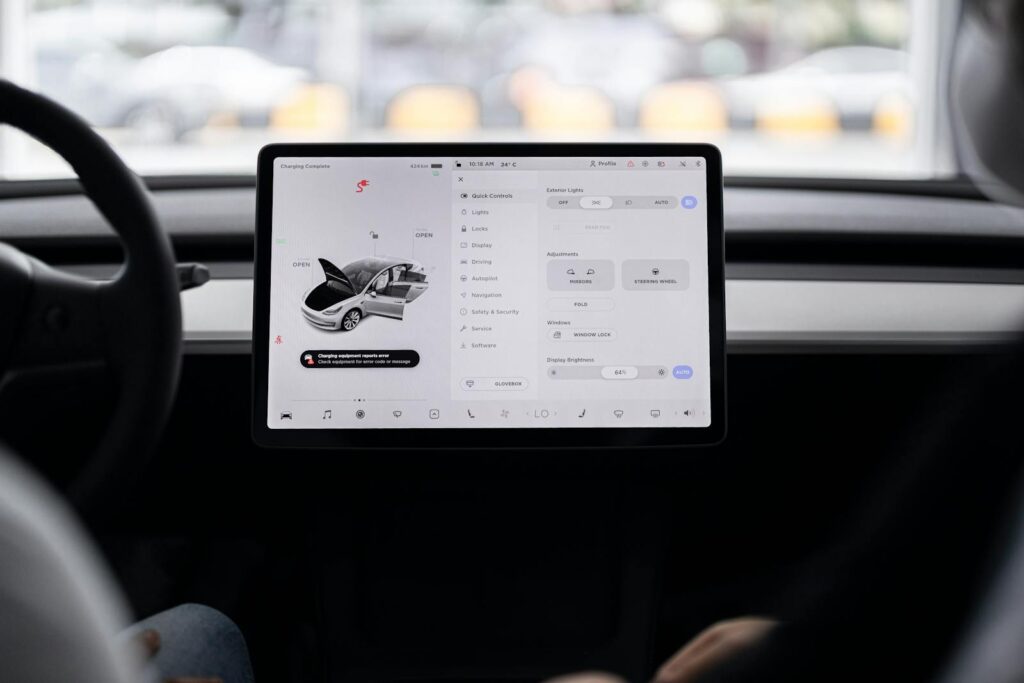
Inside, the cabin tends to feel more like a tech demo than a taxi. Riders in Jaguar electric cars used by Waymo services describe clean interiors, large touchscreens, and clear visualizations of surrounding traffic. A robotic voice announces lane changes, turns, and stops, which helps build trust, especially when the car inches into complex intersections or waits out pedestrians. One rider who called the experience “Booking the Ride, Seamless and Simple” through the Waymo One app in San Francisco highlighted how the car’s style felt neither too aggressive nor too cautious, more like a careful human than a jittery machine. Another early rider wrote that “The Ride Is Smooth, But I’d Love To Communicate Preference,” wishing for more control over how assertively the car accelerates or merges, a reminder that even a technically impressive trip can leave passengers wanting a more human-like back-and-forth with the software.
How the car actually behaves on the road
On the street, self-driving cars tend to behave like rule-abiding honor students, which can be both comforting and mildly infuriating. Riders in San Francisco and Los Angeles repeatedly describe Waymo vehicles that are meticulous about speed limits, often refusing to go even a few miles per hour over, even when surrounding traffic flows faster. One Los Angeles rider wrote on Reddit that the car “will never go beyond speed limit,” acknowledging that safety comes first but also noting the mismatch with impatient drivers around it. Earlier, a reporter riding in a driverless Uber in Pittsburgh described a similar pattern, with the car stopping far behind other vehicles at intersections and sticking exactly to a 25 mile per hour limit, even when human drivers pressed closer and moved faster.
That rigid obedience can spill over into odd navigation choices. A detailed ride-along found that a Waymo minivan once dropped a passenger in the back of a large parking lot, far from the coffee shop’s front door, after executing a cautious but inconvenient maneuver that a human driver would likely have avoided. The same evaluation noted that the Waymo vehicle “drives like a human” in the sense that it handles merges, lane changes, and braking smoothly, but that its conservatism at four-way stops and complex intersections can feel “initially a bit surreal” to someone used to informal eye contact and hand waves. Another comparison of Waymo and Cruise robotaxis observed that Waymo offered a nicer car that seats up to four people and better route visualizations, yet still struggled with certain drop-off points, reinforcing the idea that navigation logic is not always aligned with human convenience.
More from Wilder Media Group: