

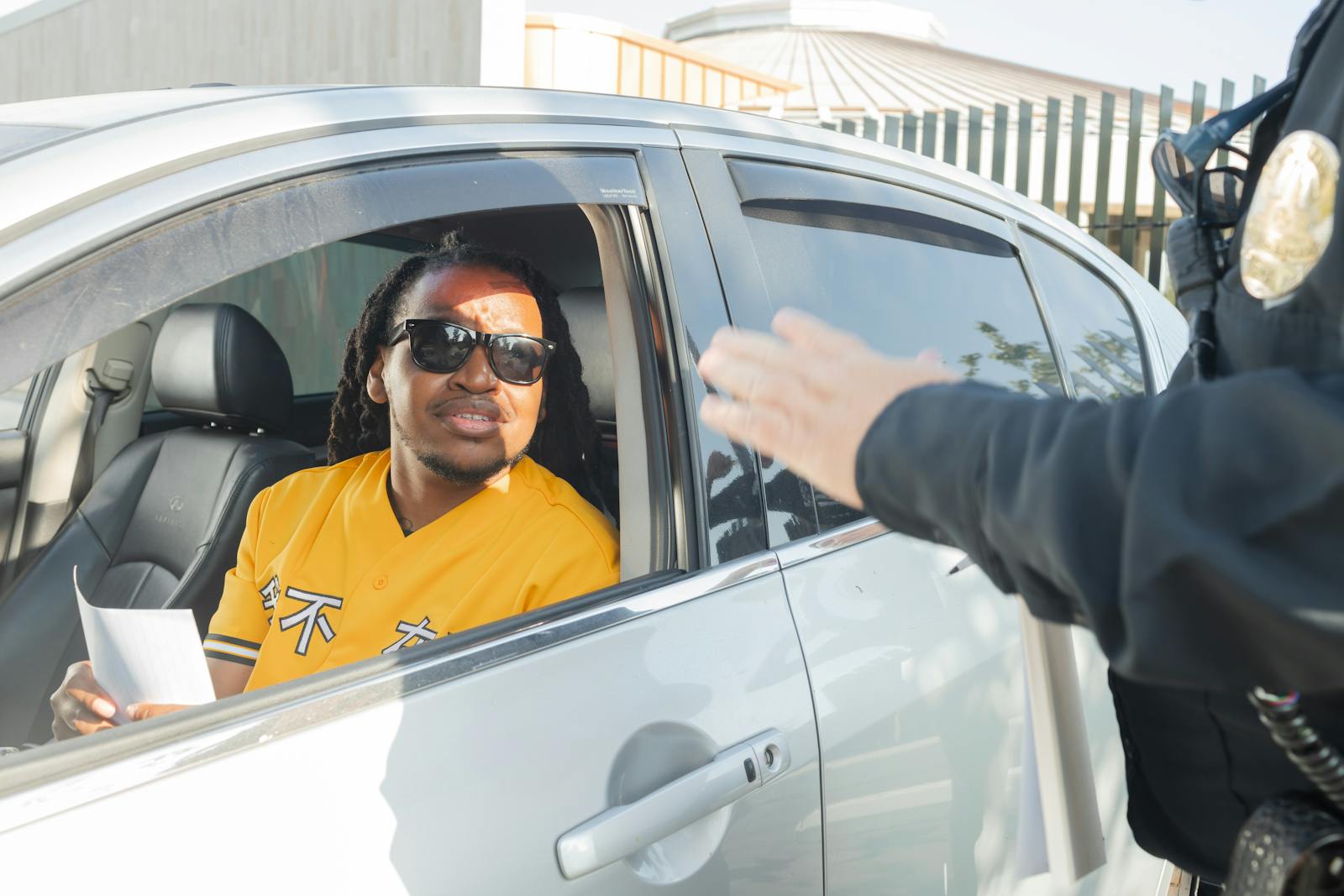
Getting pulled over can catch you off guard and make you nervous. What you say during that interaction can influence how things go, so knowing the right approach matters.
What you say—and what you choose not to say—can help protect your rights and keep the situation calm. Staying clear on this can make the experience smoother and less stressful.
Stay calm and be polite throughout the stop
When you get pulled over, try to keep your cool. Taking deep breaths can help you stay calm and focused.
Being polite goes a long way. Greet the officer respectfully and answer questions clearly but briefly.
Avoid arguing or raising your voice. Staying calm shows you’re cooperative, which can make the stop go more smoothly.
Say “Good evening, officer” when approached
When an officer approaches your vehicle, start by greeting them politely. Saying something like “Good evening, officer” sets a respectful tone right away.
This simple phrase can make the interaction smoother. It shows you’re calm and cooperative, which helps keep things professional.
Remember, being courteous doesn’t mean admitting guilt. It’s about creating a positive atmosphere from the start.
Provide your license and registration only when asked
When you get pulled over, wait until the officer asks for your license and registration before handing anything over. You don’t have to reach for your documents right away.
It’s a good idea to tell the officer what you’re doing, like saying, “I’m going to get my license from the glove box,” before moving. This helps avoid misunderstanding.
Remember, you must show these documents if asked, but you don’t have to volunteer them or explain more than necessary. Keep it simple and straightforward.
Avoid admitting guilt or saying “I’m sorry” for the reason you were stopped
When you’re pulled over, it’s best not to admit guilt or apologize for why you were stopped. Saying “I’m sorry” can be taken as admitting fault, even if you don’t mean it that way.
Instead, keep your responses neutral. You can say things like, “I understand,” or remain silent if you prefer. This helps avoid giving anything that could be used against you later.
Never say “I know my rights” or sound confrontational
Saying “I know my rights” can come off as defensive or aggressive. It might make the officer feel challenged, which usually doesn’t help the situation.
Instead, stay calm and polite. Showing respect often leads to a smoother interaction. You don’t need to loudly state your rights to protect yourself.
Focus on clear, simple communication. If you want to assert your rights, do it quietly and respectfully. Avoid sounding like you’re trying to pick a fight.
Respond clearly and briefly to questions like “Do you know why I stopped you?”
When an officer asks if you know why they stopped you, keep your answer short and straightforward. You don’t have to guess or admit anything. Saying something like, “I’m not sure” is a safe and simple reply.
Avoid volunteering extra information or explanations. Stay calm and clear with your words. This helps prevent misunderstandings and keeps the interaction smooth.
Avoid volunteering unnecessary information about where you were going or coming from
When an officer asks why you’re out, keep your answers simple. You don’t have to share every detail about your destination or origins.
Sharing too much can sometimes cause confusion or lead to unnecessary questions. Stick to brief, clear responses instead.
Remember, you’re not required to explain your entire day. Being polite but reserved helps keep the interaction smooth and focused.
If asked to step out, comply politely without arguing
If an officer asks you to step out of your vehicle, it’s usually best to comply calmly. Arguing or refusing can escalate the situation unnecessarily.
Your goal is to keep things smooth and safe. Step out slowly and keep your hands visible. Being polite shows you’re cooperating, which helps avoid tension.
Say “Am I free to go?” if unsure whether you are being detained
If you’re not sure whether the police are detaining you or just talking, asking, “Am I free to go?” can clear things up. It’s a simple question that lets you know if you’re legally allowed to walk away.
If the officer says yes, calmly leave. If they hesitate or say no, you can follow up with, “Am I being detained?” This helps protect your rights and keeps the situation clear for both of you.
Avoid making jokes or sarcastic comments about the officer or situation
When you’re pulled over, it’s best to keep things straightforward. Joking or being sarcastic might seem like a way to lighten the mood, but it can easily backfire.
Officers might see it as disrespect or attitude, which can make the situation more tense.
Remember, this isn’t the time to test your sense of humor. Staying calm and respectful helps keep the interaction smoother for everyone involved.