


A routine repair on a Chevy Tahoe has turned into a cautionary tale about do-it-yourself car fixes in the age of artificial intelligence. After a woman swapped out a broken sun visor, her SUV reportedly refused to start, and the guidance she says she received from ChatGPT only deepened the trouble. The episode highlights how a simple interior part can be tied into modern vehicle electronics, and how generic AI advice can collide with the realities of a complex wiring harness.
At the center of the story is Jan, a Woman who believed she was tackling a straightforward cosmetic issue on her Chevy Tahoe, only to find herself stranded with an SUV that would not crank. Instead of a quick win, the visor replacement spiraled into a no-start condition that raised questions about what had gone wrong and whether AI tools are ready to guide drivers through delicate electrical work.
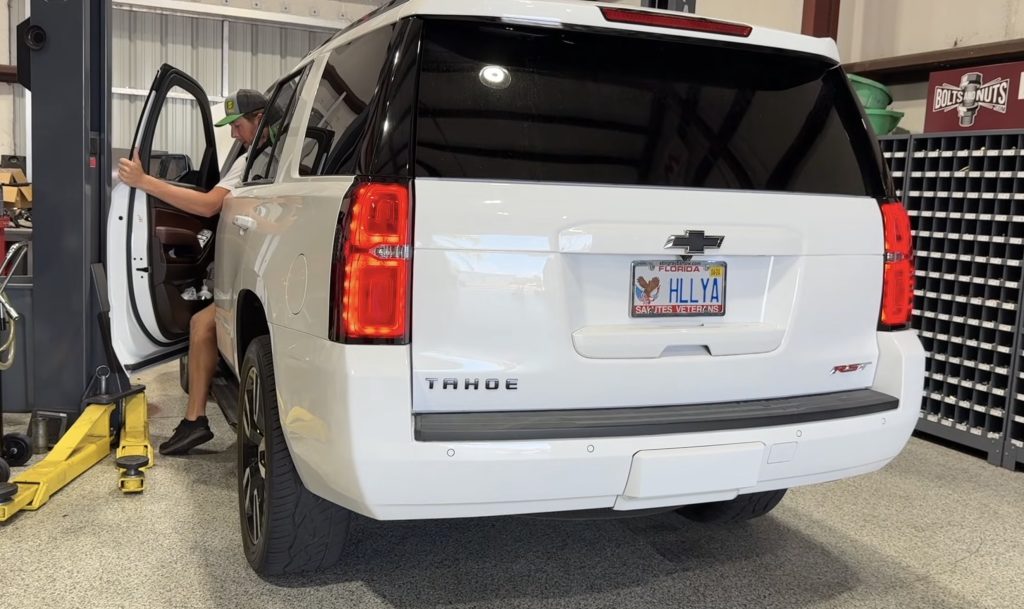
How a visor swap turned into a no-start nightmare
According to detailed accounts, Jan began with a common frustration: a broken sun visor that needed to be replaced on her Chevy Tahoe. The part sits inches from airbags, wiring for vanity lights, and sometimes sensors, but it still looks like a simple mechanical job. After she installed the new visor, however, the SUV would not start, leaving her to suspect that something in the process had upset the vehicle’s electronics and immobilized the system. Reporting on the case describes how the Woman tried to troubleshoot the problem herself, only to watch the situation escalate instead of resolve.
Jan then turned to ChatGPT for help, hoping that an AI assistant could walk her through a reset or a basic diagnostic routine. Instead, she has said that the suggestions she received, including steps she could use to reset car electronics, did not restore the Tahoe and may have complicated the troubleshooting path. Coverage of the incident notes that the SUV remained inoperative after she followed the AI’s guidance, and that the initial visor swap had now snowballed into a broader electrical mystery tied to the no-start condition on the SUV.
The high cost of “cheap” DIY fixes in modern cars
Jan’s experience lands at a moment when more drivers are trying to save money by handling minor repairs themselves, especially on interior trim that looks noncritical. Another driver, Victoria, faced a similar decision when she was quoted $500 to replace a damaged sun visor. Instead of paying the full bill, she ordered a replacement part for $50 and installed it on her own, a move that shows why many owners are tempted to bypass the service department when the price gap between $500 and $50 is so stark. Her story illustrates how online marketplaces like Amazon and basic tools can turn what looks like a luxury repair into a weekend project.
Yet the contrast between Victoria’s success and Jan’s ordeal underscores how unpredictable DIY work can be once electronics enter the picture. In Victoria’s case, the visor swap appears to have been a clean, low-risk upgrade that justified skipping the shop and relying on a part sourced through Amazon and a bit of research. For Jan, the same type of repair intersected with the Tahoe’s wiring in a way that appears to have affected the starting system, a reminder that even interior components can be integrated into safety circuits, lighting modules, or body control units that are far less forgiving of missteps.
AI advice, official guidance, and where drivers should turn
The Tahoe incident also exposes a growing tension between AI-generated instructions and official repair information. ChatGPT can offer general tips about disconnecting a battery, checking fuses, or performing a basic reset, but it does not have live access to proprietary diagrams or model-specific service bulletins. When Jan followed AI suggestions that did not match the exact configuration of her Chevy Tahoe, the gap between generic advice and the vehicle’s real wiring may have widened the problem instead of narrowing it. For owners, the lesson is that AI can be a starting point for understanding concepts, not a substitute for documentation tailored to a specific VIN.
Automakers, meanwhile, are trying to keep drivers engaged with their own channels, including official tutorials and social content that walk through features and maintenance on current models. A recent clip shared through a TikTok account tied to General Motors reflects how manufacturers are using short videos to explain functions and promote best practices inside their vehicles. Those efforts, combined with factory service manuals and dealer support, offer a more reliable roadmap than an AI chatbot when a repair touches airbags, sensors, or ignition systems. Jan’s stalled Chevy Tahoe, and the role she says ChatGPT played in making things worse, is a pointed reminder that when a “simple” visor job suddenly leaves an SUV dead in the driveway, the safest next step is often a qualified technician armed with the right diagrams, not another round of experimental prompts.
More from Wilder Media Group: